
Anchoring the Impossible
The aquanauts get the headlines. Before anyone could live on the seabed at Tennessee Reef, though, a global engineering team had to answer a harder question: how do you keep a building safe at the bottom of the ocean, through hurricanes, for twenty years? This is the engineering behind DEEP's Vanguard.
When DEEP set out to place Vanguard, a subsea human habitat, on the seabed in the Florida Keys, the mission was described in the language of ocean science and exploration. Beneath that ambition sat a stack of hard engineering problems. They had to be solved completely, because nothing can be left at "mostly working" when people are living at depth.
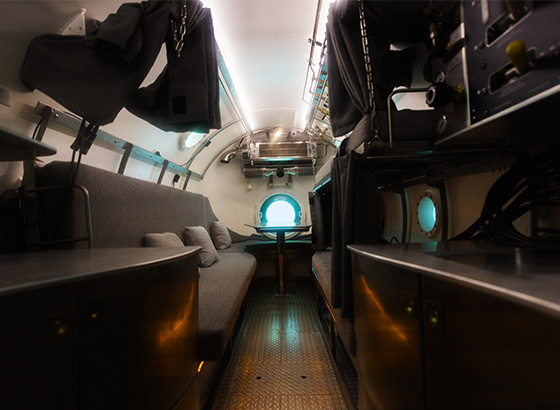
Unique Group was brought in to solve them. What started as a contained scope around life-support systems grew, project by project, into responsibility for the habitat's entire supporting infrastructure: the seabed survey, the foundation, the interface to the habitat, the life-support panels, the safety architecture and the interior fit-out. The approach was straightforward. When the project asked whether something could be done, the answer was yes, and the engineering followed.
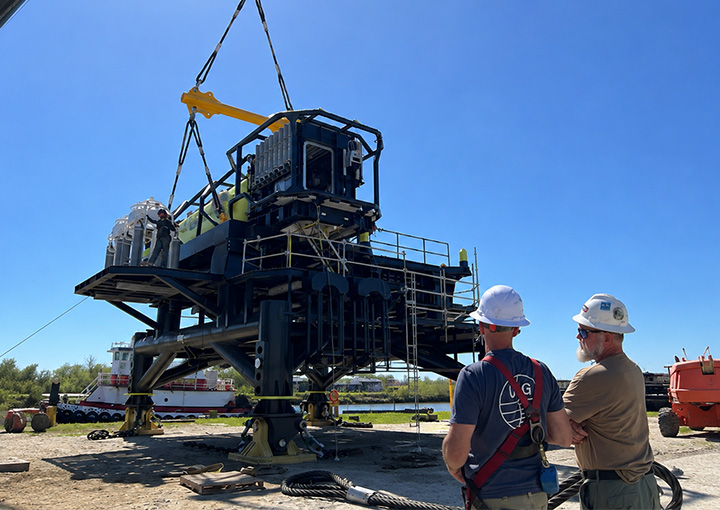
Reading the Seabed
No subsea structure is better than the ground beneath it, and the Florida Keys is a difficult place to find good ground.
The reef is a protected marine sanctuary. The seabed is a mix of sand, coral rock and living habitat that cannot be disturbed.
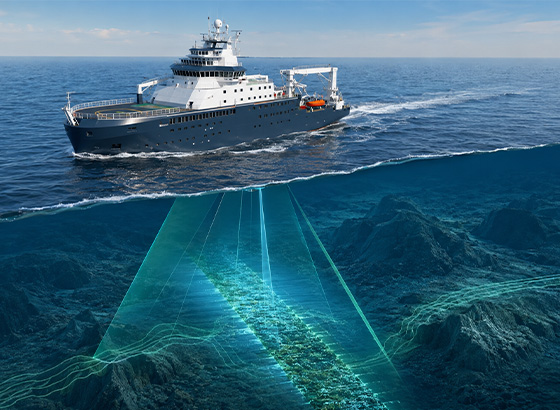
Unique Group ran the survey campaign from start to finish. The geophysical phase mapped bathymetry and ran sub-bottom profiling across candidate sites. The geotechnical phase went further, bringing in dive teams and a core drill to take rock-core samples directly from the seabed and shipping them to a laboratory in Miami for testing. That data was critical, it had to prove the seabed was coral rock with real structural capacity rather than loose sediment, because the whole foundation depended on it.
Unique Group used the geotechnical picture to shortlist viable locations, and DEEP ground-truthed each one before Tennessee Reef was chosen. A full metocean study, with cyclonic modelling, set the extreme-weather envelope that every later calculation had to respect.
A Foundation Built for Hurricanes
The structure holding Vanguard to the seabed is the part the engineering team is proudest of.
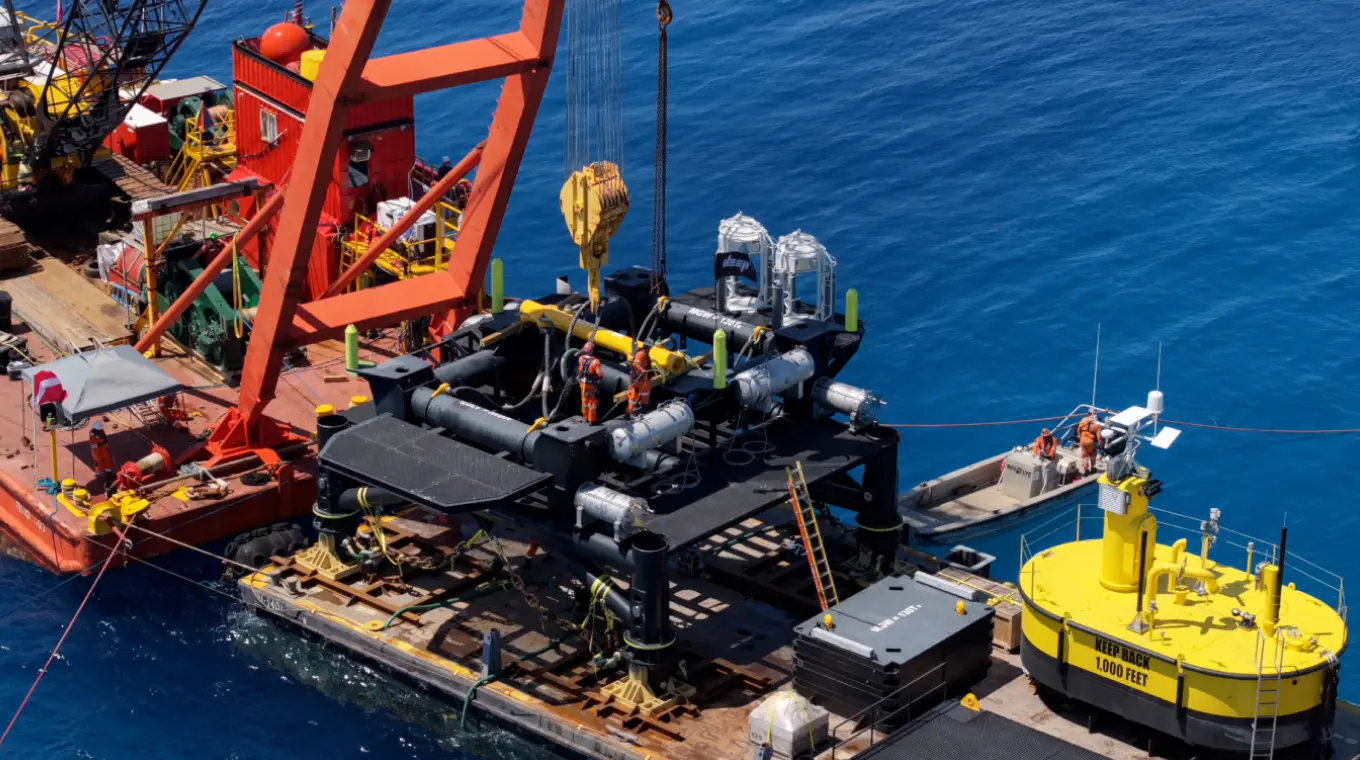
It combines two proven principles in one design: the dead weight of a gravity base and the holding power of piles drilled into the seabed.
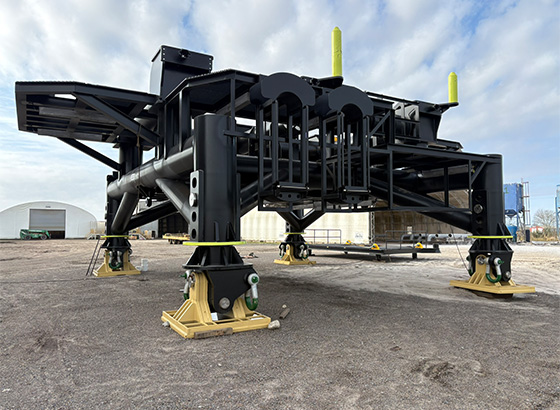
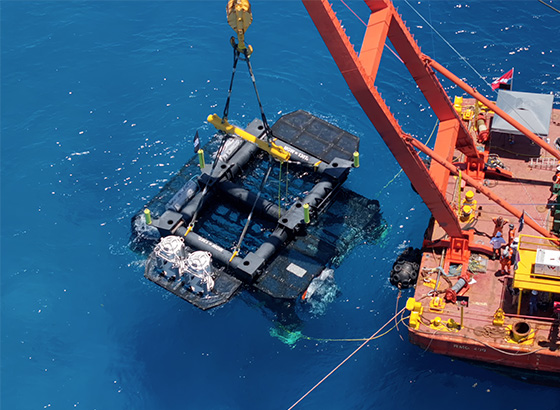
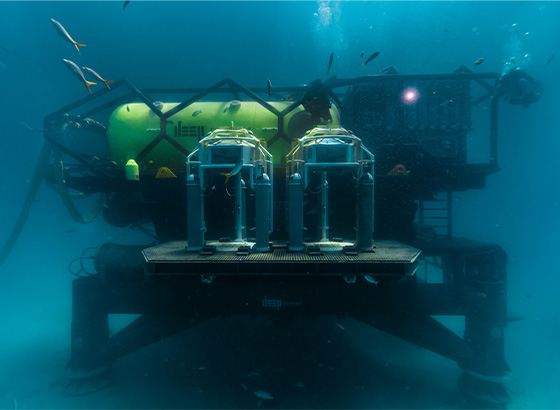
Two 130-tonne ballast modules give the structure the dead weight to hold position on the seabed. Four piles drilled and tethered into the coral rock lock it down against uplift and lateral loads. Together they form a foundation built to withstand Category 5 hurricane conditions over a twenty-year service life, certified throughout to DNV subsea rules, the same classification standard applied to permanent offshore infrastructure.
Unique Group's work on the foundation covered the design, the calculations, fabrication in Louisiana, and on-site project management and supervision through to installation. Engineering at the bottom of the ocean rarely runs to plan, and this was no exception. When seabed conditions called for it, the team reworked the pile installation method on site, using large-diameter caissons, grouting the piles within them, and using the caissons themselves in the excavation method. Solving that in the moment, without compromising the certification case, is the difference between a foundation that works and a project that stalls.
Getting the Habitat to the Seabed
A pressure vessel built to keep people alive at depth does not want to sink, yet Vanguard had to do exactly that and then mate precisely with the foundation below.
Unique Group designed the interface structure that handled both jobs at once. A pair of heavy beams adds around 30 tonnes to the habitat, enough to make it negatively buoyant, and the same beams form the mechanical interface that locks it to the foundation.
It is not visible in the finished habitat, but the whole installation depended on it.
Engineering the Safety Case
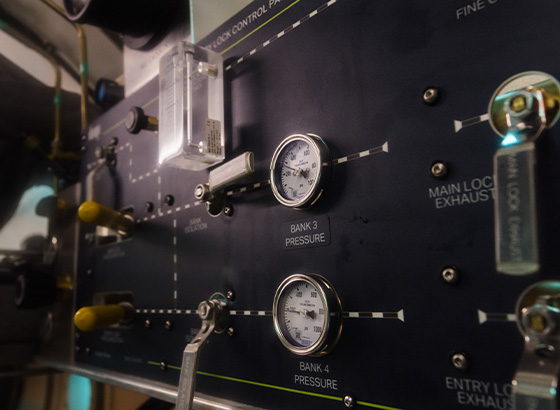
Unique Group designed and supplied the fluid and gas control panels at the heart of Vanguard's operation.
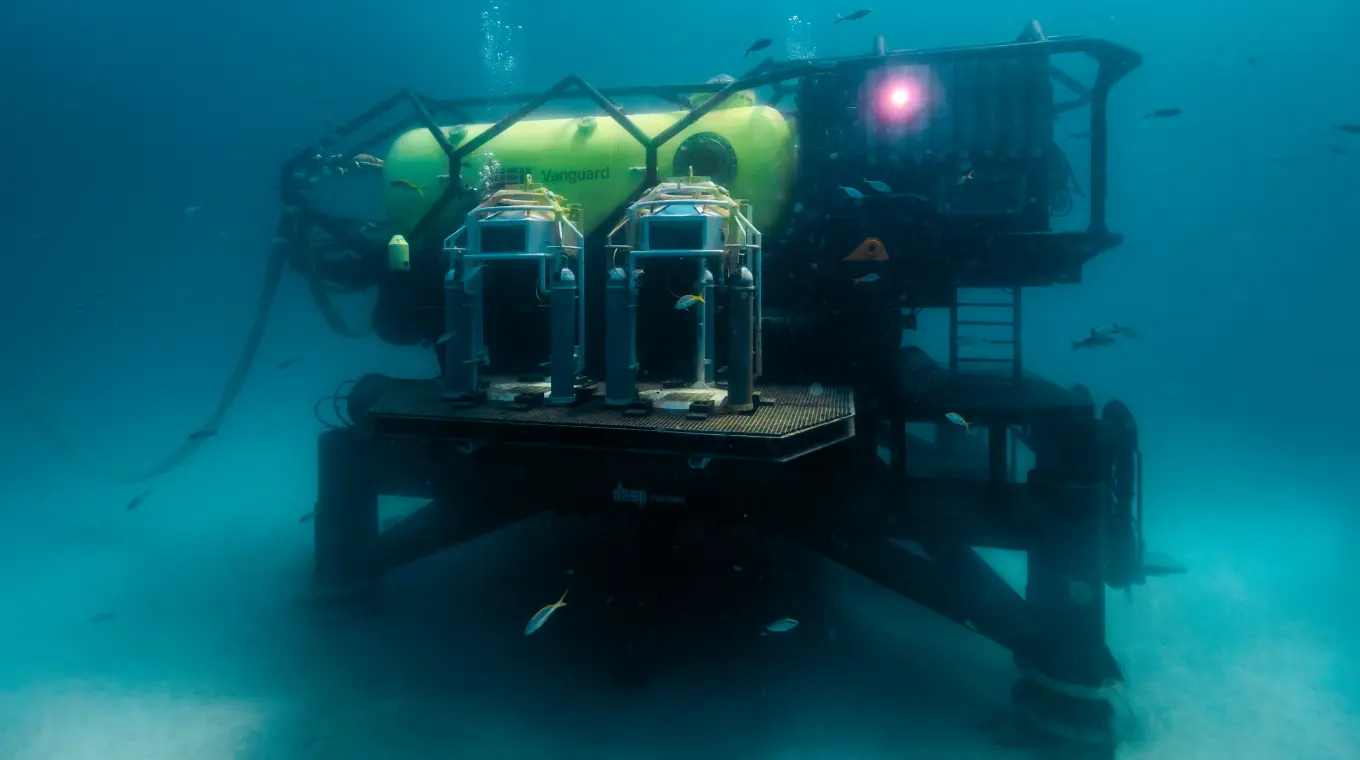
Around the panels sit the safety provisions, built as a layered rescue case rather than a single fallback.
In-habitat refuges
Where a diver can shelter and breathe in an emergency
Emergency breathing gas
Held at the habitat
Certified pressure vessel chain
Running from the surface support vessel back to a shore-based forward operating base for treatment if evacuation is ever needed
The mooring spread securing the surface support buoy and its umbilical was Unique Group's work too. None of this shows up in the footage of aquanauts inside the chamber. It is also what makes that footage possible.
One Project, Four Countries, One Team
 United Kingdom
|
 United States
|
 South Africa
|
 UAE
UAE
|
The timeline left no room for sequential working, so the project ran everywhere at once.
Delivery drew on Unique Group's worldwide engineering network, with teams in the UK, United States, South Africa and the UAE working as one. Engineers and project managers moved between hubs and sites as the work demanded, sharing design, fabrication, testing and execution across continents.That reach only mattered because of the breadth behind it.
| Survey and geotechnics | Diving and life support | Offshore project management |
| Metocean and environmental analysis | Structural and mechanical design | Fabrication |
All of it sits in-house at Unique Group. It is what let one accountable team carry Vanguard from seabed survey to final fit-out without handing off across a chain of separate contractors, and what made holding a single DNV certification thread across four time zones, demanding as it was, an achievable discipline rather than an impossible one.
From an engineering standpoint, the achievement of Vanguard is integration rather than any single breakthrough technology. Survey, geotechnics, structural design, life support and offshore execution, brought together under one team and held to classification standards on a demanding timeline. That is the capability Unique Group brings to the edge of the marine environment, and the foundation now resting at Tennessee Reef is the proof.
Vanguard was delivered for DEEP, with partners including Bastion Technologies, Triton Submarines and Resolve Marine.