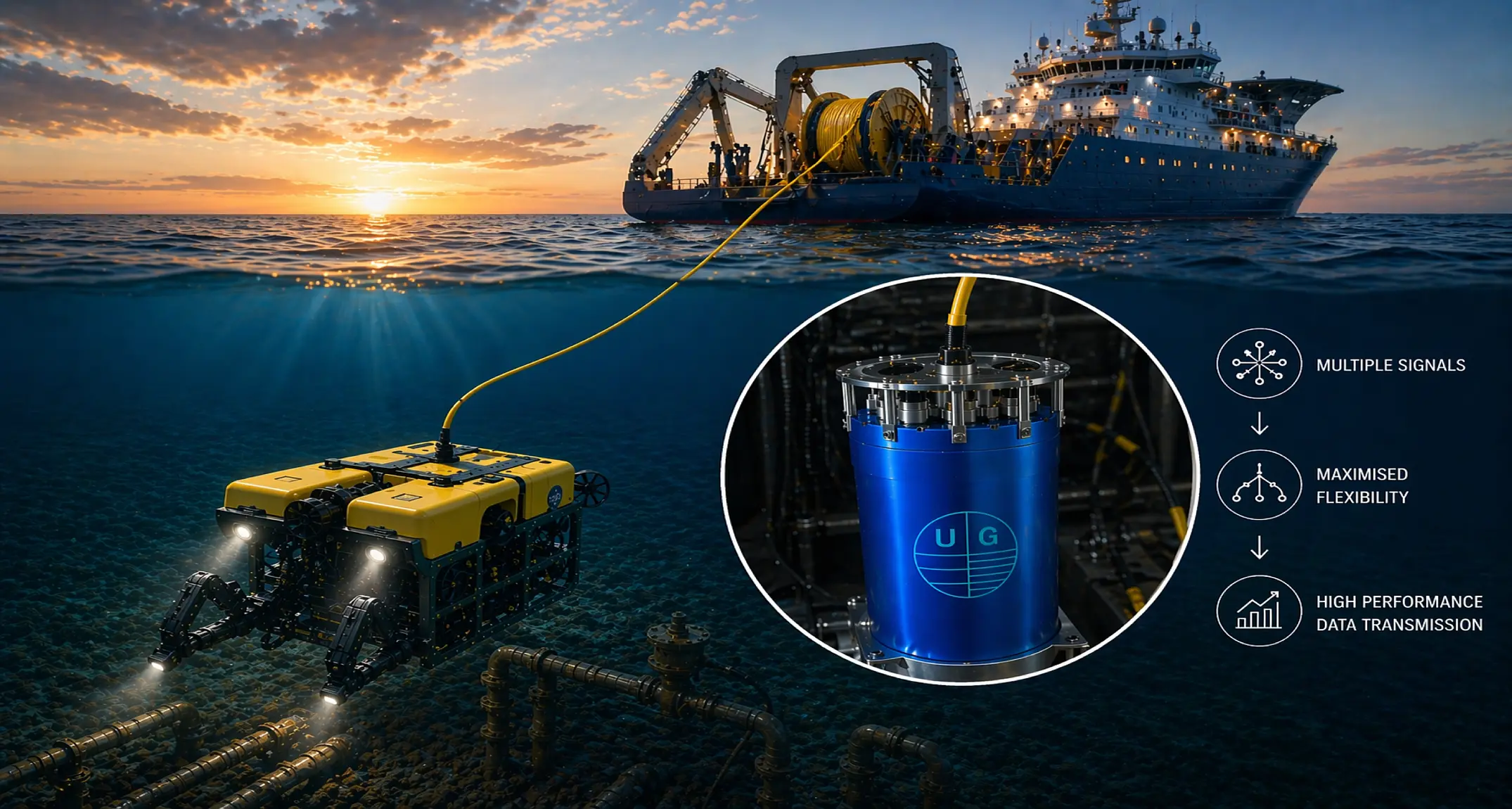
Offshore and subsea operations rely heavily on real-time data transmission between subsea equipment and surface control systems. From remotely operated vehicles (ROVs) to complex survey spreads, multiple devices must operate simultaneously, generating large volumes of data that need to be transmitted efficiently and reliably.
In these environments, fibre optic multiplexers play a critical role in supporting efficient, reliable communication across integrated subsea systems.
While the core principles of fibre optic multiplexing are covered in our article on how fibre optic multiplexers work, this article focuses specifically on real-world applications across offshore and subsea operations.
Key Takeaways
- Fibre optic multiplexers enable multiple subsea systems to transmit data, video, and control signals through a single fibre optic cable.
- In offshore operations, multiplexing reduces umbilical complexity and improves system integration across ROVs, survey equipment, and inspection tools.
- Fibre optic multiplexers are widely used in ROV operations to support real-time communication between subsea vehicles and surface control systems.
- Offshore survey systems use multiplexers to integrate multiple sensors such as side scan sonar, multibeam systems, and positioning equipment into a unified data stream.
- In Inspection, Repair, and Maintenance (IRM) operations, multiplexers enable continuous monitoring, high-quality data transmission, and real-time decision-making.
- Fibre optic multiplexers support long-distance subsea communication by providing high bandwidth, low signal loss, and reliable performance in deepwater environments.
- In offshore construction and installation, multiplexers improve coordination between subsea tools and surface vessels by consolidating communication channels.
- Modern offshore systems rely on fibre optic multiplexers as a central communication backbone to integrate multiple technologies into a single operational workflow.
- The use of fibre optic multiplexing improves operational efficiency, scalability, and reliability across complex offshore and subsea projects.
Why Fibre Optic Multiplexers Are Essential Offshore
In subsea environments, multiple systems operate in parallel, including:
- Cameras and video systems
- Sonar and imaging equipment
- Navigation and positioning sensors
- Environmental monitoring tools
Without multiplexing:
- Each system would require separate cabling
- Umbilical complexity would increase
- Deployment and maintenance would become inefficient
Fibre optic multiplexers address these challenges by:
- Combining multiple data streams
- Enabling transmission over a single fibre
- Supporting real-time communication and control
In offshore operations, this is especially important where space, weight, reliability, and ease of deployment all have a direct impact on operational efficiency.
Key Applications in Offshore & Subsea Operations
1. ROV Operations and Control Systems
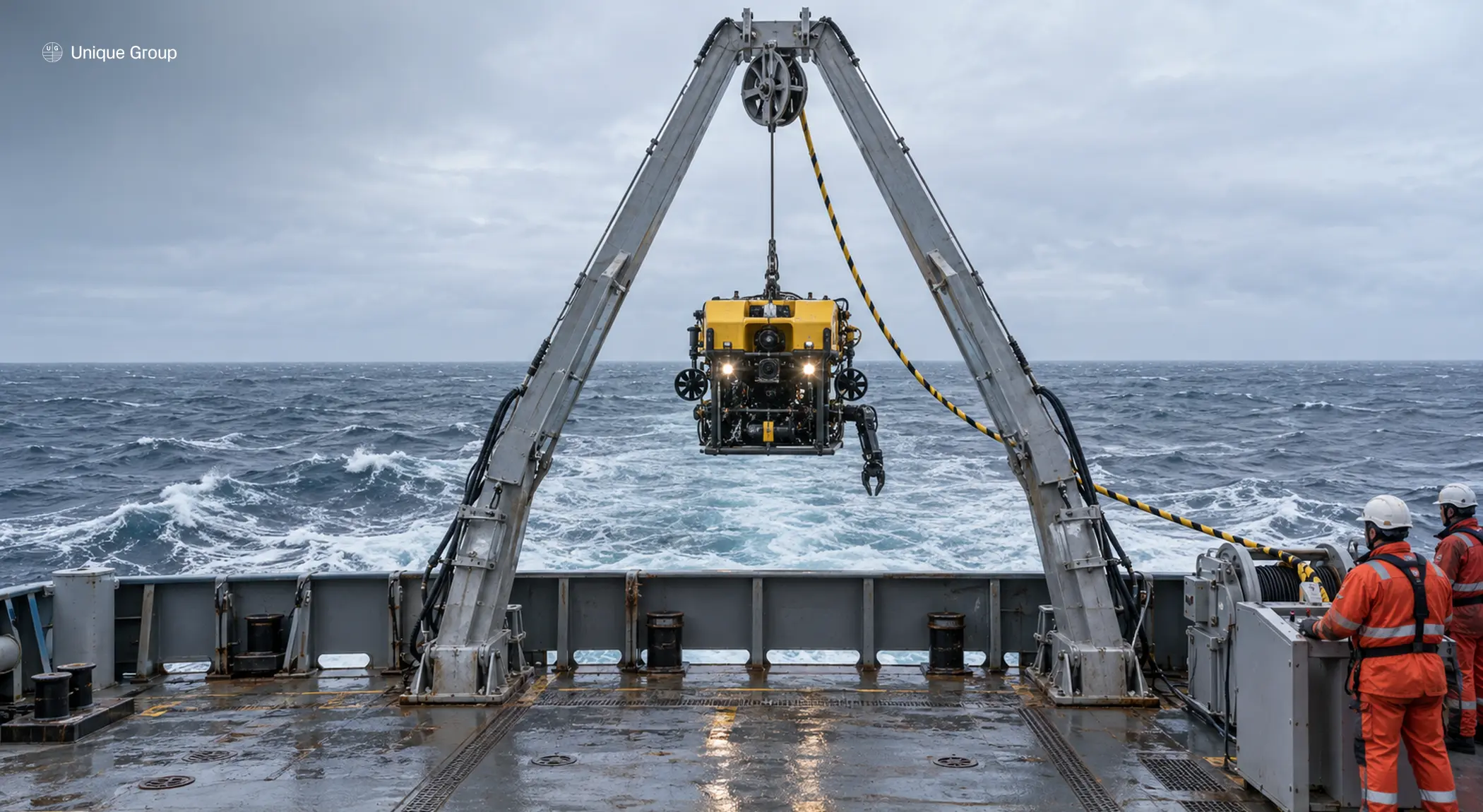
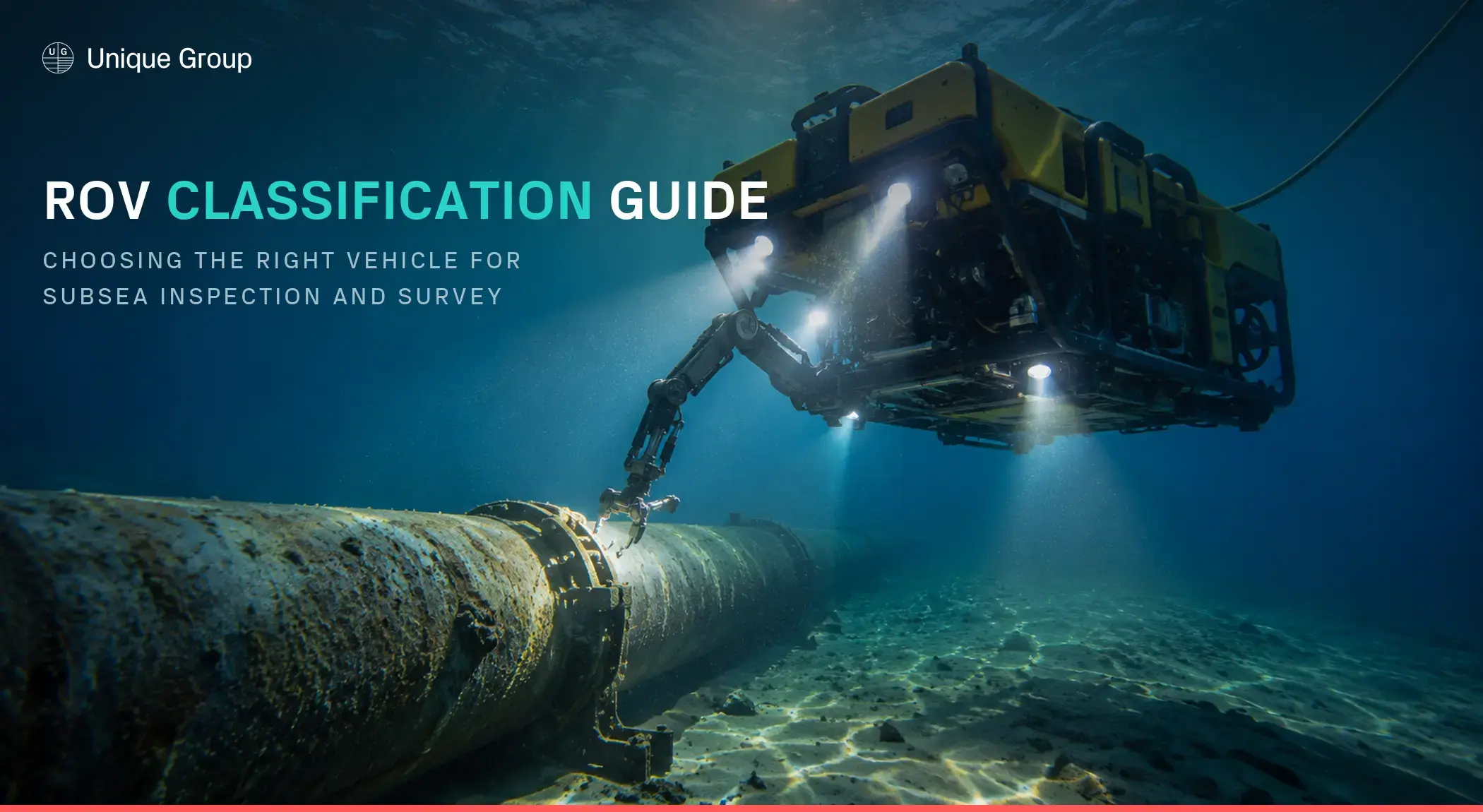
Fibre optic multiplexers are widely used in ROV systems, where continuous real-time transmission between subsea vehicles and surface operators is essential.
ROVs require uninterrupted communication for:
- Live video feeds
- Sensor data
- Navigation inputs
- Control commands
Solutions such as the Innova Matrix Mk II+ provide a plug-and-play interface for integrating a wide range of sensors and equipment into remotely operated systems.
This enables:
- Seamless integration of multiple devices
- Real-time monitoring and control
- Reduced system complexity
In more advanced ROV operations, where multiple cameras, sensors, and control channels operate simultaneously, multiplexers help reduce the number of physical connections required within the umbilical while maintaining stable communication.
2. Integration of Survey Sensors
Offshore survey operations often involve multiple sensors working simultaneously, including:
- Side scan sonar
- Multibeam systems
- Sub-bottom profilers
- Positioning systems
Fibre optic multiplexers allow these systems to be integrated into a single communication channel. For example, they can interface a full suite of survey sensors through a fibre optic umbilical, ensuring:
- Efficient data transfer
- Synchronised data acquisition
- Reduced cabling requirements
This is particularly valuable in offshore survey campaigns where multiple data sources must be transmitted reliably for accurate seabed mapping, positioning, and geophysical analysis.
3. Compact ROV and Lightweight Systems
Modern offshore operations increasingly demand:
- Smaller ROVs
- Lightweight systems
- High sensor payload capacity
Compact multiplexers, such as the Innova Micro Matrix, are designed to support:
- Multiple Ethernet and serial channels
- High data throughput
- Integration into compact platforms
This allows operators to add advanced capabilities without increasing system size, making it easier to maintain efficiency and flexibility in constrained deployments.
4. High-Performance Subsea Communication Systems
Advanced offshore operations require the transmission of:
- High-definition video
- Large volumes of sensor data
- Control signals and diagnostics
High-performance multiplexers such as Uni-Mux Deeplink6 are designed to integrate video, data, and control signals within ROV, survey, and offshore systems.
This enables:
- High-bandwidth communication
- Reliable long-distance data transmission
- Stable performance in harsh subsea environments
These capabilities are critical in data-intensive operations where multiple mission-critical systems must run concurrently without signal degradation.
5. Subsea Inspection, Repair, and Maintenance (IRM)
Inspection, Repair, and Maintenance (IRM) operations require:
- Continuous monitoring of subsea assets
- High-quality imaging and data transmission
- Real-time decision-making
Multiplexers support IRM activities by:
- Transmitting inspection data from subsea systems
- Enabling remote diagnostics and control
- Supporting multiple inspection tools simultaneously
This enables faster, more informed decision-making during critical offshore operations.
6. Offshore Construction and Installation
During offshore installation and construction projects, fibre optic multiplexers are used to:
- Monitor installation progress
- Support positioning and alignment systems
- Enable communication between subsea tools and surface vessels
By consolidating multiple signals into a single fibre link, they:
- Reduce operational complexity
- Improve reliability during critical installation phases
This is particularly important where precision and coordination between subsea and topside teams are essential.
7. Long-Distance Subsea Data Transmission
Fibre optic communication is essential for long-distance offshore operations.
Multiplexers enable:
- Transmission of large data volumes over extended distances
- Minimal signal loss
- High reliability in deepwater environments
This is especially important for:
- Deepwater exploration
- Long pipeline routes
- Remote subsea installations
In these scenarios, multiplexers support dependable communication while maintaining data integrity and system performance.
Key Benefits Across Applications
Across all offshore use cases, fibre optic multiplexers provide:
1. Simplified System Architecture
- Fewer cables
- Reduced complexity
- Easier deployment
2. High Data Capacity
- Supports multiple high-bandwidth signals
- Enables real-time operations
3. Reliable Performance
- Designed for harsh subsea conditions
- Ensures stable communication
4. Scalability
- Easily integrates with additional sensors
- Supports evolving offshore requirements
These benefits make fibre optic multiplexers a critical component in modern offshore systems where efficiency, reliability, and adaptability are essential.
Role of Fibre Optic Multiplexers in Integrated Offshore Systems
Modern offshore operations rely on integrated systems combining:
- Survey equipment
- Inspection tools
- Communication systems
Fibre optic multiplexers act as the central communication backbone, ensuring that all systems can operate together efficiently. In practice, their role extends beyond signal transmission. They enable the integration of multiple offshore technologies into a unified system, helping operators reduce complexity while maintaining performance across operations.
How Fibre Optic Multiplexers Support Integrated Offshore Workflows
In modern offshore projects, systems are rarely deployed in isolation. ROVs, survey sensors, inspection tools, and communication systems must operate simultaneously as part of a larger workflow.
Fibre optic multiplexers support this integration by allowing multiple systems to share a streamlined communication path. This simplifies system architecture, reduces cabling requirements, and improves overall operational efficiency across offshore projects.
Conclusion
Fibre optic multiplexers are a critical enabler of modern offshore and subsea operations, supporting everything from ROV control to high-performance survey systems.
By enabling multiple systems to operate through a unified communication framework, they:
- Simplify system design
- Improve operational efficiency
- Enable reliable, high-speed communication
As offshore operations become more complex and data-driven, fibre optic multiplexers will continue to play a key role in ensuring seamless integration and performance across subsea systems.
For guidance on selecting the right MUX for your specific platform and signal requirements, read our subsea fibre optic multiplexer selection guide.