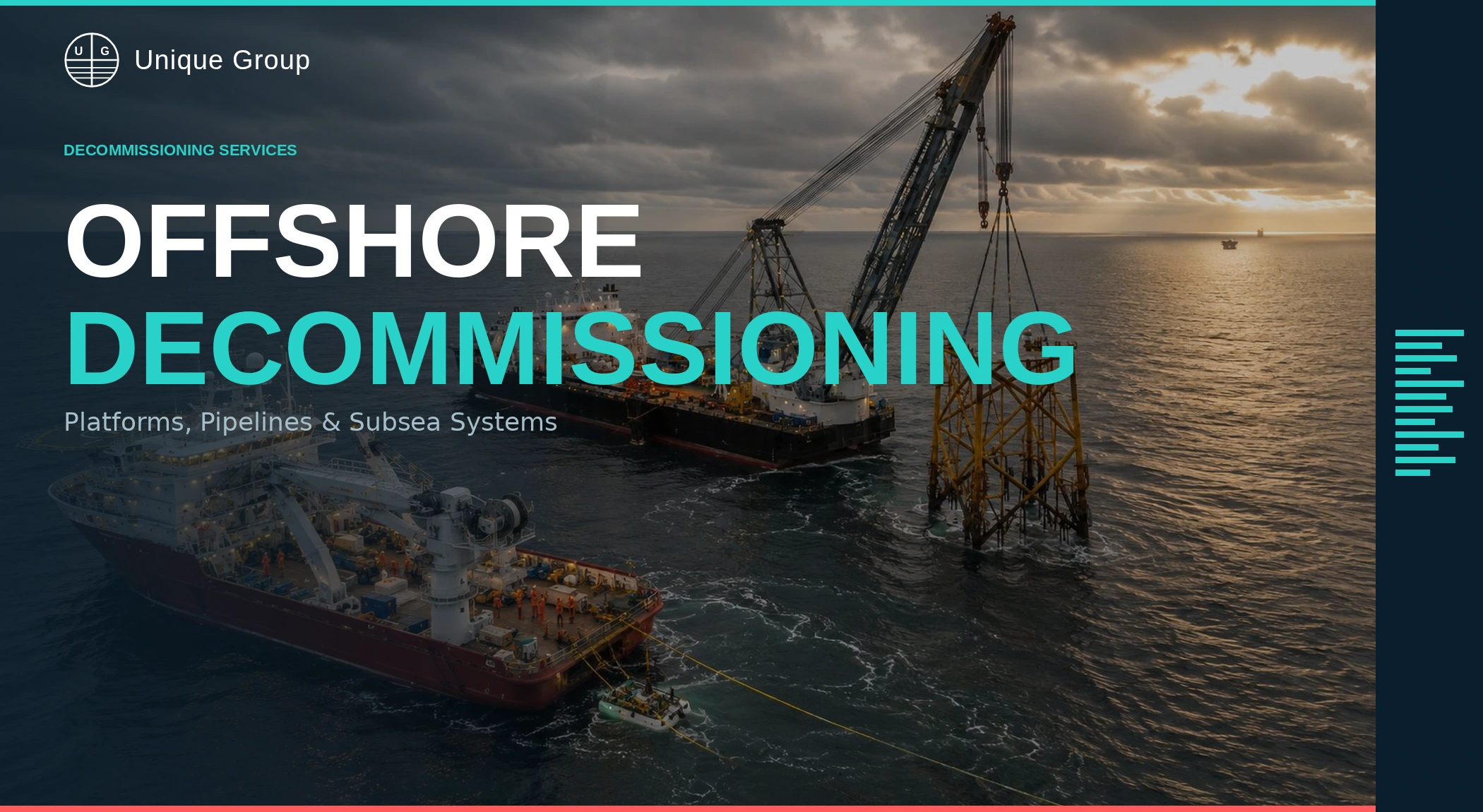
Offshore decommissioning services include the planning, inspection, isolation, cleaning, removal, recovery, seabed clearance, and verification activities required to safely retire offshore oil and gas infrastructure. These services may involve platform removal, pipeline decommissioning, subsea structure recovery, ROV inspection, survey support, environmental monitoring, and final regulatory close-out.
Offshore decommissioning is one of the most technically complex and operationally demanding challenges facing the global energy industry. As oil and gas fields in the North Sea, Southeast Asia, the Middle East, and beyond reach the end of their productive lives, operators face a growing backlog of aging infrastructure that must be safely, responsibly, and cost-effectively retired.
The scale of what lies ahead is significant. Thousands of platforms, hundreds of thousands of kilometres of subsea pipeline, and entire fields of wellheads, manifolds, and associated subsea equipment must be assessed, isolated, removed, or responsibly left in place — all under tightening regulatory scrutiny and increasing pressure to minimise environmental impact.
What makes offshore decommissioning particularly challenging is that no two asset types demand the same approach. A fixed jacket platform and a buried subsea pipeline and a deepwater production manifold each present a different set of technical, logistical, and regulatory problems. Understanding those differences is the starting point for planning an effective campaign.
This article covers the three core categories of offshore decommissioning — platforms, pipelines, and subsea systems — and explains what each involves, what specialist services and equipment are required, and why an integrated delivery approach is increasingly the preferred model for operators managing complex programmes.
What Are Offshore Decommissioning Services?
Offshore decommissioning services include the planning, inspection, isolation, cleaning, removal, recovery, seabed clearance, and verification activities required to safely retire offshore oil and gas infrastructure. These services may involve platform removal, pipeline decommissioning, subsea structure recovery, ROV inspection, survey support, environmental monitoring, and final regulatory close-out.
Why Offshore Decommissioning Is Accelerating
Decommissioning activity is rising not because of policy ambition alone, but because the physical reality of aging infrastructure is forcing action. According to the U.S. Bureau of Safety and Environmental Enforcement (BSEE), approximately 75% of existing offshore platforms on the Outer Continental Shelf are more than 25 years old. Across Europe, the Offshore Energies UK (OEUK) 2024 Decommissioning Insight Report forecasts the removal of more than 914,000 tonnes of topsides across the UK Continental Shelf alone. In Asia Pacific, fields developed between the late 1970s and 1990s — particularly across Indonesia, Malaysia, Thailand, and Australia — are now reaching end of life simultaneously, driven by declining production and tightening national regulatory oversight.
Governments and regulators are also closing the gaps that previously allowed operators to defer decommissioning indefinitely. Idle iron policies, tightening abandonment regulations, and stricter environmental compliance frameworks are all driving earlier action. Operators can no longer treat decommissioning as a future problem.
The result is a market that is expanding rapidly and demanding a more sophisticated supply chain — one capable of handling not just individual tasks, but integrated programmes across multiple asset types.
Platform Decommissioning: From Topside to Mudline
Offshore platforms are typically the most visible element of any decommissioning campaign, but their removal involves far more than the structural lift that photographs on the surface.
Understanding the Structure
For decommissioning purposes, a fixed offshore platform generally divides into two distinct components: the topside (the operational structure above the waterline) and the substructure or jacket (the section between the waterline and the seabed). Each requires its own planning approach, inspection regime, and removal methodology.
Topsides contain the production equipment, utilities, accommodation, and associated systems. Before removal, all hydrocarbons must be drained and removed, hazardous materials (including asbestos, chemical residues, and radioactive scale) must be surveyed and safely managed, and structural integrity must be assessed to confirm the topside is in a condition suitable for safe lifting. Depending on the weight and condition, topsides may be removed as a single lift or progressively stripped and removed in sections.
The jacket presents a different challenge. It must be severed below the mudline — typically a minimum of 15 feet beneath the seabed surface, as required under frameworks such as BSEE regulations in the U.S. — disconnected from any remaining conductors or piles, and then lifted or towed to shore for recycling or disposal.
Survey, Inspection, and Diving Support
Before any structural work begins, a thorough survey and inspection programme is essential. This covers the platform’s structural condition, the seabed around the foundations, and the presence of any buried or partially buried infrastructure that may complicate removal operations.
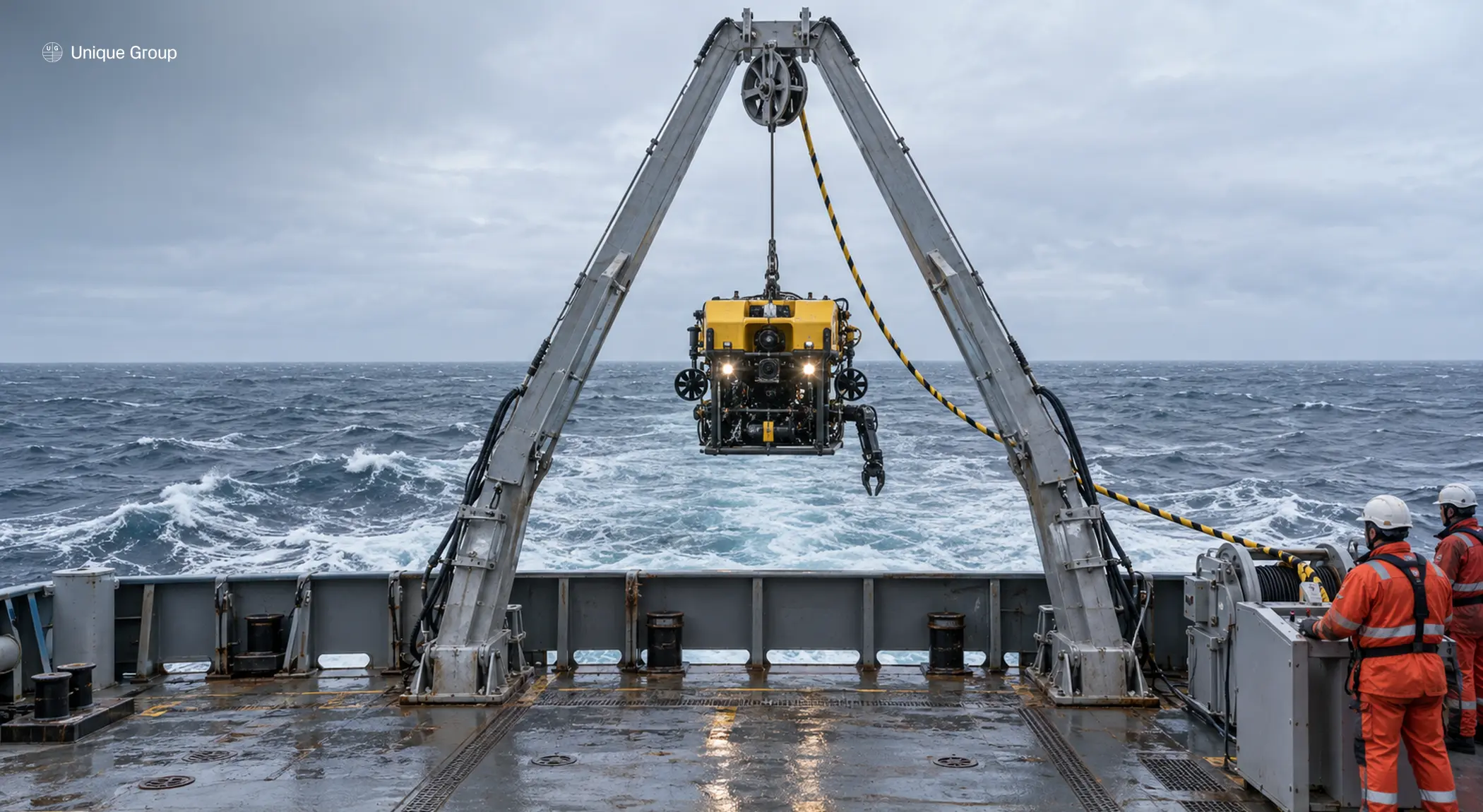
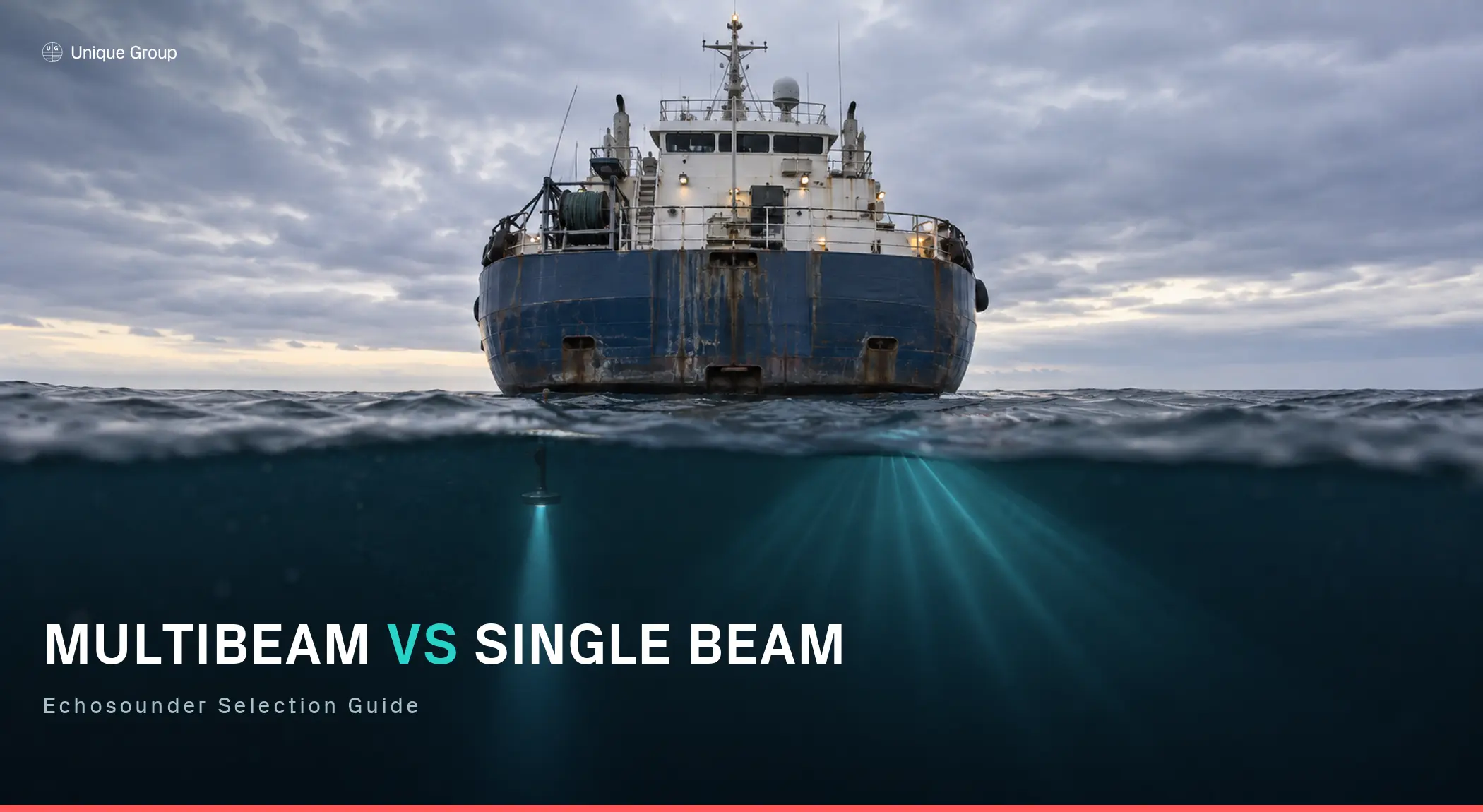
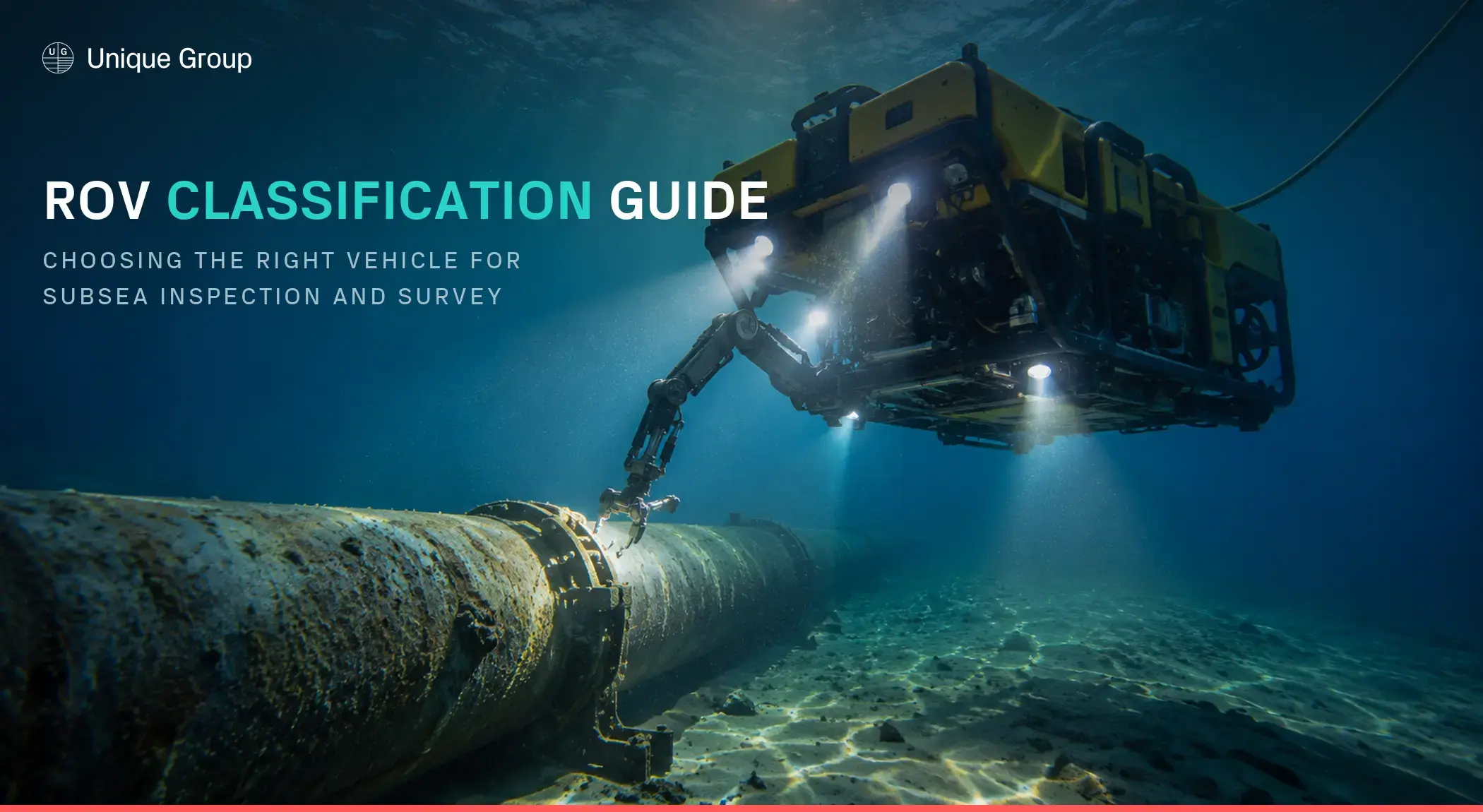
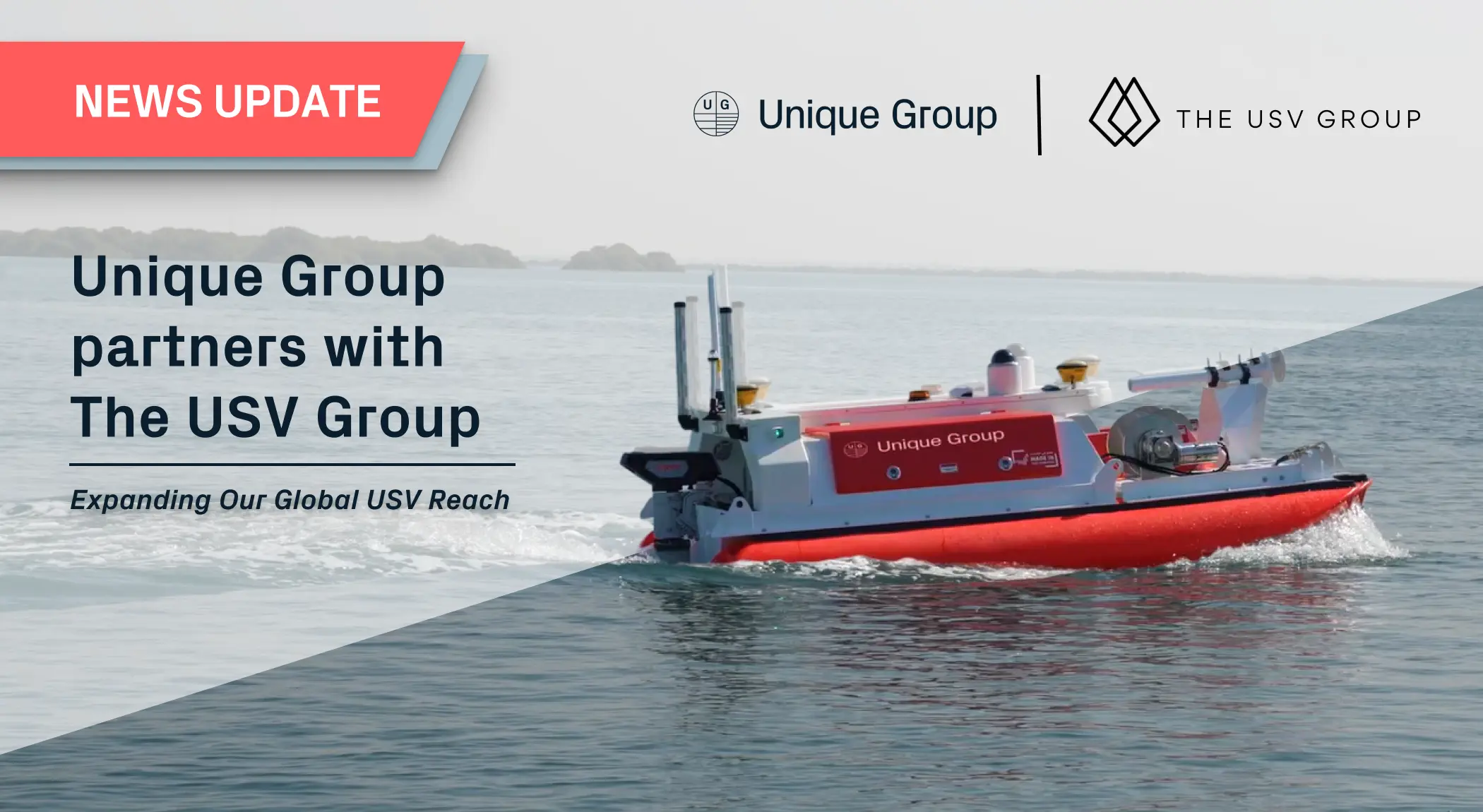
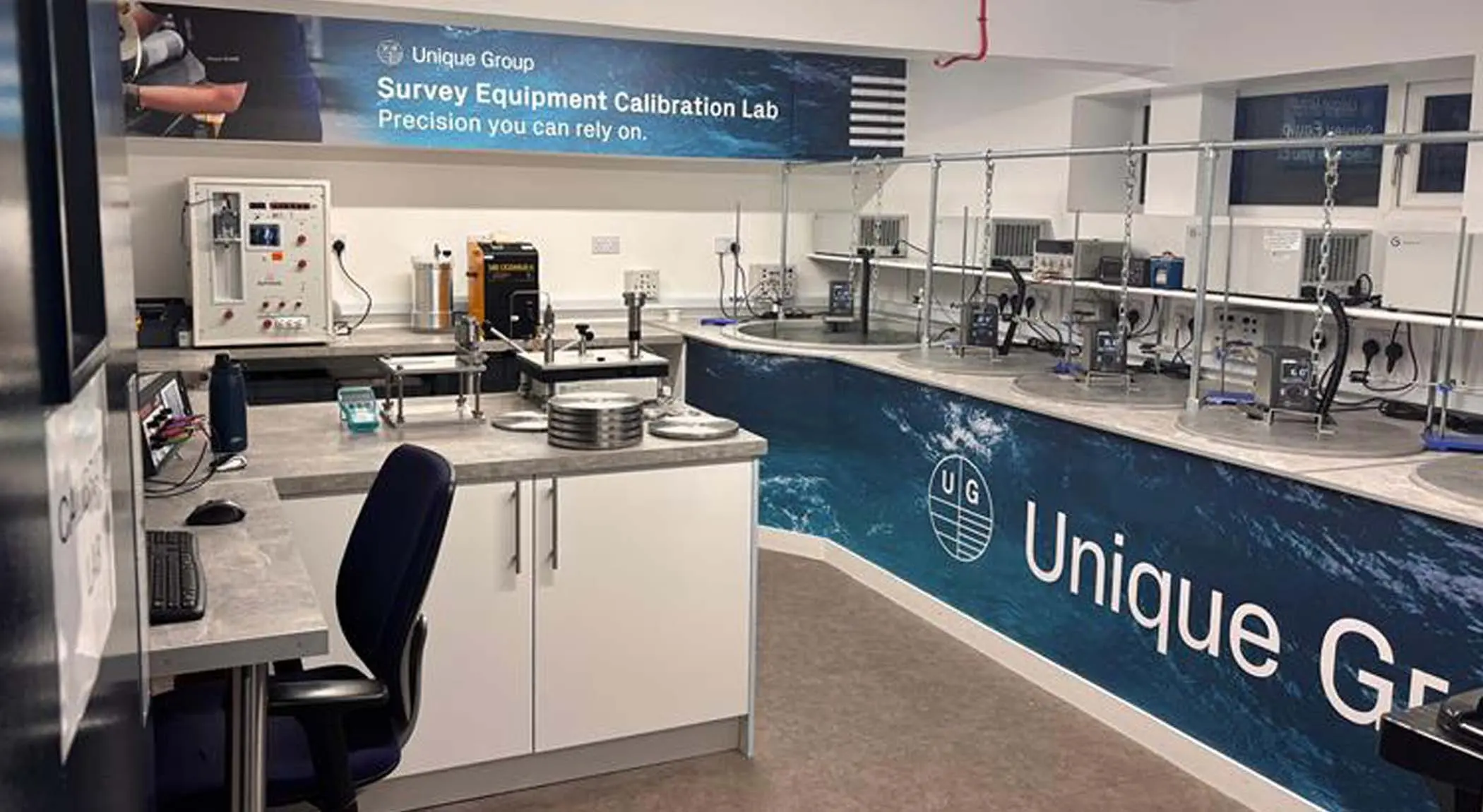
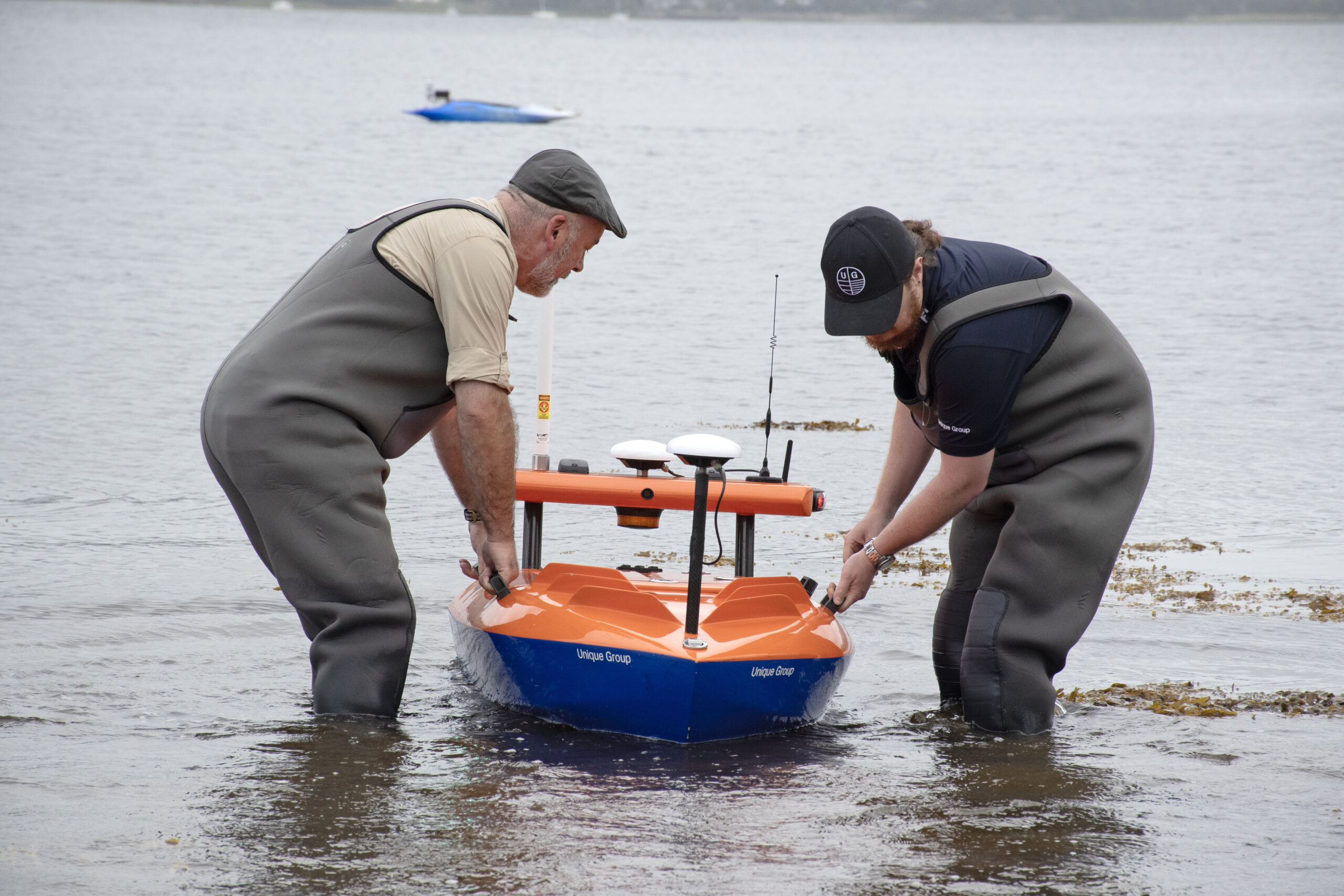
Unique Group supports this phase using a comprehensive portfolio of inspection and geophysical survey tools, including multibeam echosounders, side-scan sonar, and sub-bottom profilers. Unmanned Surface Vessels (USVs) — including the Uni-Pact and Uni-Max — are deployed for hydrographic and geophysical surveys, including in deeper offshore environments where manned survey approaches are less efficient. For close-access structural inspection, inspection-class ROVs are available globally at Unique Group, providing visual and ultrasonic assessment of jacket members, welds, anodes, and marine growth accumulation.
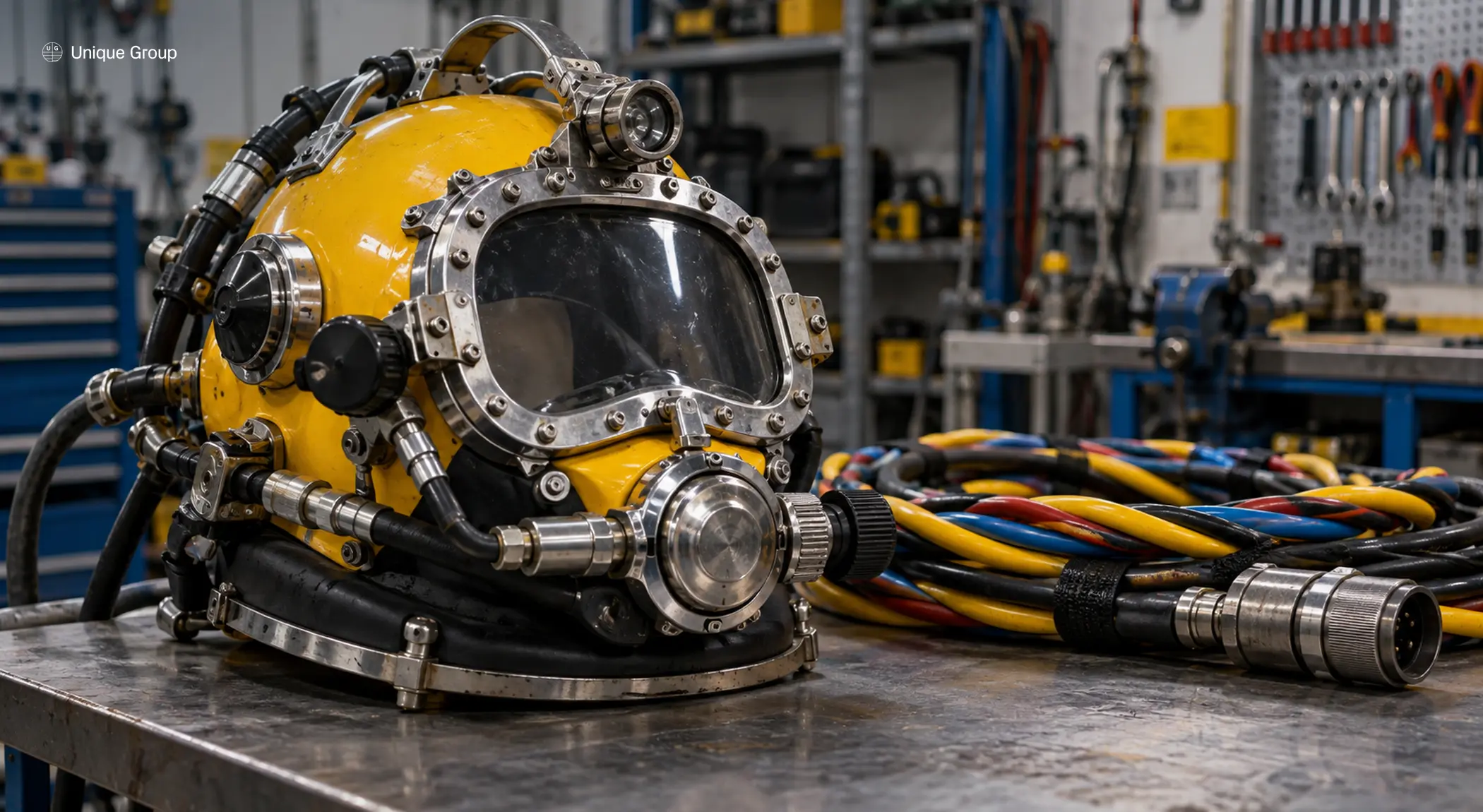
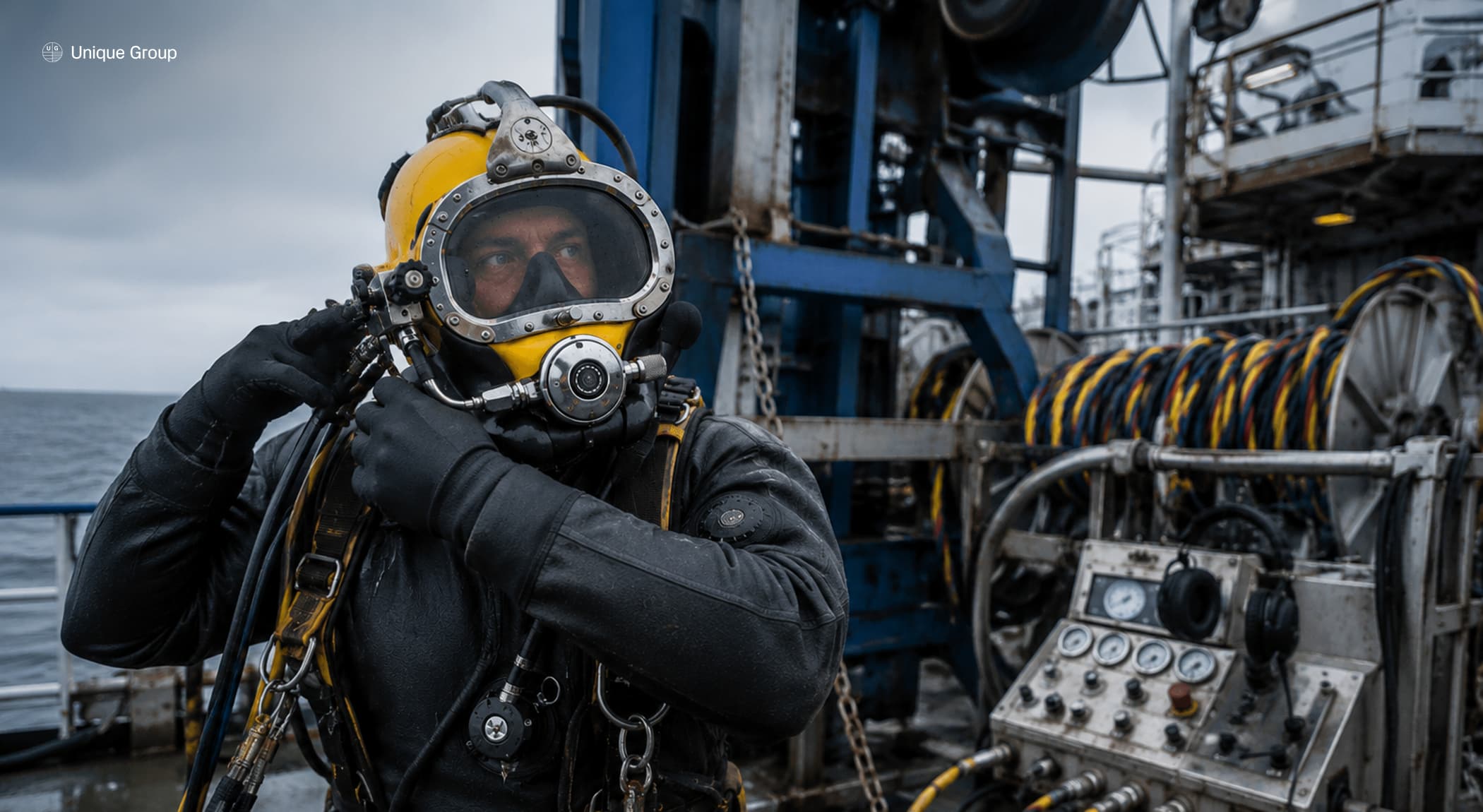
Diving support plays an important role in platform decommissioning, particularly for near-surface inspection, manual preparation tasks, and interventions in the zone between the surface and the practical operating depth of an ROV. Unique Group’s diving and life support capability covers surface supply diving for these shallow-water preparation scopes.
Buoyancy-Assisted Removal
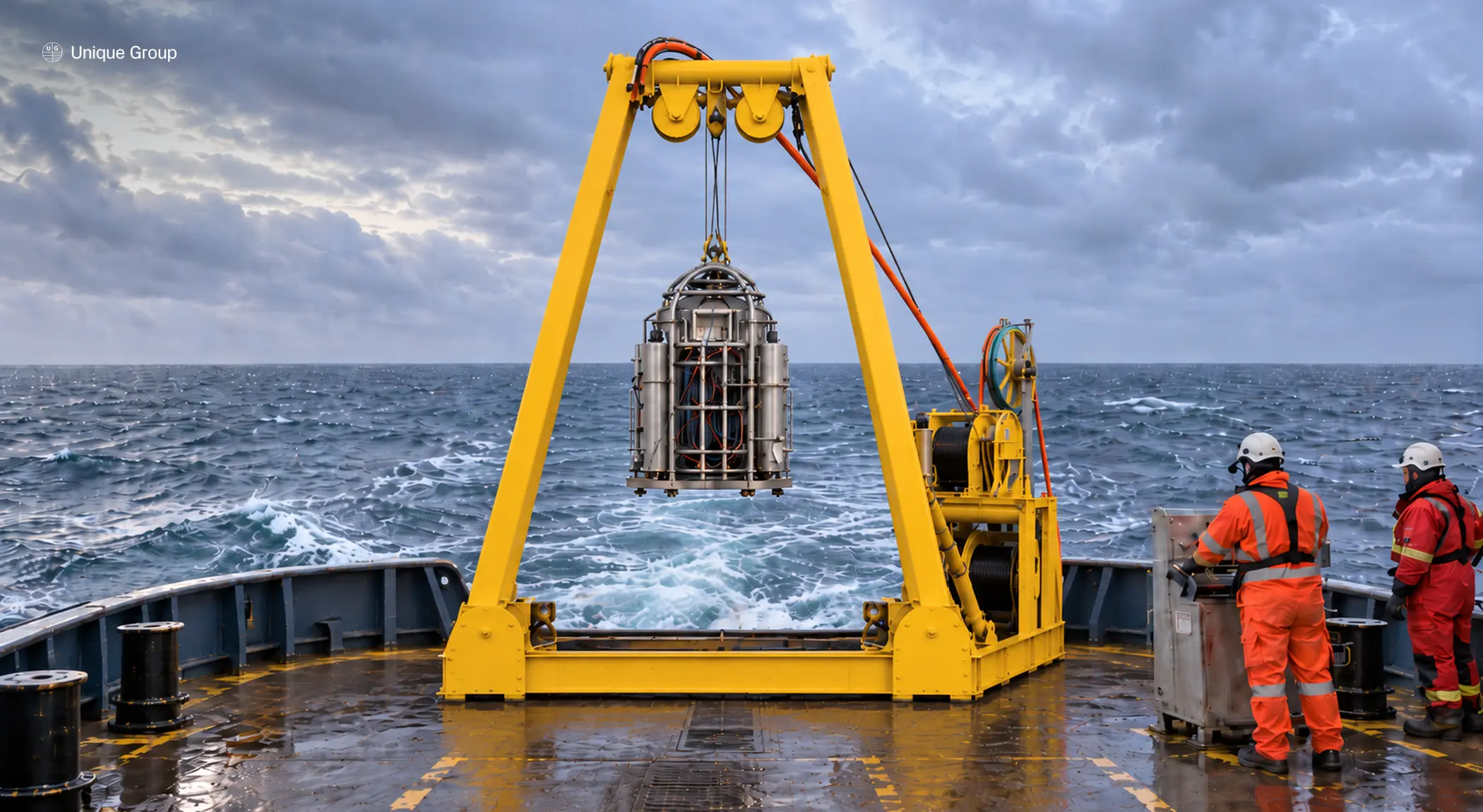
Where a conventional single-lift heavy crane vessel is not the most practical or cost-effective solution, buoyancy can play a significant role in platform removal. Unique Group’s Seaflex® buoyancy solutions — engineered, reusable subsea buoyancy modules — are used in platform removal operations to provide controlled uplift during jacket severance and recovery. Buoyancy-assisted removal reduces the peak lifting load on the crane vessel and can provide greater control over ascent rates during the recovery of large structural sections.
Jacket Severance
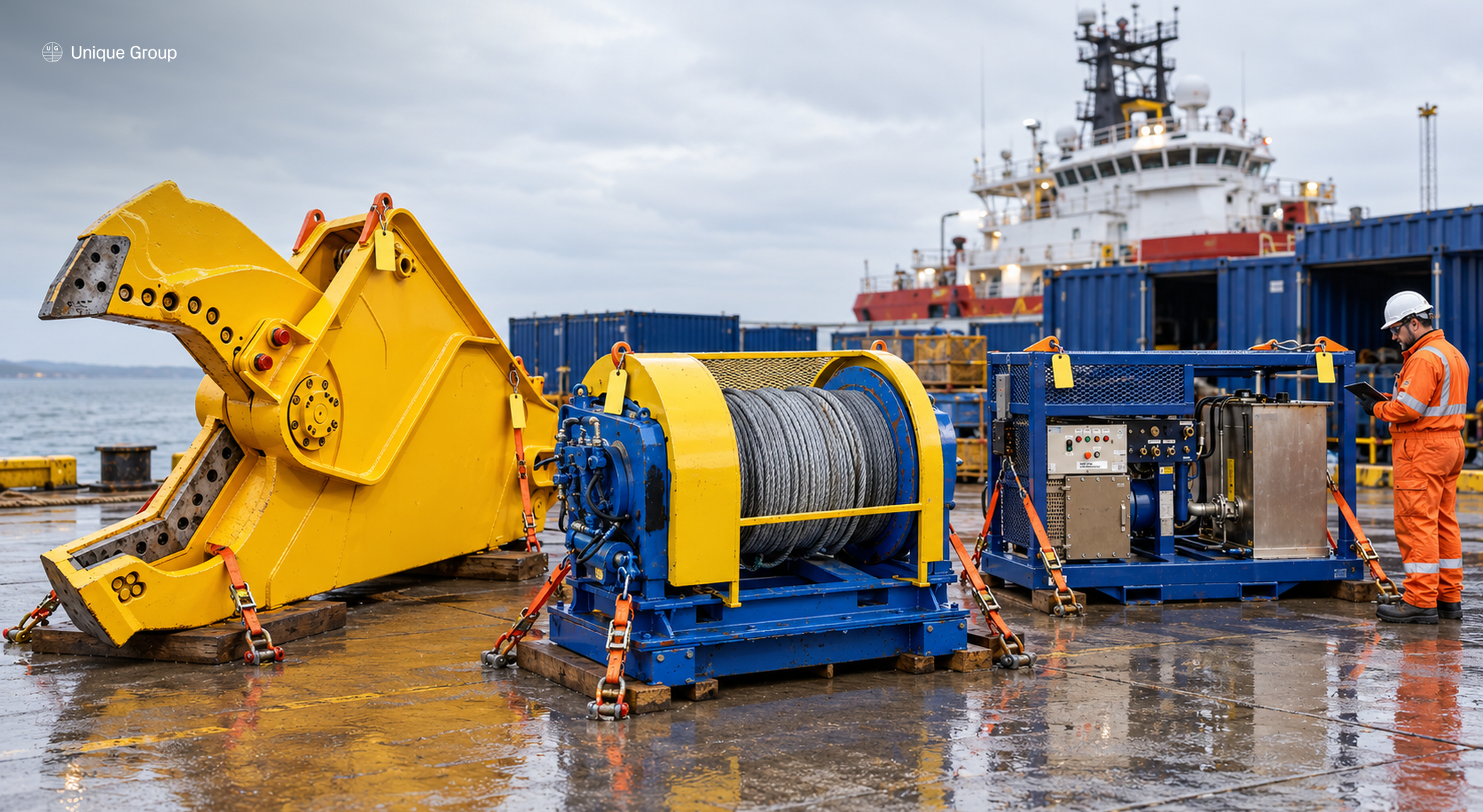
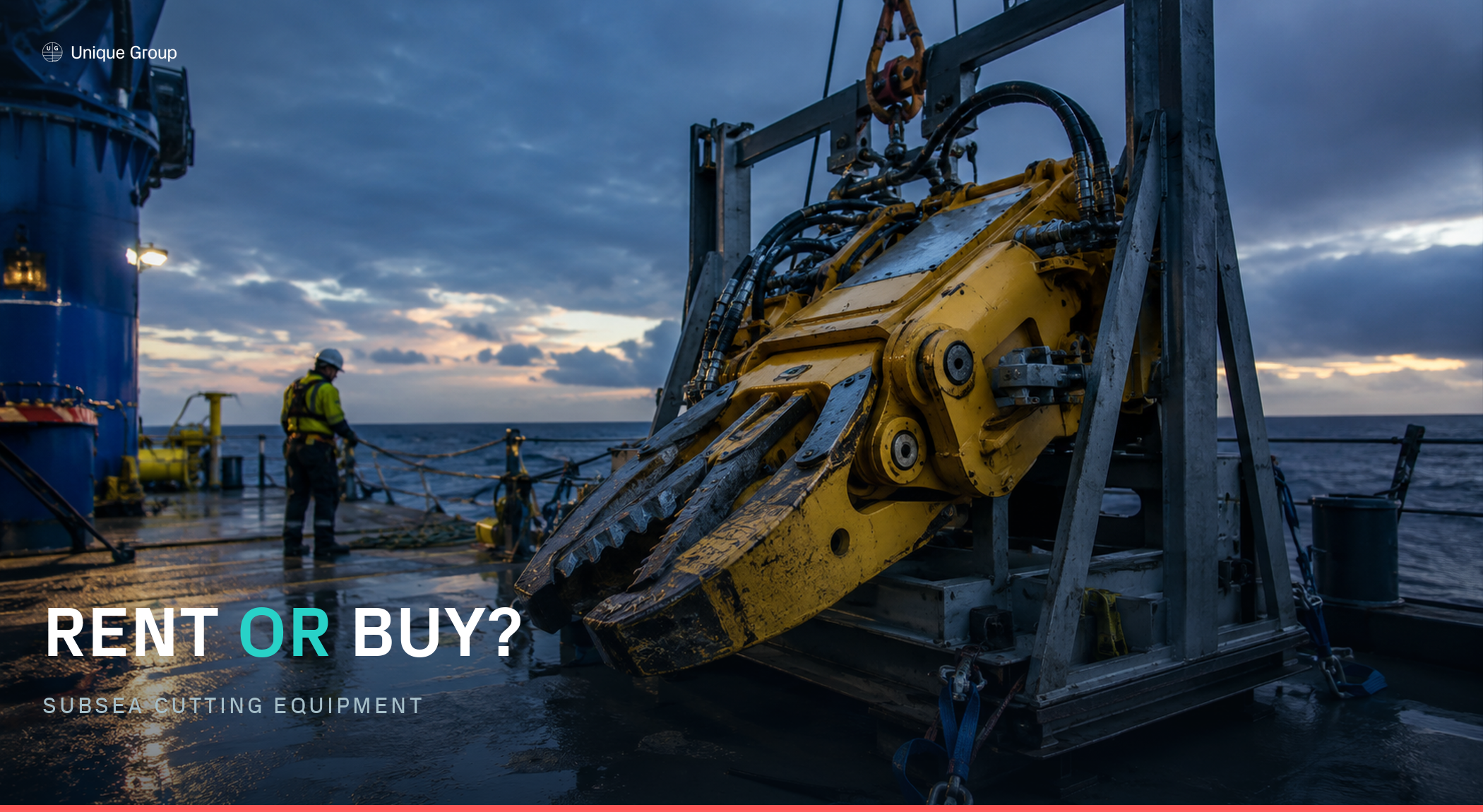
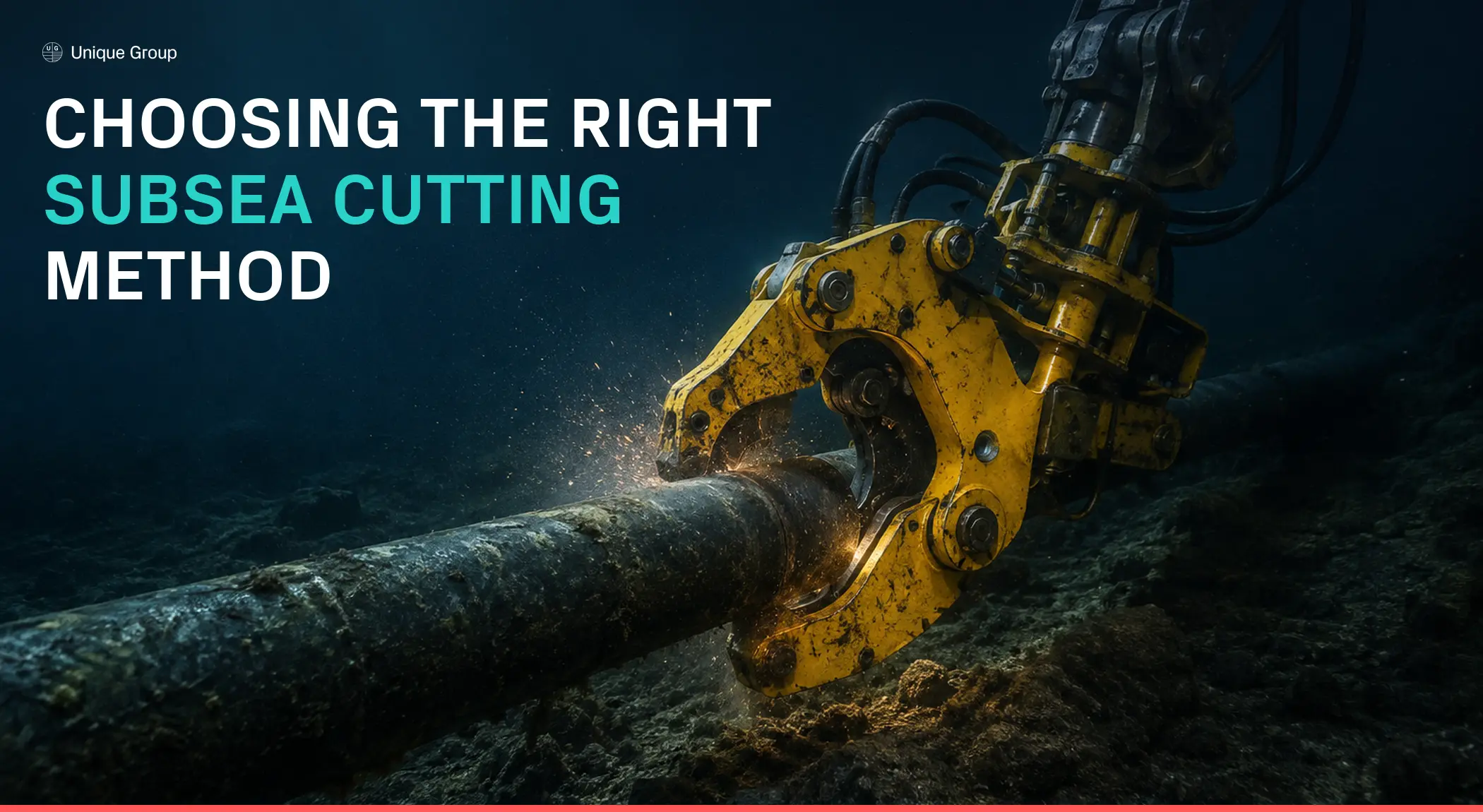
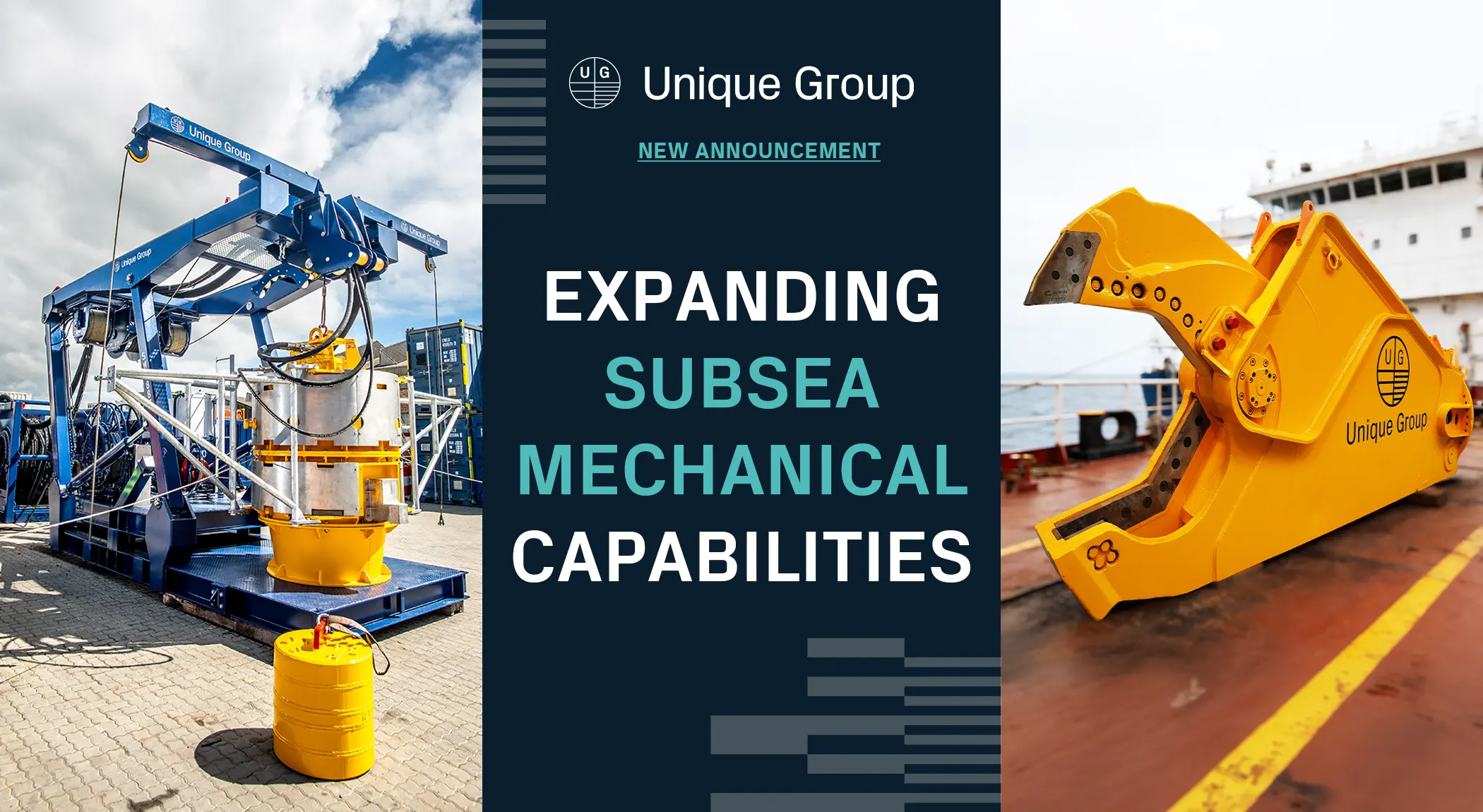
Jacket piles and conductors must be cut subsea, typically using mechanical saws, hydraulic shears, or abrasive waterjet systems depending on the material, wall thickness, and the space available for tooling deployment. Unique Group’s Subsea Hydraulic Shear system delivers a cutting force of 1,850 tonnes with a jaw opening of 965mm, capable of cutting pipelines and structural members up to 36″ diameter with 1.5″ wall thickness — making it well suited to the heavy structural members found in jacket legs and piles.
Pipeline Decommissioning: Cleaning, Isolation, and Responsible Retirement
Subsea pipelines present a distinct set of challenges. The global subsea pipeline network spans more than 150,000 kilometres, and a growing proportion of that infrastructure is now approaching end of life. Pipeline decommissioning is technically demanding, environmentally sensitive, and — critically — involves a decision that must be made before operational planning can begin.
Leave in Place, Trench and Bury, or Full Removal?
The fate of a decommissioned pipeline is not always the same. Operators, regulators, and environmental consultants must collectively determine the most appropriate end-of-life route for each pipeline, taking into account its location, size, condition, contents, seabed type, environmental sensitivity, and the regulatory requirements of the jurisdiction.
Three primary options exist:
Leave in place – the pipeline remains on the seabed, cleaned and sealed, and subject to post-decommissioning monitoring obligations. This is typically only accepted where full removal is demonstrably impractical or where the pipeline poses no material environmental risk in its current state.
Trench and bury – the pipeline is cleaned, isolated, and buried beneath the seabed. This removes it from the risk of trawl gear interaction and surface vessel anchor strikes, but does not eliminate long-term monitoring obligations.
Full removal – the pipeline is cleaned, dewatered, cut into recoverable sections, and brought to surface for onshore recycling or disposal. This is the most environmentally complete outcome and increasingly the preferred position of regulators — particularly under frameworks such as OSPAR, which governs decommissioning across the North-East Atlantic.
The decision is driven by technical, regulatory, and environmental assessment — not operator preference alone. Early engagement with the relevant regulatory body is essential.
Cleaning, Flushing, and Isolation
Regardless of the chosen end-of-life route, the pipeline must first be thoroughly cleaned and isolated to prevent hydrocarbon release into the marine environment. This typically involves:
- Pigging: deploying mechanical or foam pigs to push product out of the line and into a receiving facility
- Chemical cleaning: gel slugs and cleaning chemicals are used to remove wax, scale, and hydrocarbon residues that mechanical pigging alone cannot clear
- Dewatering and drying: swabbing and nitrogen purging to remove liquid from the pipeline interior
- Isolation and sealing: engineered clamps, plugs, and environmental sealing systems are used to permanently seal pipeline ends and any open connections
Unique Group’s Bespoke Engineering division has over two decades of experience designing, manufacturing, testing, and installing customised subsea clamps, seals, and pipeline isolation tools. The SIClamp® — a DNV GL type approved Structural Pipeline Repair Clamp — can be deployed by divers or ROV in both shallow and deep water, and is used in pipeline isolation applications during the decommissioning preparation phase. Where no off-the-shelf solution exists, Unique Group engineers work directly with the client to design and manufacture a project-specific solution.
Cutting, Recovery, and Post-Cut Handling
Where a pipeline is being fully removed, subsea cutting and recovery operations follow cleaning and isolation. Hydraulic shear systems or rotary saws are used to cut the pipeline into sections at manageable intervals, which are then recovered to surface.
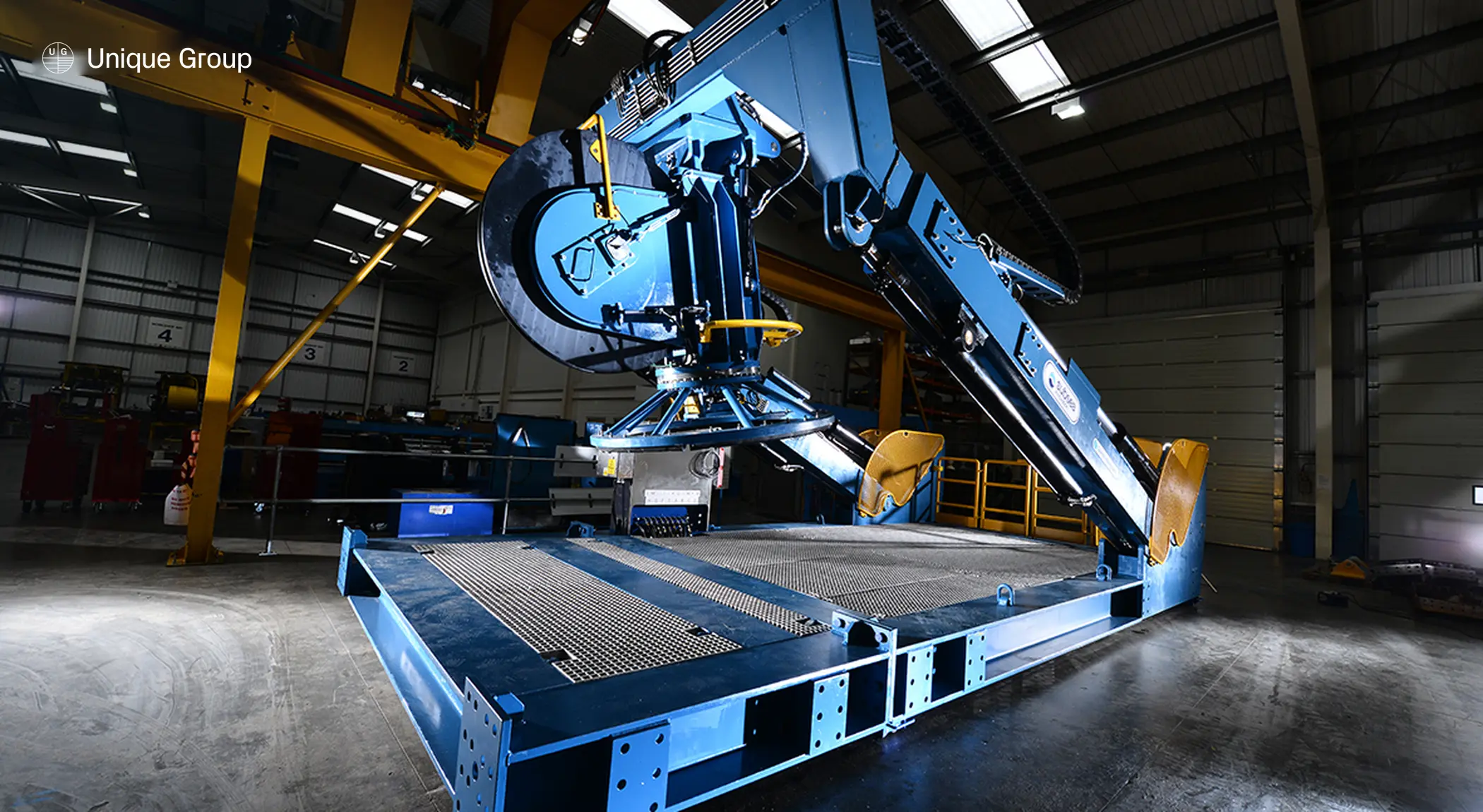
Unique Group’s 16Te Twin Subsea Pipe Recovery Tool is specifically designed for this phase. The modular twin-grab system enables controlled lifting and recovery of cut pipeline sections — including bundled pipelines — with a maximum capacity of 16 tonnes and compatibility for pipelines up to 36″ (915mm) diameter. Its ROV-compatible design integrates into standard subsea mechanical spreads and reduces the number of individual lift cycles needed across a removal campaign, improving productivity and reducing vessel time.
The Subsea Hydraulic Shears (1,850Te) handle the cutting phase, with the recovery tool then engaging the cut section for controlled ascent to the surface. The two systems are designed to work together within an integrated mechanical spread.
Subsea Systems Decommissioning: Wellheads, Manifolds, and Seabed Infrastructure
The third and most technically varied category covers the subsea infrastructure that connects wells to production systems — wellheads, Christmas trees, manifolds, templates, flowlines, umbilicals, suction piles, and associated structures. Each element has its own removal requirements, and the seabed around these assets is often heavily loaded with buried infrastructure, debris, and drill cuttings accumulated over decades of operation.
1. Pre-Operations Survey and Seabed Assessment
Before any subsea structure is touched, a detailed pre-operations survey is required. This maps the location and condition of all assets to be removed, identifies buried infrastructure that may interfere with cutting or lifting operations, establishes the seabed condition around foundations and pile penetrations, and provides the data needed for intervention planning.
Unique Group provides this capability using multibeam echosounder systems, side-scan sonar, sub-bottom profilers, and ultra-short baseline (USBL) acoustic positioning for precise tracking of ROVs and subsea tools during operations. Survey data is gathered both from surface vessels and — in deeper water or remote environments — from USVs.
2. Seabed Preparation and Excavation
Subsea structures are frequently partially or fully buried, surrounded by accumulated drill cuttings, or overlain by rock dump placed during field life for protection. Before cutting or lifting can begin, the structure must be exposed and the surrounding seabed prepared.
This is where Unique Group’s proprietary Uni-FlowX Controlled Mass Flow Excavation (CMFE) system provides a significant operational advantage. The Uni-FlowX uses controlled mass flow of water — without direct physical contact with the seabed — to excavate sediment around buried structures in a precise and controlled manner. This eliminates the risk of mechanical damage to the asset being recovered and significantly reduces the sediment plume compared to conventional jetting systems.
Unique Group operates a fleet of two Uni-FlowX CMFE units, both of which are available for decommissioning campaigns. The system is ROV-deployed and suitable for a range of subsea decommissioning preparation scopes, including pipeline and cable de-burial, suction pile exposure, and mud mat clearance prior to jacket removal. Its performance in difficult seabed conditions has been demonstrated across live offshore operations in challenging environments.
3. Cutting and Recovery
Once exposed and prepared, subsea structures are cut and recovered using a combination of mechanical tools selected for the specific asset type and material. Wellheads and conductor casings require internal or external casing cutters; rigid pipelines and flowlines use hydraulic shears or rotary saws; flexible lines and umbilicals require shears or hydraulic grabs; suction piles require pile extraction tools following controlled flooding and release.
Unique Group’s Subsea Hydraulic Shear system handles the heavy-duty structural cutting requirements across this scope. The 16Te twin-grab pipe recovery tool manages the post-cut recovery of flowlines and pipeline sections. Inspection-class ROVs — available globally — provide real-time visual monitoring of all cutting and recovery operations and support accurate tooling placement.
4. Debris Clearance and Seabed Verification
Post-removal debris clearance is a regulatory requirement in most jurisdictions. Once structures have been removed, the seabed must be surveyed and any remaining debris — cut metal, gravel bags, protective coatings, anode fragments — identified and recovered. Survey data is compared against the pre-operations baseline to demonstrate clearance to the required standard.
Unique Group’s survey capability supports this post-clearance verification phase directly, with the same equipment and teams that conducted the pre-operations survey able to deliver the final seabed clearance data needed for regulatory sign-off.
Why Operators Choose an Integrated Decommissioning Partner
Offshore decommissioning programmes are not simple procurement exercises. They typically run across multiple years, involve dozens of distinct scopes, require careful sequencing, and depend on equipment and personnel being available in the right place at the right time.
Fragmented supply chains – where survey, diving, mechanical, buoyancy, and lifting services are all sourced from different vendors — introduce unnecessary interfaces, increase project management overhead, and multiply the risk of gaps in responsibility. When something goes wrong in a multi-vendor environment, establishing accountability is complex and costly.
An integrated provider reduces those interfaces. A single organisation supplying survey tools, inspection ROVs, seabed excavation systems, cutting tools, recovery tools, buoyancy equipment, and diving support across a single project means fewer handovers, clearer lines of responsibility, and a project team that has worked across all these systems together.
Unique Group’s approach to decommissioning is built around this model. With a global fleet of equipment available for both sale and rental — reducing client CAPEX and consolidating vendor management — and an in-house engineering department capable of designing bespoke tooling where standard solutions don’t exist, the company supports operators, EPCIs, and marine contractors across the full scope of decommissioning, from initial survey to final seabed verification.
Operational coverage spans 18 locations across the United States, United Kingdom, Europe, the Middle East, and Asia Pacific — meaning the right equipment and the right people are accessible regardless of where the asset sits.
Unique Group supports offshore decommissioning programmes across all three asset categories — platforms, pipelines, and subsea systems — with an integrated range of survey, mechanical, diving, buoyancy, and bespoke engineering solutions. Learn more about our full decommissioning solutions, or visit our decommissioning industry page for an overview of how we support operators at every stage.
Speak with our decommissioning specialists to discuss your project requirements.
Frequently Asked Questions
What is the difference between platform topsides and jacket decommissioning?
Topsides are the operational structures above the waterline and are usually removed first after hydrocarbons and hazardous materials are cleared. The jacket is the substructure between the waterline and seabed, which must be cut below the mudline before removal. Each stage requires different inspection, lifting, and cutting methods.
Can a subsea pipeline be left in place rather than removed?
Yes, in some cases. The decision depends on environmental risk, seabed conditions, pipeline condition, and regulatory approval. Options may include leaving the pipeline in place, trenching and burying it, or full removal after cleaning, isolation, and assessment.
What equipment is needed for subsea pipeline decommissioning?
Pipeline decommissioning may require pigging and cleaning equipment, isolation tools, engineered clamps, subsea cutting tools, pipe recovery systems, ROVs, and survey equipment for pre- and post-decommissioning verification.
How does seabed excavation support decommissioning operations?
Seabed excavation exposes buried or partially buried assets such as pipelines, suction piles, and wellheads before cutting or recovery. Controlled excavation systems such as Uni-FlowX CMFE help prepare the seabed while reducing the risk of asset damage and supporting accurate tool deployment.