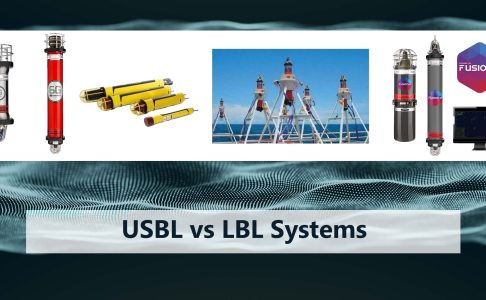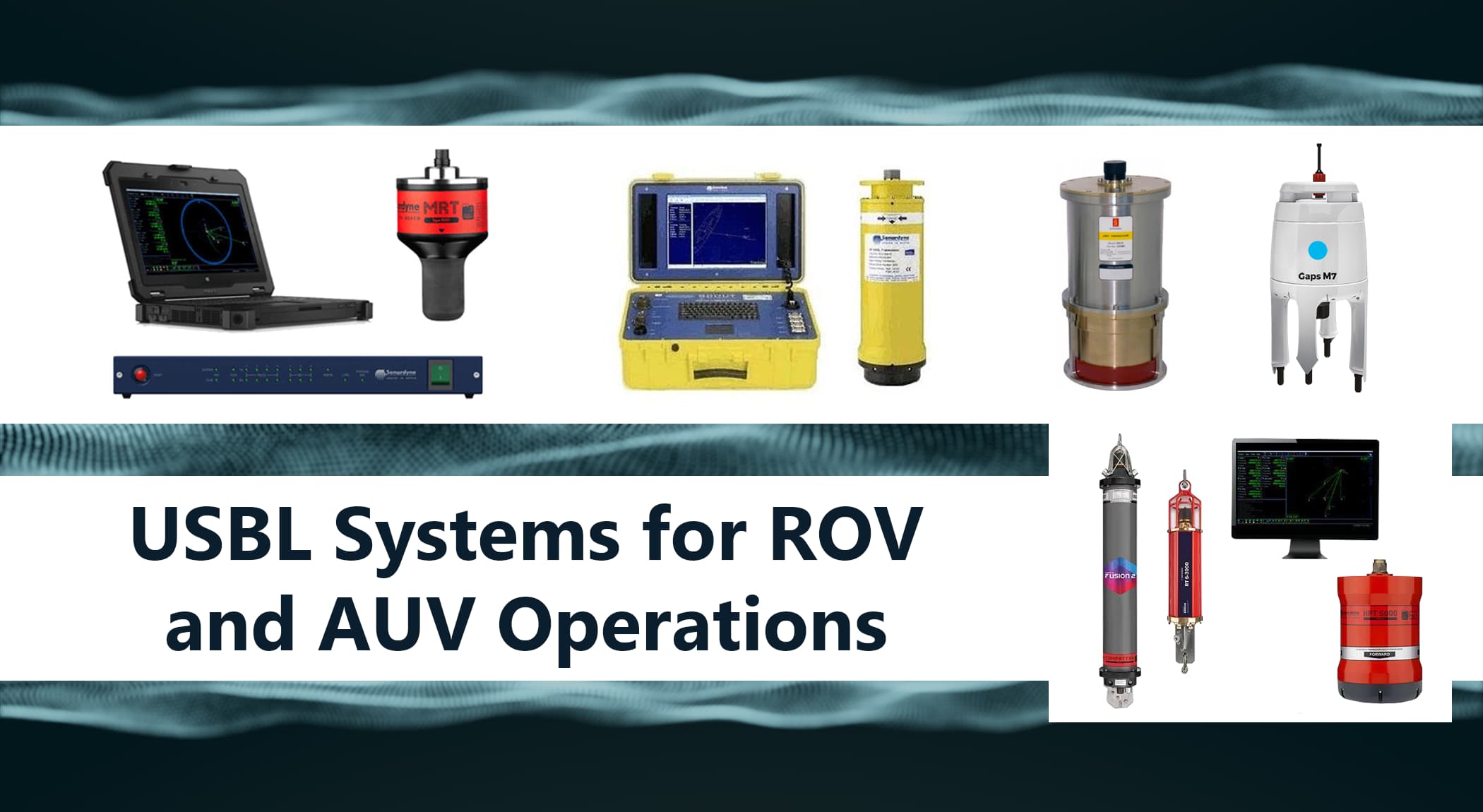
Underwater operations involving Remotely Operated Vehicles (ROVs) and Autonomous Underwater Vehicles (AUVs) require precise positioning and navigation, with Ultra-Short Baseline (USBL) systems playing a crucial role in achieving this accuracy. A USBL system determines the position of a subsea transponder relative to a vessel-mounted transceiver by measuring acoustic ranges and bearing angles, with this relative position then georeferenced using surface GNSS and heading information to enable accurate tracking during subsea operations. Overall USBL accuracy is influenced by several external factors, including vessel motion reference units (MRU), gyro accuracy, sound velocity profiles (SVP), transponder geometry, and proper system calibration, making the selection of the right USBL system essential for marine, diving, and survey applications.
Key Takeaways
- USBL systems enable accurate ROV and AUV positioning by measuring acoustic range and bearing between a vessel-mounted transceiver and a subsea transponder, with positions georeferenced using GNSS and heading data.
- Positioning accuracy depends on multiple external factors, including MRU and gyro performance, sound velocity profiles, transponder geometry, and proper calibration procedures.
- System selection should consider accuracy, range, and hardware compatibility, particularly the ability to interface with INS, DVL, depth sensors, and ROV control systems.
- Environmental conditions influence USBL performance, especially in shallow or acoustically challenging waters where multipath effects, noise, and stratification can occur.
- Effective implementation requires correct installation and ongoing support, including appropriate mounting, offset measurements, calibration, training, and technical assistance throughout the project lifecycle.
Key Features to Consider When Choosing a USBL System
Accuracy and Range
The primary function of a USBL system is to provide accurate positioning data. Systems like the Sonardyne Ranger 2 and the Exail GAPS M7 are renowned for their high accuracy and extensive range capabilities, making them ideal for deep-water operations.
Hardware Compatibility
Ensuring compatibility with existing equipment is crucial. USBL systems like the Sonardyne Scout and Kongsberg µPAP Compact are designed to integrate seamlessly with a variety of ROV and AUV systems, providing flexibility in various underwater projects.
Integration considerations may include interfacing with INS, DVL, depth sensors, and ROV control systems to ensure reliable data fusion and navigation performance.
Operational Environment
The environmental conditions under which the USBL system will operate can greatly influence your choice. USBL performance can be affected by shallow-water multipath effects, acoustic noise, water column stratification, and sound velocity variations. Some systems offer advanced filtering, aiding sensor integration, and flexible deployment options to help mitigate these challenges.
Systems like the Exail GAPS M5 are built to perform in challenging conditions, including shallow waters and areas with high levels of acoustic interference.
User Interface and Software
Advanced USBL systems come equipped with intuitive software solutions that enhance operational efficiency. The Sonardyne Micro Ranger 2 offers a user-friendly interface, making it accessible for technicians with varying levels of experience.
Operator software typically supports real-time tracking, quality indicators, diagnostics, and data export, all of which are critical for efficient offshore and nearshore survey operations.
Comparing Top USBL Systems for Marine Operations
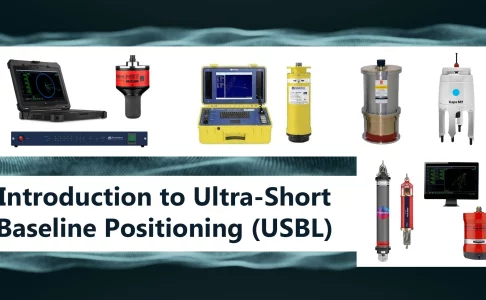
Unique Group offers a range of USBL systems tailored to meet diverse operational needs. Below are a selection of commonly deployed USBL systems based on operational requirements:
1. Sonardyne Micro Ranger 2: Ideal for nearshore operations, providing reliable tracking and easy deployment.
2. Exail GAPS M7: Known for its hybrid acoustic-inertial navigation and advanced processing and sensor aiding options, suitable for complex deep-sea missions.
3. Kongsberg µPAP Compact: Compact and versatile, perfect for smaller vessels and ROVs.
Special Features Worth Considering
Some USBL systems come with additional features that can enhance their performance:
Multi-target Tracking: Systems like the AAE Easytrak Nexus 2 offer advanced multi-target tracking capabilities, essential for complex field operations involving multiple underwater assets.
Integrated Gyro and Compass: The Sonardyne Gyro USBL transceiver includes integrated sensors that provide additional data points for enhanced positioning accuracy.
Some USBL systems can interface with integrated or external gyrocompasses, MRUs, and heading sensors, providing improved stability and positioning confidence during dynamic vessel operations.
Implementing USBL Systems in Your Operations
Integrating a new USBL system into your operational setup involves understanding the installation requirements and operational training. Unique Group’s team of experts is ready to assist with installation support, comprehensive training, and post-installation troubleshooting to ensure optimal performance and longevity of your USBL system.
Key implementation considerations include transceiver mounting (hull-mounted or over-the-side pole), accurate offset measurements, patch testing or calibration procedures, and sound velocity profiling to ensure optimal absolute positioning accuracy.
Why Choose Unique Group for Your USBL Needs?
Unique Group stands out as a leader in providing cutting-edge marine technology solutions. Our extensive catalogue, including top brands like Sonardyne and Kongsberg, ensures that you find the perfect USBL system tailored to your specific needs. With decades of expertise and a commitment to quality, Unique Group is your trusted partner in enhancing underwater operational efficiency.
We support USBL systems through rental, sales, mobilisation, offshore technical support, training, and long-term servicing, ensuring reliability across the full project lifecycle. With decades of expertise and a commitment to quality, Unique Group is your trusted partner in enhancing underwater operational efficiency.
Conclusion
Choosing the right USBL system is crucial for the success of ROV and AUV operations. By considering factors such as accuracy, compatibility, environmental conditions, and unique features, you can select a system that not only meets but exceeds your operational requirements.
USBL systems are frequently used in conjunction with INS and DVL sensors to constrain navigation drift and improve positional confidence, particularly during long-duration AUV missions. Explore our advanced USBL solutions tailored for marine operations. Contact Unique Group today for expert advice and custom options.