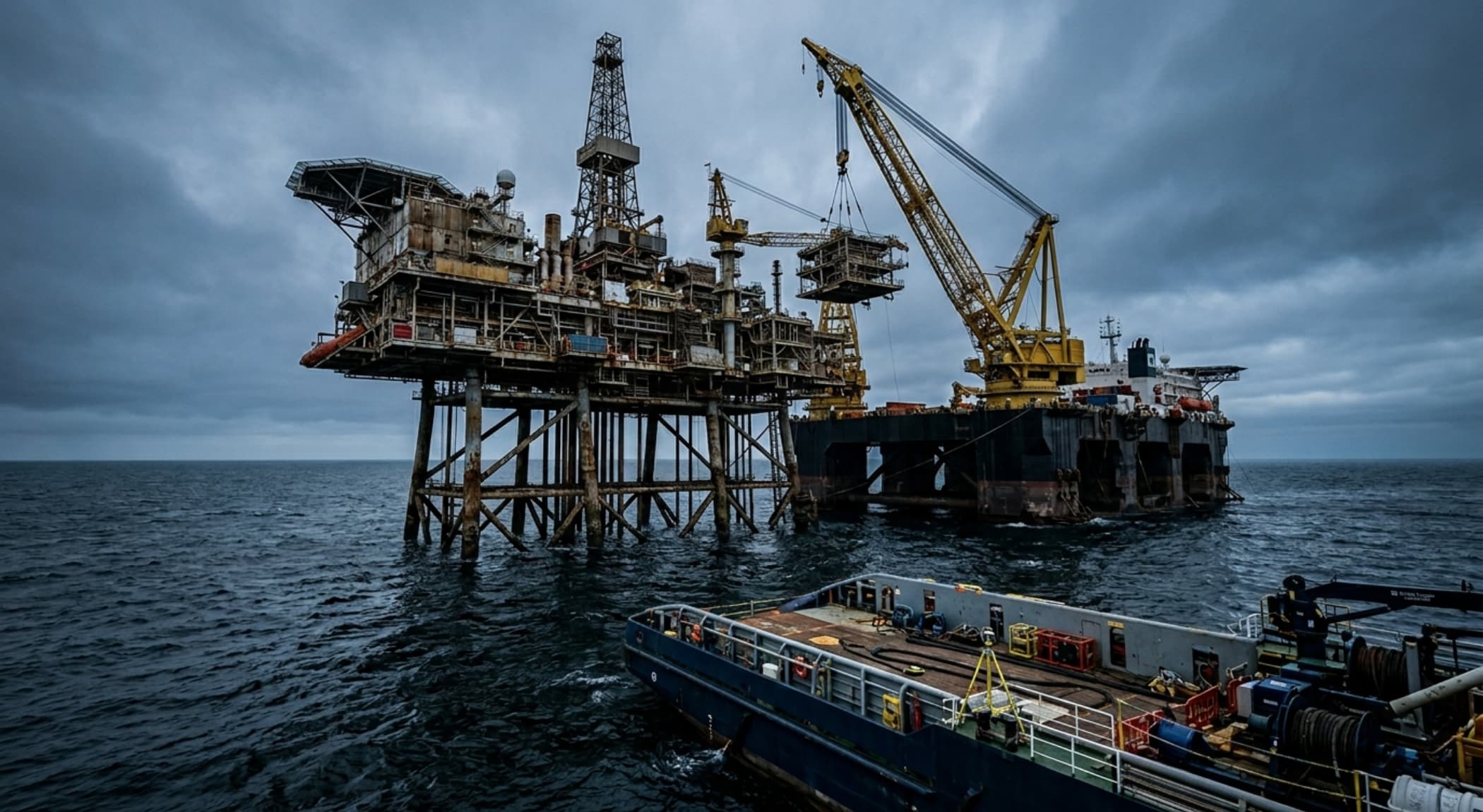
Offshore decommissioning has become one of the most technically demanding disciplines in the energy sector. Thousands of platforms, subsea systems, and pipelines are reaching the end of their operational life across the North Sea, Southeast Asia, the Middle East, and beyond. The equipment used to retire them safely is as critical as the engineering that originally put them in place.
Selecting the right technology for a decommissioning programme is not straightforward. Every project involves a different combination of asset types, water depths, seabed conditions, regulatory requirements, and environmental constraints. Understanding which equipment categories apply, and when, is essential for operators, EPCIs, and marine contractors planning complex campaigns.
This article covers the core technology and equipment categories used in offshore decommissioning, from pre-operations survey through to final seabed verification.
Pre-Decommissioning Survey Equipment
Accurate baseline data is the foundation of any decommissioning programme. Before physical work begins, operators require a detailed, verified picture of the asset and the surrounding seabed: its structural condition, debris field, environmental sensitivities, and spatial context.
Survey equipment used at this stage typically includes:
- Multibeam Echosounder (MBES) systems for high-resolution bathymetric mapping of the seabed and structure footprint. MBES data informs lifting plans, pipeline routes, and debris clearance strategies.
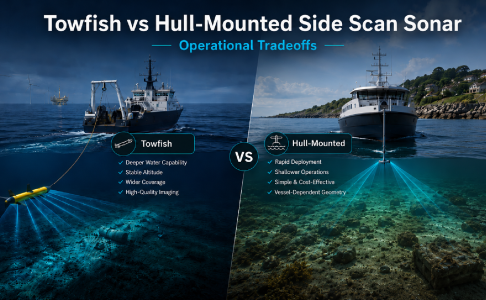
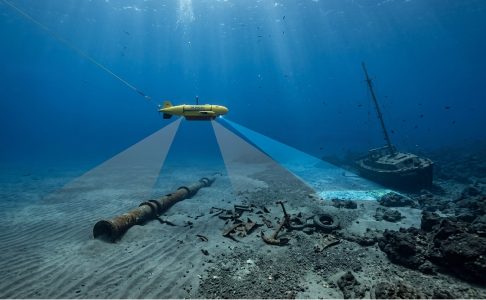
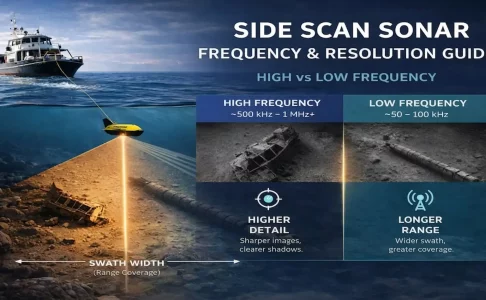
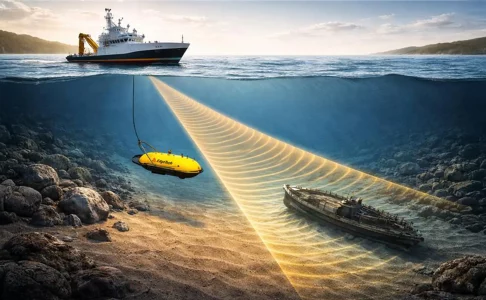
- Side-scan sonar for broad-area seabed imaging to detect debris, anomalies, and the extent of any scour or marine growth around structure bases.
- Sub-bottom profilers (SBP) to characterise the seabed stratigraphy and identify buried infrastructure, which is critical where pipelines or cables may have been covered by sediment migration over the lifetime of the field.
- USBL (Ultra-Short Baseline) positioning systems to accurately locate subsea assets, ROVs, and deployed instrumentation during the survey phase.
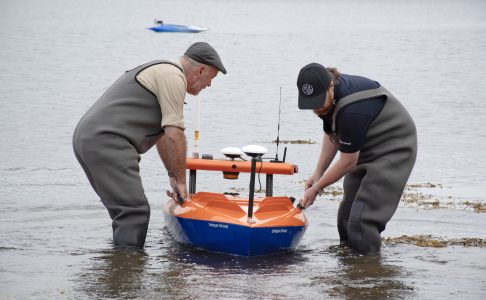
- Autonomous or Unmanned Surface Vessels (USVs) are increasingly used for pre-decommissioning geophysical surveys, particularly in areas where manned survey vessels are operationally expensive or logistically impractical. Unique Group’s USVs, the Uni-Pact and Uni-Max, are deployed for hydrographic and geophysical surveys in offshore decommissioning planning.
(Survey data accuracy directly affects lifting calculations and regulatory compliance at post-decommissioning verification. Early investment in quality survey data is one of the highest-ROI decisions in any decommissioning campaign.) Explore Unique Group’s survey equipment range.
Subsea Positioning Systems
Precise positioning underpins every phase of active decommissioning, from ROV deployment during inspection through to structure removal and final seabed clearance verification.
- USBL (Ultra-Short Baseline) systems are the most commonly deployed positioning method for decommissioning operations. A transceiver mounted on the vessel hull communicates with transponders on ROVs or deployed tools to provide real-time 3D position data. USBL systems are well-suited to shallow and mid-water decommissioning work where a single vessel-mounted reference is sufficient.
- LBL (Long Baseline) positioning uses an array of seabed-mounted transponders to achieve higher accuracy over larger working areas or in deeper water. LBL is used where USBL accuracy degrades, typically in deeper projects or where the vessel cannot maintain a consistent overhead position.
- SSBL (Super Short Baseline) systems offer improved accuracy in compact transducer arrays and are used where deck space or installation constraints limit a full USBL deployment.
In decommissioning, accurate positioning is not only about operational efficiency. It directly affects safety. An ROV navigating close to a structure under tension, or a cutting tool being deployed to a specific pile location below the mudline, must be positioned with precision. Errors in positioning translate directly into execution risk. Explore Unique Group’s subsea positioning systems via our offshore solutions range.
Sonar Systems
Sonar technology plays a dual role in offshore decommissioning: it provides the environmental and structural awareness operators need during planning, and it delivers the real-time situational data teams rely on during execution.
- Side-scan sonar is used to generate detailed seabed imagery over wide survey corridors, identifying debris, marine growth accumulation, and any previously unrecorded objects in the clearance zone.
- Multibeam sonar produces high-density 3D point cloud data of the seabed and structure surfaces, used both pre-decommissioning for baseline mapping and post-decommissioning for clearance verification surveys.
- Scanning sonar mounted on ROVs provides close-range, real-time imaging during structure inspection and cutting operations. This is particularly important where visibility is low and the ROV pilot requires acoustic situational awareness to work safely around a degraded structure.
- Acoustic Doppler Current Profilers (ADCPs) are deployed to understand current profiles at the work site, information that directly affects ROV operability windows and the behaviour of suspended structures during removal lifts.
Post-decommissioning, sonar surveys confirm that the seabed has been returned to the required standard. Regulatory frameworks in most jurisdictions, including the UK, Norway, and Australia, require verified clearance data before a site can be signed off.
ROVs
Remotely Operated Vehicles (ROVs) are central to modern offshore decommissioning. They remove personnel from hazardous subsea environments while delivering the inspection, manipulation, and cutting capabilities that decommissioning requires.
- Inspection-class ROVs are used for visual and sonar-based assessment of structural condition, marine growth accumulation, corrosion mapping, and anode depletion surveys. They gather the data that informs removal engineering.
- Work-class ROVs are the primary execution tools for subsea decommissioning tasks. They carry hydraulic tooling packages that can include cutting equipment, torque tools, clamp deployment systems, and debris grab systems. Work-class ROVs operate to water depths that far exceed safe diver limits and are used throughout the active removal phase.
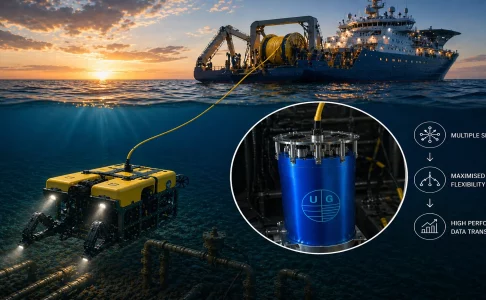
- Deep Trekker ROVs, available globally through Unique Group and with exclusive distribution across the Middle East, offer portable, deployable inspection and light intervention capability suited to nearshore, port, and shallow-water decommissioning scopes.
ROV selection for a decommissioning project depends on water depth, the physical nature of the tasks required, available deployment vessel, and the tooling required. Inspection-class vehicles are generally sufficient for survey and assessment phases; work-class vehicles are required once cutting, manipulation, or recovery operations begin.
Combined with real-time sonar systems, ROV teams gain situational awareness that would be impossible to achieve by camera alone, particularly in turbid water, around structure members with significant marine growth, or when working adjacent to unstable jacket sections.
Seabed Excavation and CMFE Equipment
One of the most frequently overlooked equipment categories in decommissioning planning is seabed excavation. Many offshore assets, including pipelines, pile casings, suction anchors, manifolds, and cable systems, are partially or fully buried beneath the seabed by decades of sediment accumulation. Before these assets can be cut, recovered, or verified as clear, the seabed must be carefully excavated around them.
Controlled excavation is also required to expose jacket piles below the mudline, where severance must be completed before the structure can be safely lifted.
Mass flow excavation (MFE) systems use high-volume, low-pressure water jets to fluidise sediment and displace it from around buried assets, without the structural damage risk associated with high-pressure jetting or mechanical dredging. This technique is suited to preparing the seabed around pipelines, pile clusters, and wellheads prior to cutting or recovery operations.
Unique Group’s Uni-FlowX is a purpose-built mass flow excavation system designed for subsea CMFE (Cutting, Milling, Farming, and Excavation) operations. It provides controlled exposure of buried assets while minimising unintended seabed disturbance, a key consideration in environmentally sensitive decommissioning zones.
(Seabed excavation requirements are often underestimated at the planning stage. Accurate sub-bottom profiler data from the pre-decommissioning survey phase is essential to scope excavation work correctly.)
Subsea Cutting Equipment
Once a structure has been surveyed, positioned, and the seabed prepared, cutting is the pivotal step that enables physical removal. Jacket piles, conductors, pipelines, manifold piping, and subsea cables all require precision severance.
Common cutting methods used in decommissioning include:
- Mechanical cutting using diamond wire saws, hydraulic shears, or abrasive cutting wheels. These methods are reliable in shallower water and on smaller-diameter structures where conventional tooling can be deployed from an ROV or diver work platform.
- Abrasive waterjet cutting uses high-pressure water and abrasive media to cut through steel at depth. This method is effective on complex cross-sections, multi-wall casings, and situations where mechanical contact cutting is impractical.
- Internal cutting tools are deployed inside conductors and casings, particularly for well abandonment preparation, to sever downhole casing strings cleanly without disturbing the cemented interval.
Cutting method selection depends on steel wall thickness, number of strings, water depth, access geometry, and the precision required. In all cases, the cut must be made at a location and angle that allows safe lift and does not create secondary hazards, which means positioning accuracy and pre-cut structural assessment are always prerequisites.
Unique Group offers bespoke engineering solutions for non-standard cutting requirements, drawing on in-house engineering design and fabrication capability.
Buoyancy and Lifting Equipment
Structure removal, whether topside, jacket, or subsea module, requires carefully managed lifting operations. In decommissioning, lifting is complicated by structural degradation, unknown load distributions, and the fact that original installation data may no longer reflect actual asset condition.
Buoyancy-assisted removal is an approach used where conventional crane vessel lift capacity is constrained or where controlled ascent rate is required. Buoyancy modules attached to the structure provide upward force that reduces the peak load on the crane and allows more controlled management of ascent dynamics.
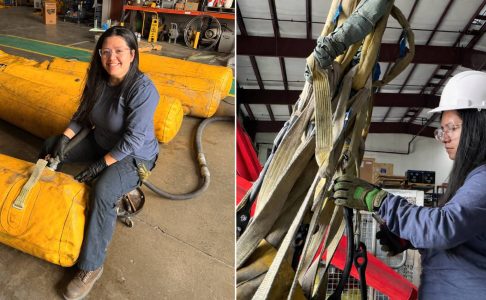
Unique Group’s Seaflex® buoyancy solutions, engineered and reusable subsea buoyancy modules, are used in platform removal operations to provide controlled uplift during jacket severance and recovery. Buoyancy-assisted removal reduces crane vessel dependency and can improve safety margins on heavy structural lifts.
Air lift bags are used for the recovery of smaller subsea items such as debris sections, cut pipe segments, concrete mattresses, and loose equipment, where a dedicated crane lift is impractical or disproportionate to the task.
Certified lifting equipment, including shackles, slings, pad eyes, and rigging hardware rated to the required Safe Working Load (SWL), must be verified before every lift. In decommissioning, where structures may have corroded or degraded attachment points, bespoke lift rigging is often required.
All lifting operations in decommissioning require load calculations based on current structural condition, not original installation engineering. Assumed weights from original project data are a known source of lift planning error.
Diving and Life Support Equipment
While ROVs have reduced the need for diver intervention in deeper decommissioning work, surface supply diving remains relevant, particularly for near-surface inspection, manual preparation tasks, and interventions in water depths below practical ROV operating cost thresholds.
Surface supply diving is used in decommissioning for:
- Pre-lift visual inspection of attachment points in the splash zone
- Manual clearing of marine growth and obstruction from lifting pad eyes and structural connections
- Final inspection of severed pile tops before lift
- Nearshore and port decommissioning scopes
Dive control and life support systems, including gas mixing panels, umbilicals, LARS (Launch and Recovery Systems), and dive bells, must be matched to the water depth and planned diver exposure duration. IMCA-compliant life support equipment is the standard for offshore decommissioning operations.
Unique Group’s diving and life support capability supports surface supply diving for shallow-water decommissioning preparation scopes, including LARS systems and associated life support equipment.
Integrated Solutions: Why Equipment Combination Matters
No single equipment category operates in isolation during a decommissioning programme. The data from survey equipment informs positioning requirements. Positioning accuracy enables safe ROV deployment. ROV inspection data drives excavation scope. Excavation enables cutting. Cutting enables lifting. Post-lift survey verifies clearance.
When these equipment categories are sourced from fragmented vendors, project interfaces multiply, bringing with them the risk of miscommunication, sequencing delays, and accountability gaps.
Operators and EPCIs increasingly favour integrated equipment providers who can supply across multiple decommissioning phases, reducing handover points, simplifying logistics, and keeping a single line of responsibility for equipment performance across the programme.
Unique Group supports offshore decommissioning across all technology categories covered in this article, with global equipment availability for both sale and rental, reducing CAPEX exposure and vendor management burden for project teams.
Challenges in Deepwater Decommissioning
Water depth introduces a compounding layer of technical difficulty across every equipment category.
Positioning accuracy degrades with depth. USBL systems require careful calibration and sound velocity compensation at depth. LBL systems may need to be deployed to maintain accuracy across the working area.
ROV capability is depth-limited by umbilical length, hydraulic power transmission losses, and the physical challenges of operating heavy work-class vehicles at depth. High-spec work-class ROVs rated for 3,000 metres or more carry significantly higher mobilisation cost and vessel requirements.
Structural uncertainty is greater in deepwater assets. Older deepwater infrastructure may have experienced degradation that is harder to inspect and verify remotely. Marine growth patterns, corrosion rates, and post-installation deformation all influence removal engineering.
Environmental window constraints are more severe in deepwater locations, where weather downtime can compress the available operational season and drive up cost per effective working day.
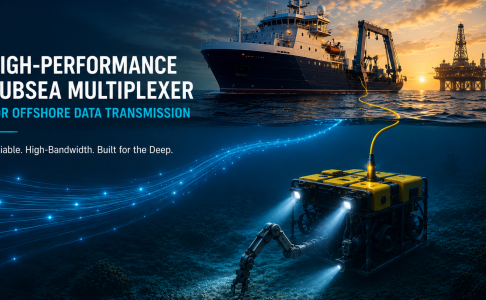
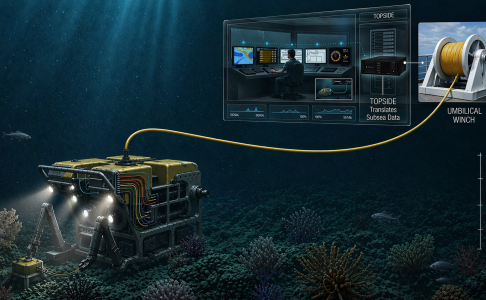
Communication and control systems for subsea equipment must maintain reliable data links at depth, an area where fibre optic umbilical and acoustic telemetry technologies have improved significantly in recent years, but where reliability remains a selection criterion.
Early investment in accurate baseline data, covering survey, positioning verification, and structural integrity assessment, reduces the cost of deepwater decommissioning decisions. Operators who attempt to manage deepwater complexity with shallow-water equipment assumptions face material execution risk.
Equipment Selection Considerations
Technology selection for a decommissioning project should be driven by project-specific factors, not generic procurement assumptions. Key considerations include:
- Water depth determines ROV class, positioning system type, cutting method, and operational window assumptions.
- Asset type drives equipment category selection. Platforms, pipelines, subsea systems, and wellheads each require different primary equipment in different sequences.
- Seabed conditions, including burial depth of pipelines and piles, seabed strength, and sediment type, all affect excavation scope and cutting tool selection.
- Regulatory framework varies by jurisdiction. Some regions require specific post-decommissioning survey standards, environmental monitoring protocols, and documentation requirements that affect equipment specification.
- Operational duration affects procurement strategy. Long-duration campaigns benefit from sale and rental models that reduce CAPEX and allow equipment to be right-sized to each phase rather than procured for peak demand.
- Single-vendor vs multi-vendor supply has a direct bearing on execution risk. Integrated supply across survey, positioning, ROV, excavation, and lifting reduces project interface complexity and simplifies accountability during execution.
Conclusion
Technology and equipment selection is not a procurement decision. It is an engineering decision with direct consequences for project safety, cost, and regulatory compliance. The right combination of survey, positioning, sonar, ROV, excavation, cutting, buoyancy, and diving equipment, sequenced correctly and operated with precision, is what transforms a complex decommissioning obligation into a controlled, data-driven operation.
Speak with our offshore specialists to discuss the equipment and technology requirements for your next decommissioning project. Explore Unique Group’s offshore decommissioning solutions
Frequently Asked Questions
What survey equipment is required before offshore decommissioning begins?
Pre-decommissioning surveys typically require multibeam echosounder systems, side-scan sonar, sub-bottom profilers, and USBL positioning. These provide the baseline bathymetric, structural, and sub-seabed data that inform removal engineering and regulatory documentation.
What is the difference between USBL and LBL positioning in decommissioning?
USBL (Ultra-Short Baseline) uses a single vessel-mounted transceiver and is suited to most shallow and mid-water decommissioning work. LBL (Long Baseline) uses a seabed transponder array and provides higher accuracy over wider areas or in deeper water where USBL performance degrades.
When is buoyancy used instead of conventional crane lifting in structure removal?
Buoyancy-assisted removal is used when crane lift capacity is constrained by structural weight, when controlled ascent rate is required, or when reducing peak load on a crane vessel improves safety margins. Seaflex® engineered buoyancy modules are one solution for this application.
What is seabed excavation and why is it needed in decommissioning?
Seabed excavation uses controlled water jetting or mass flow excavation (MFE) systems to expose buried pipelines, pile casings, and other infrastructure that has been covered by sediment over the field lifetime. Excavation is required before cutting or recovery operations can be safely completed.
How is post-decommissioning seabed clearance verified?
Post-removal seabed surveys using multibeam sonar and side-scan sonar compare the cleared area against the pre-decommissioning baseline. In most regulatory jurisdictions, this data must demonstrate clearance to a defined standard before the site is formally signed off.