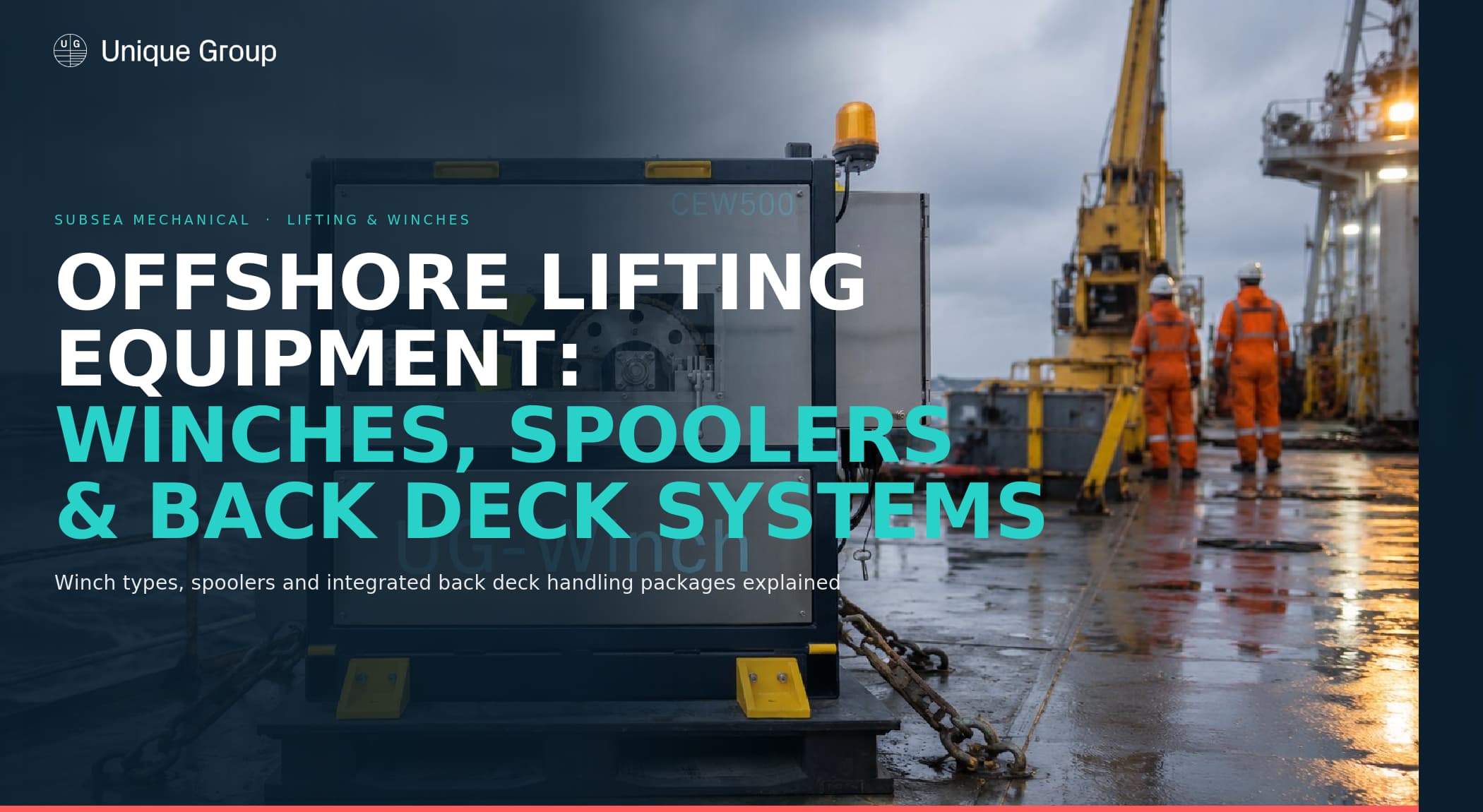
Offshore lifting equipment includes any mechanical system used to deploy, recover, or tension loads at sea, principally winches, spoolers, tensioners, A-frames and integrated back deck packages. These systems are used across subsea construction, IRM, cable lay, offshore wind, and decommissioning, and must perform reliably in conditions where failure has direct safety consequences.
These operations are only as reliable as the equipment behind them. Whether you are deploying subsea infrastructure, laying cable, or decommissioning ageing assets, the winches, spoolers and back deck systems aboard your vessel determine how safely and efficiently that work gets done. This guide covers the main types of offshore lifting equipment, how each system works, and what to consider when specifying or sourcing equipment for your next project.
What Is Offshore Lifting Equipment?
Offshore lifting equipment refers to the mechanical systems used to lift, lower, pull, deploy and recover loads in marine and offshore environments. This includes winches, spoolers, tensioners, A-frames, overboarding chutes and integrated back deck handling packages.
These systems operate across a wide range of offshore disciplines, including subsea construction, cable lay, IRM (Inspection, Repair and Maintenance), mooring installation and decommissioning. For a deeper look at back deck configuration specifically for offshore wind cable installation, pull-in and inter-array cable support, see our offshore wind back deck equipment guide.
What Is a Back Deck on an Offshore Vessel?
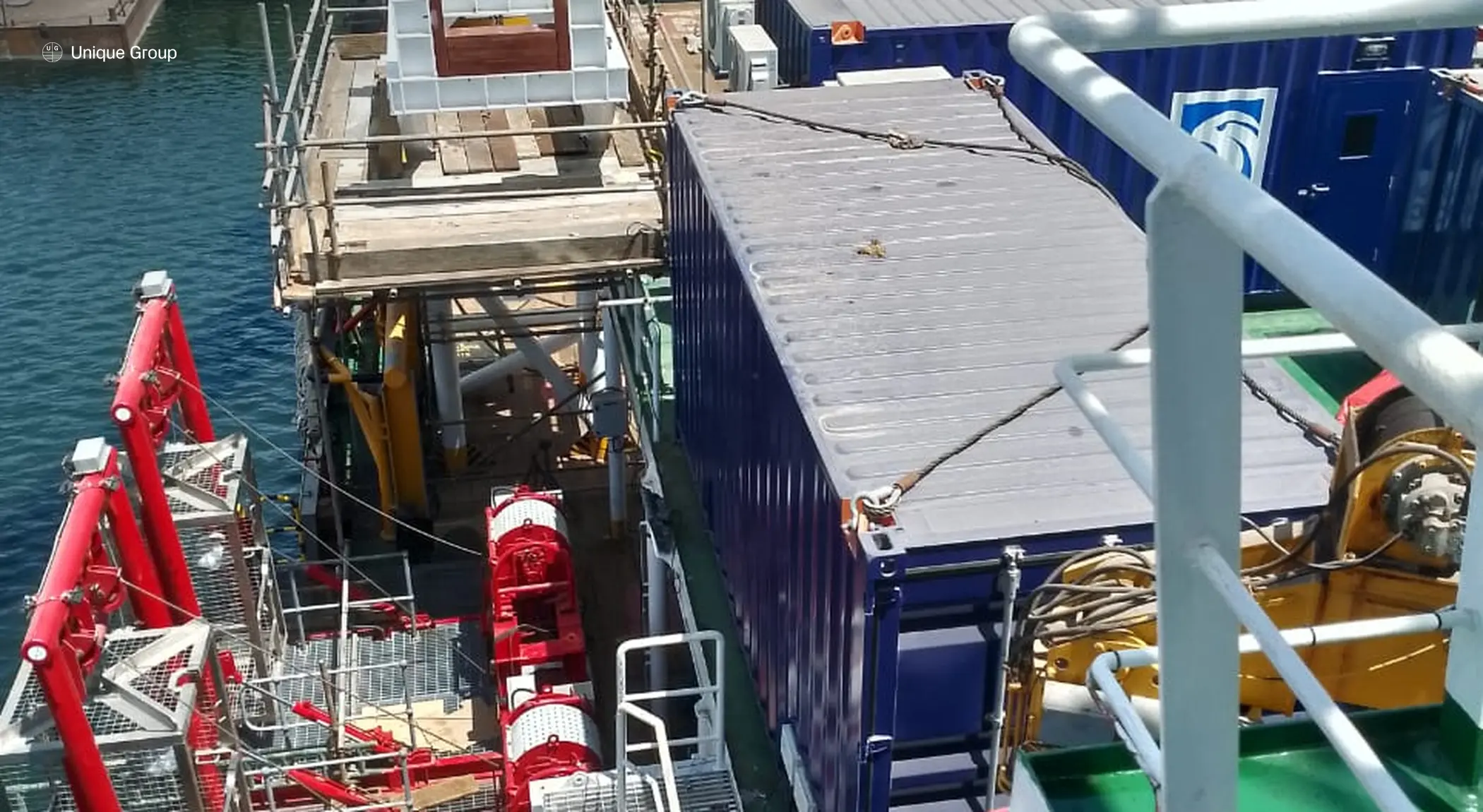
The back deck is the stern working area of an offshore support or construction vessel, and it must be configured precisely for each project scope.
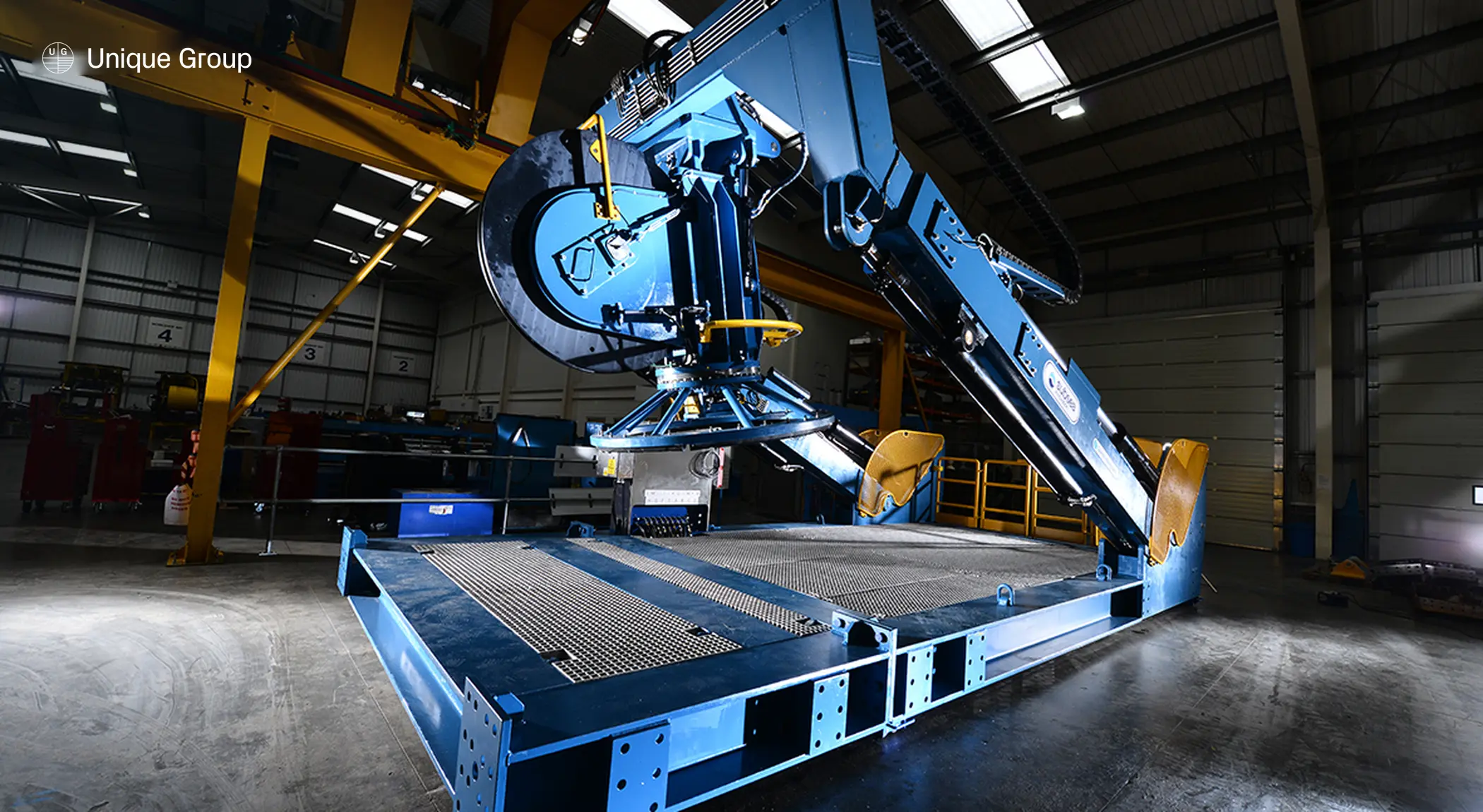
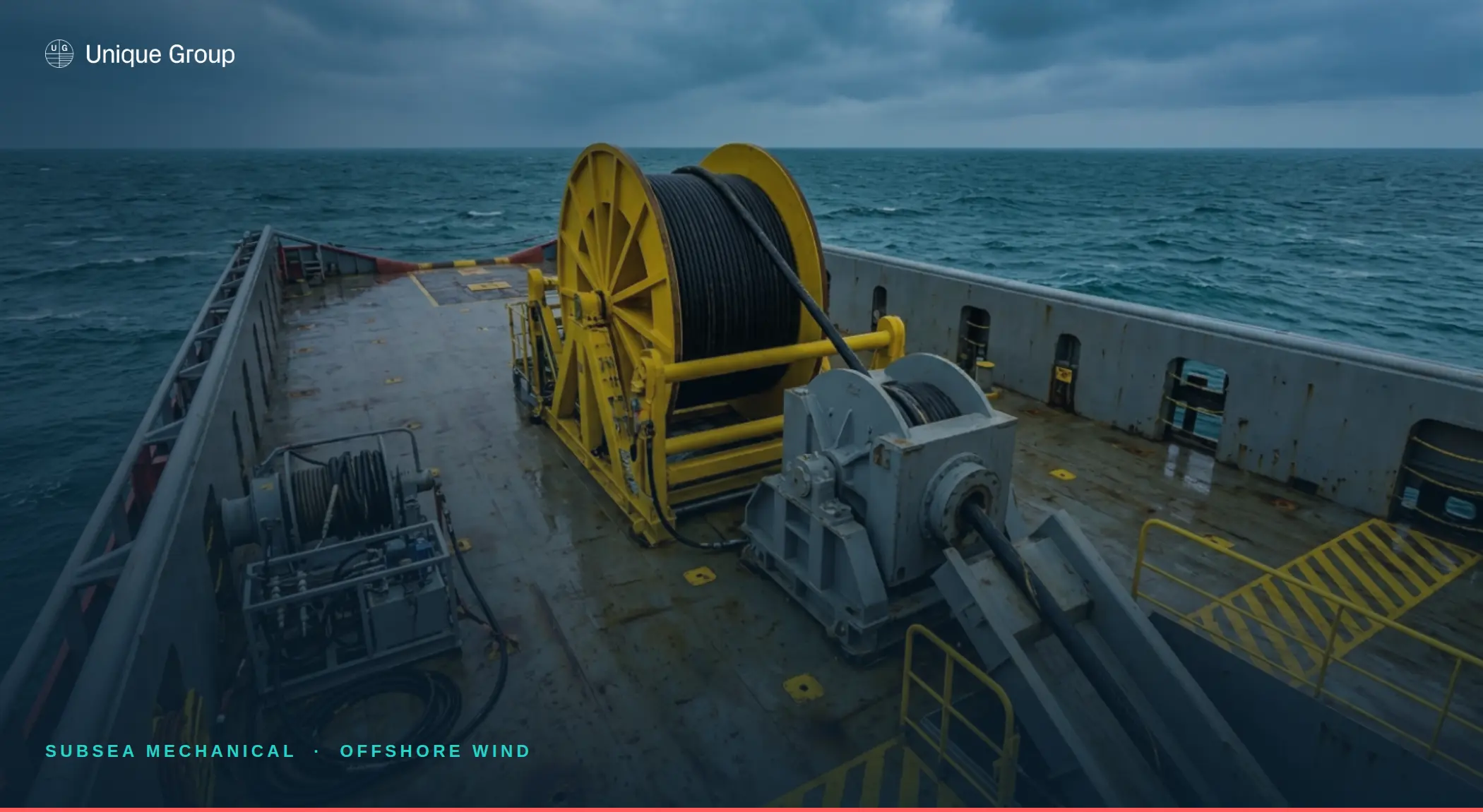
A well-integrated back deck brings together winches, spoolers, tensioners, hydraulic power units (HPUs), control systems and overboarding equipment into a coordinated handling system. When components are correctly specified and matched, mobilisation is faster, commissioning time is shorter, and the risk of deck incompatibilities is reduced.
Types of Offshore Winches
Not all offshore winches are the same. Each type is built for a specific function, load profile and operational context.
| Winch Type | Primary Function | Key Application |
|---|---|---|
| Drum Winch | Lift, lower, and pull with wire stored on drum | Mooring, abandonment and recovery (A&R), general offshore lifting |
| Traction Winch | High continuous pull via friction drums | Umbilical handling, pipeline lay, long-distance pulls |
| Linear Winch | Extreme pull force via mechanical grippers | Shore pulls, pipeline pull-in, beach pulls |
| Spooling Winch | Controlled transfer of wire or umbilical between reels | Cable lay, wire rope management |
| AHC Winch | Heave-compensated load deployment | Deepwater subsea equipment deployment |
Drum Winches
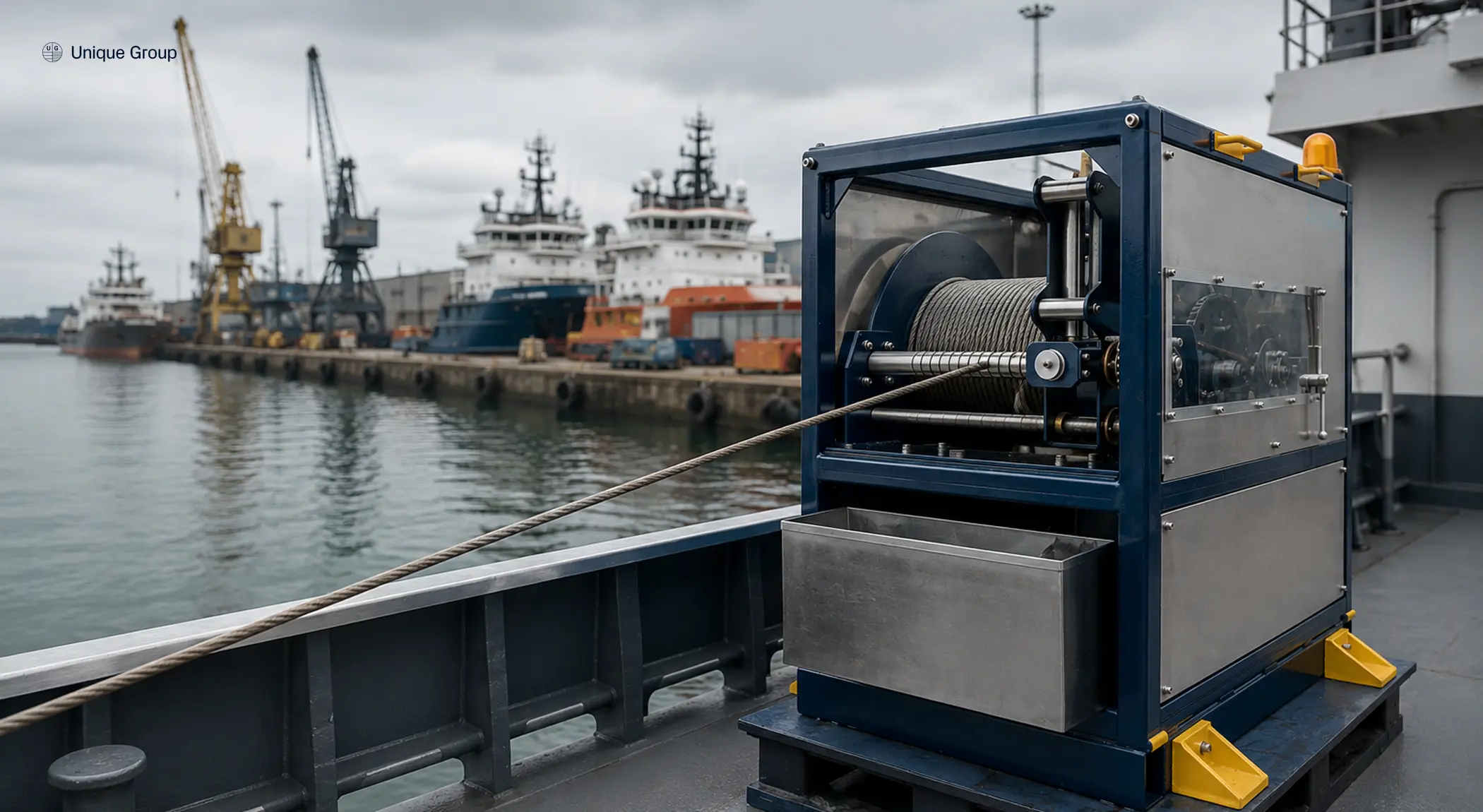
A drum winch stores wire rope or chain on a rotating drum. It is the most common winch type in offshore operations, used for lifting, mooring, pull-ins, and abandonment and recovery (A&R). Drum winches are available in hydraulic and electric configurations and can be specified with constant tension functionality and active heave compensation (AHC).
Unique Group supplies a range of hydraulic winches and spoolers for offshore and subsea operations worldwide, available for both sale and rental.
Traction Winches
A traction winch generates high, continuous pulling force through friction between two grooved drums arranged in line, without storing the line on the drum itself. A separate storage drum handles the wire. This design suits applications requiring sustained high tension: umbilical handling, deep pipeline work, and long-distance pulls where a conventional drum winch would require an impractically large storage capacity.
Linear Winches
Linear winches grip the line mechanically using opposing grippers or clamps, generating pulling forces from 100 tonnes to over 800 tonnes without a drum. They are used for shore pulls, pipeline pull-in operations and beach pulls where long wire ropes are not practical. Linear winches are typically hydraulically powered and can be operated in continuous or intermittent mode.
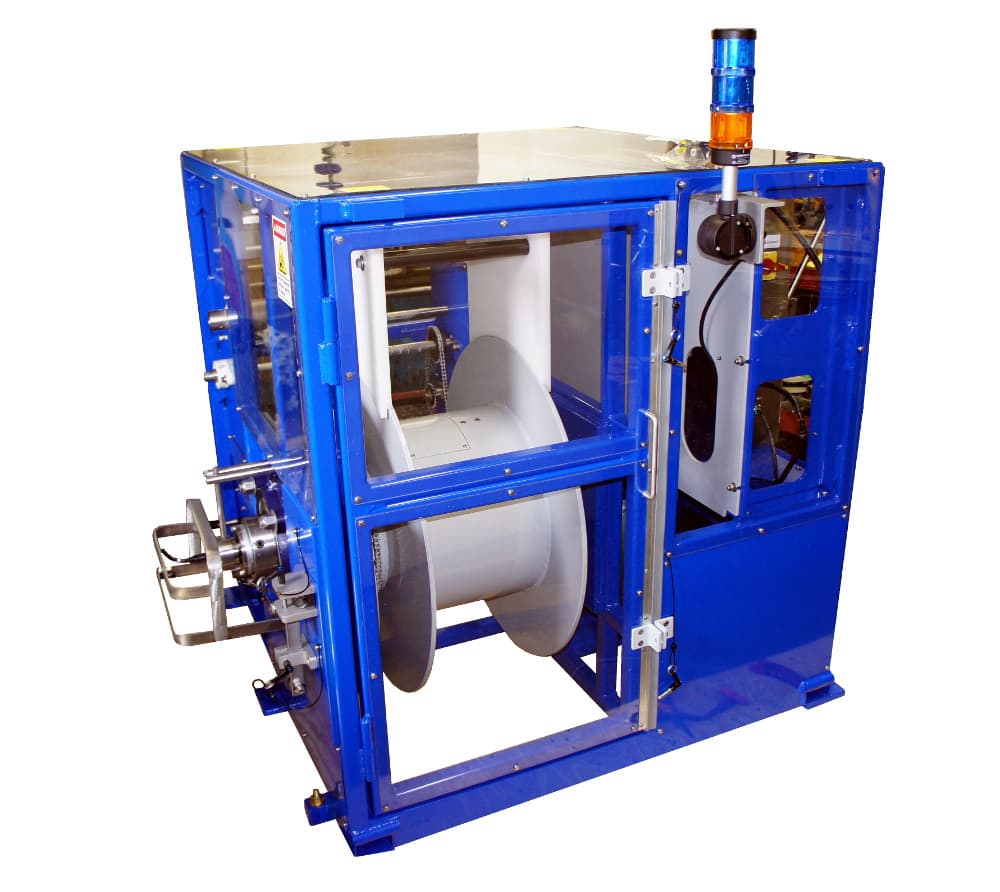
Spooling Winches
A spooling winch transfers wire rope, umbilicals or cables between reels, applying controlled back tension throughout to ensure even layering and product integrity. Unlike drum winches, spooling winches are rated by payload capacity rather than line pull. They are a critical part of any cable lay or wire management scope.
Active Heave Compensation (AHC) Winch Packages
AHC winches counteract the vertical motion of a vessel caused by waves and swell, maintaining a stable load position during subsea deployment. This is particularly important in deepwater operations, where vessel motion can impose significant dynamic loading on sensitive subsea equipment. Without compensation, that dynamic load can damage the payload or cause it to swing dangerously on the wire. AHC packages are available as standalone systems or integrated into drum winch configurations.
What Does a Spooler Do? Why Does It Matter?
A spooler manages the controlled transfer of wire rope, umbilical or cable between a supply reel and a storage drum. It applies back tension throughout the transfer to ensure the product layers evenly, without gaps or deformation.
Poor spooling leads to bird-nesting, which refers to tangled or overlapping rope under load, and can cause line damage and, in a live offshore operation, equipment failure. Consistent, controlled back tension is a basic requirement of safe, repeatable offshore wire management, not an optional refinement.
What Is an Offshore Back Deck Package?
A back deck package is a project-configured suite of deck equipment assembled to support a specific offshore scope. Packages typically include:
- Winches (drum, traction or spooling depending on application)
- Hydraulic or electric power units (HPUs / EPUs)
- Control systems with local and remote operation
- Tensioners and level winders
- Overboarding chutes and guide systems
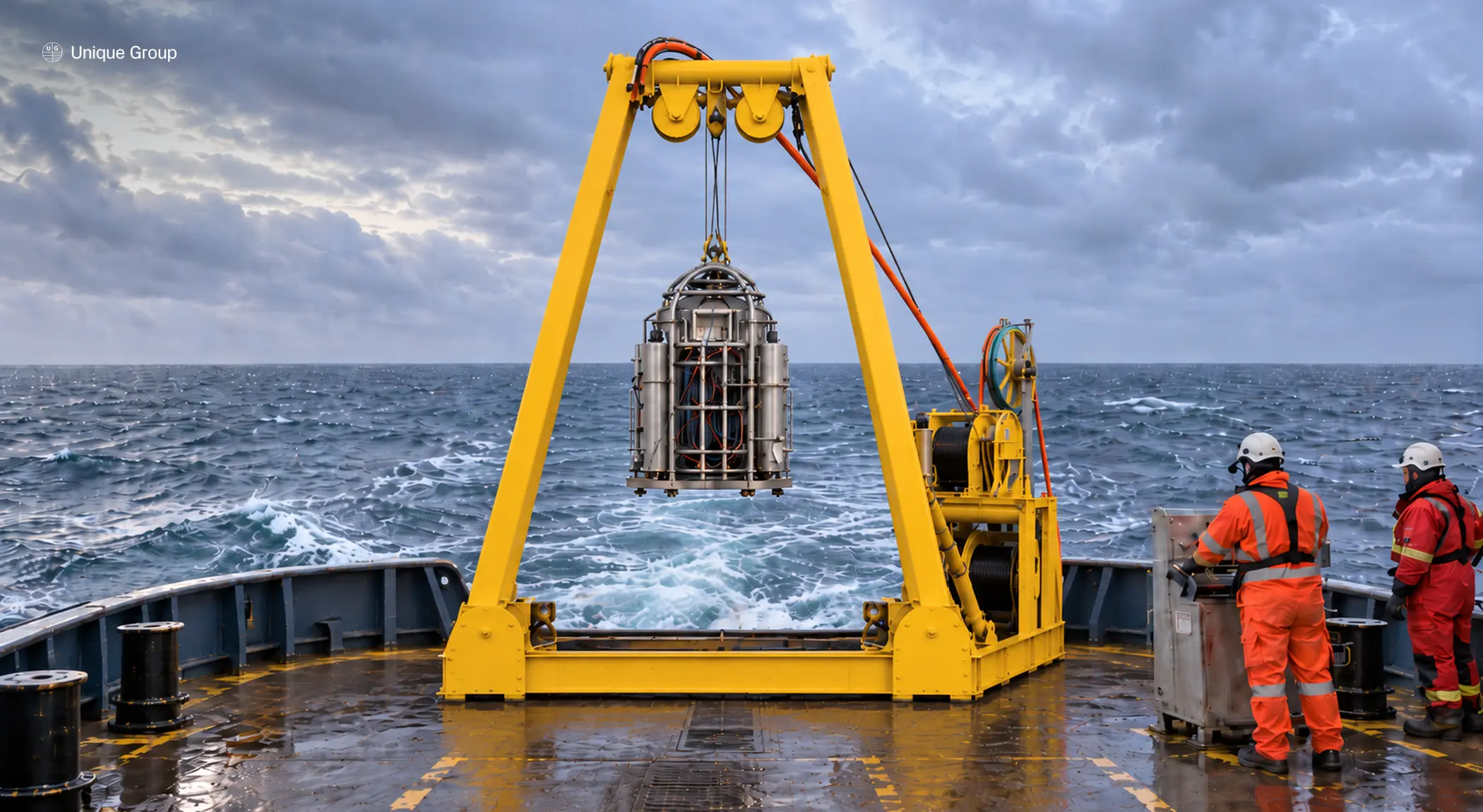
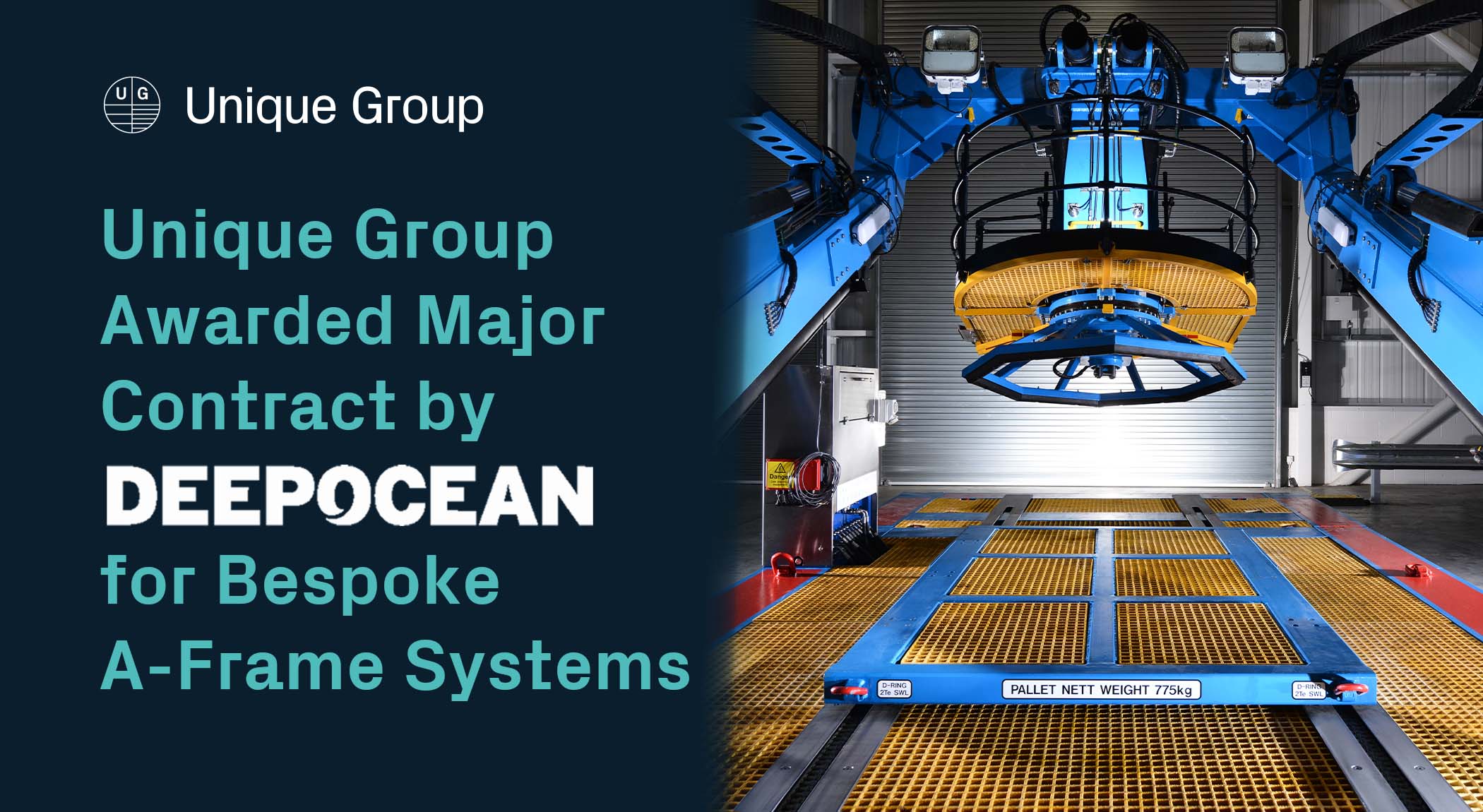
- A-frames or deployment frameworks
- Ancillary equipment: sheaves, fairleads, deflectors
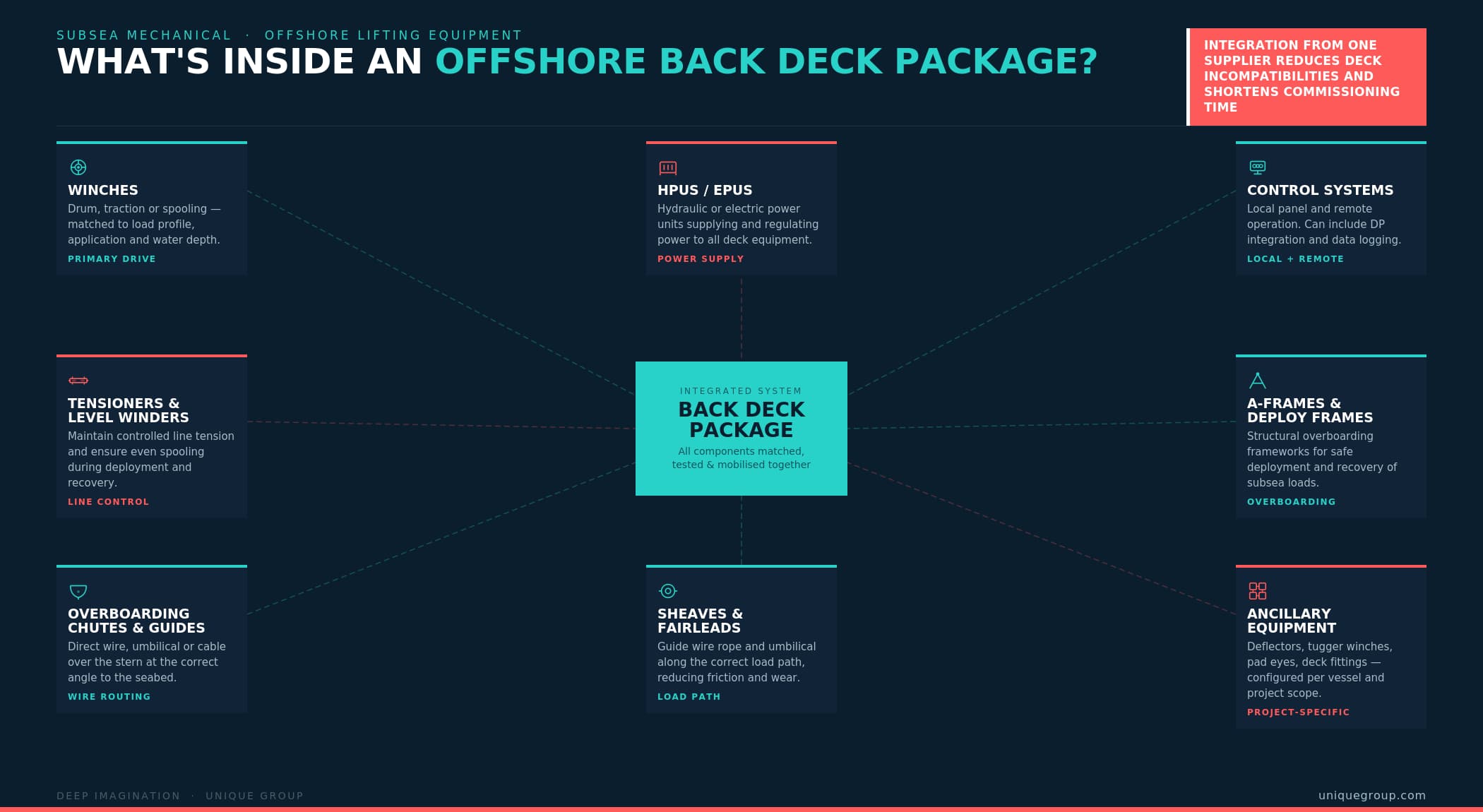
The advantage of sourcing a complete package from a single supplier is integration. Components are matched, tested together and mobilised as a coordinated system, reducing the risk of interface issues on deck and shortening commissioning time offshore.
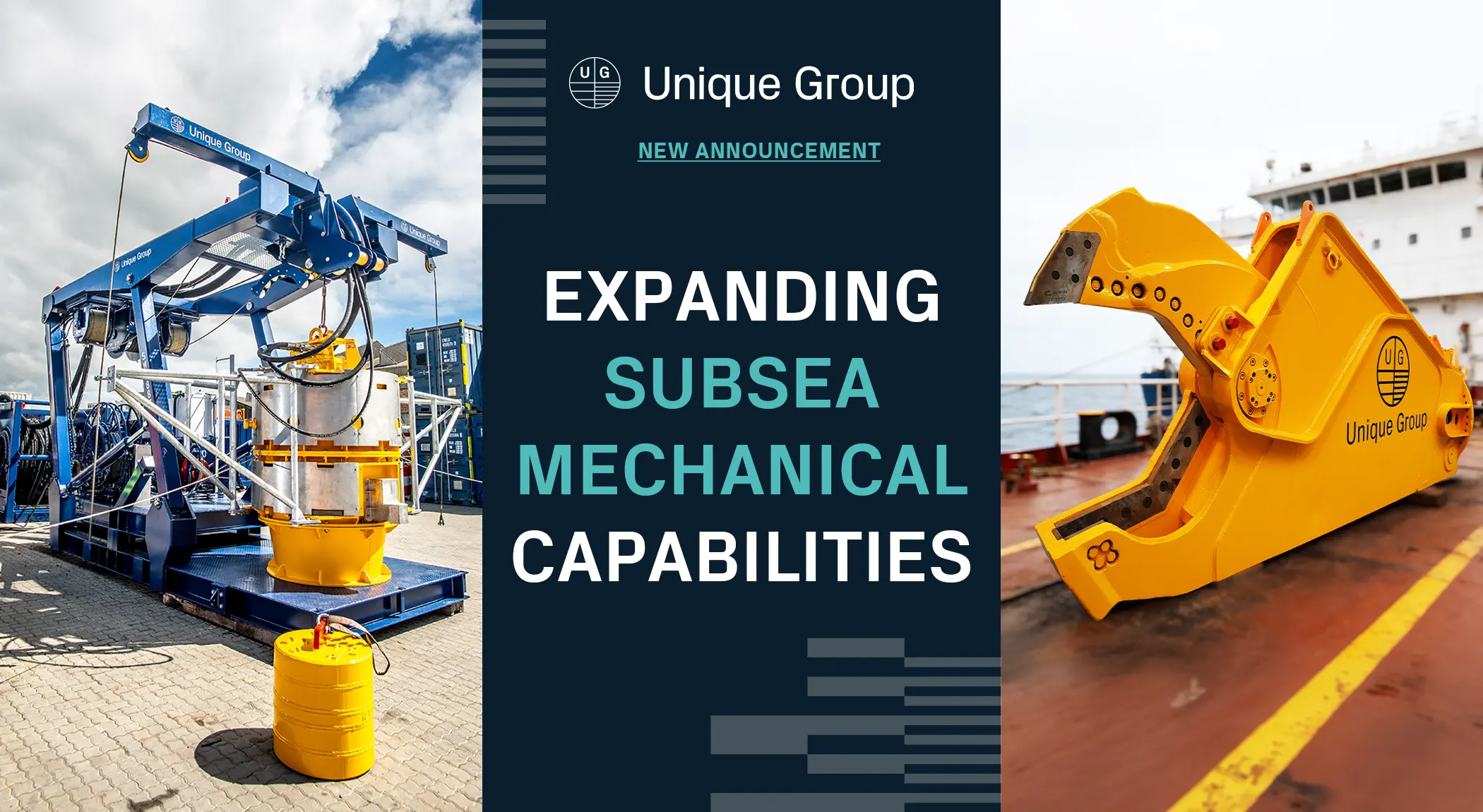
Unique Group supplies and rents complete back deck packages, including the Uni-Winch CEW500 and A.G.O. winch systems, for offshore lifting, cable handling and decommissioning scopes worldwide.
Where Are Offshore Winches and Back Deck Systems Used?
Subsea Construction and IRM
Winches and back deck systems support ROV deployment, structural installation, umbilical handling, flowline pull-in and inspection campaigns. Load requirements and deck space constraints vary significantly by vessel type and water depth.
Unique Group provides launch and recovery systems (LARS) and associated deck handling equipment for subsea IRM and construction scopes.
Cable Lay and Offshore Wind
Offshore wind installation involves repeated cable deployment cycles, requiring spooling systems capable of managing large cable volumes with consistent tension. Back deck packages for wind scopes typically include tensioners, reel drive systems and overboarding chutes. Explore Unique Group’s cable lay and reel drive solutions.
Decommissioning
Decommissioning scopes often involve retrieving aged assets, cutting and recovering pipelines and pulling in old umbilicals, sometimes in unpredictable condition. Equipment must handle variable loads safely, with the flexibility to adapt to changing operational requirements. See Unique Group’s decommissioning capabilities.
Buying vs. Renting Offshore Lifting Equipment
Project duration, mobilisation timeline and total cost of ownership all influence whether purchase or rental is the better option.
Rental makes sense when:
- The project is short-term or single-campaign
- Mobilisation needs to happen fast
- The operator does not want to carry maintenance obligations
Purchase makes sense when:
- The equipment will be in sustained operational use
- The operator wants full configuration control
- Long-term cost of ownership favours ownership over repeat rental fees
Unique Group supplies and rents offshore winches, spoolers and back deck handling equipment for projects worldwide, from short-term rental packages to full project-configured back deck systems.
Speak with our subsea mechanical specialists to discuss your project requirements.
Frequently Asked Questions
What is the difference between a drum winch and a traction winch?
A drum winch stores the wire on the drum itself and generates pull by winding the drum. A traction winch generates pulling force through friction between two grooved drums without storing the line. A separate storage reel is required.. Traction winches are preferred where sustained high tension over long distances is required.
What is active heave compensation (AHC) on an offshore winch?
Active heave compensation (AHC) is a control system that adjusts the winch drum in real time to counteract vertical vessel motion caused by waves and swell. It keeps the suspended load at a stable depth during deployment, which is particularly important in deepwater operations where dynamic loading on subsea equipment must be minimised.