Choosing between electric and hydraulic offshore winches is not a question of which type is better. It is a question of which type fits the operation. The correct decision depends on load requirements, duty cycle, vessel power infrastructure, control precision, deck layout, hazardous area classification, and maintenance capability.
This guide covers how electric and hydraulic offshore winches compare across the criteria that matter most to offshore operators, survey managers, and procurement teams — including where pneumatic winches remain the right answer.
What Is an Electric Offshore Winch?
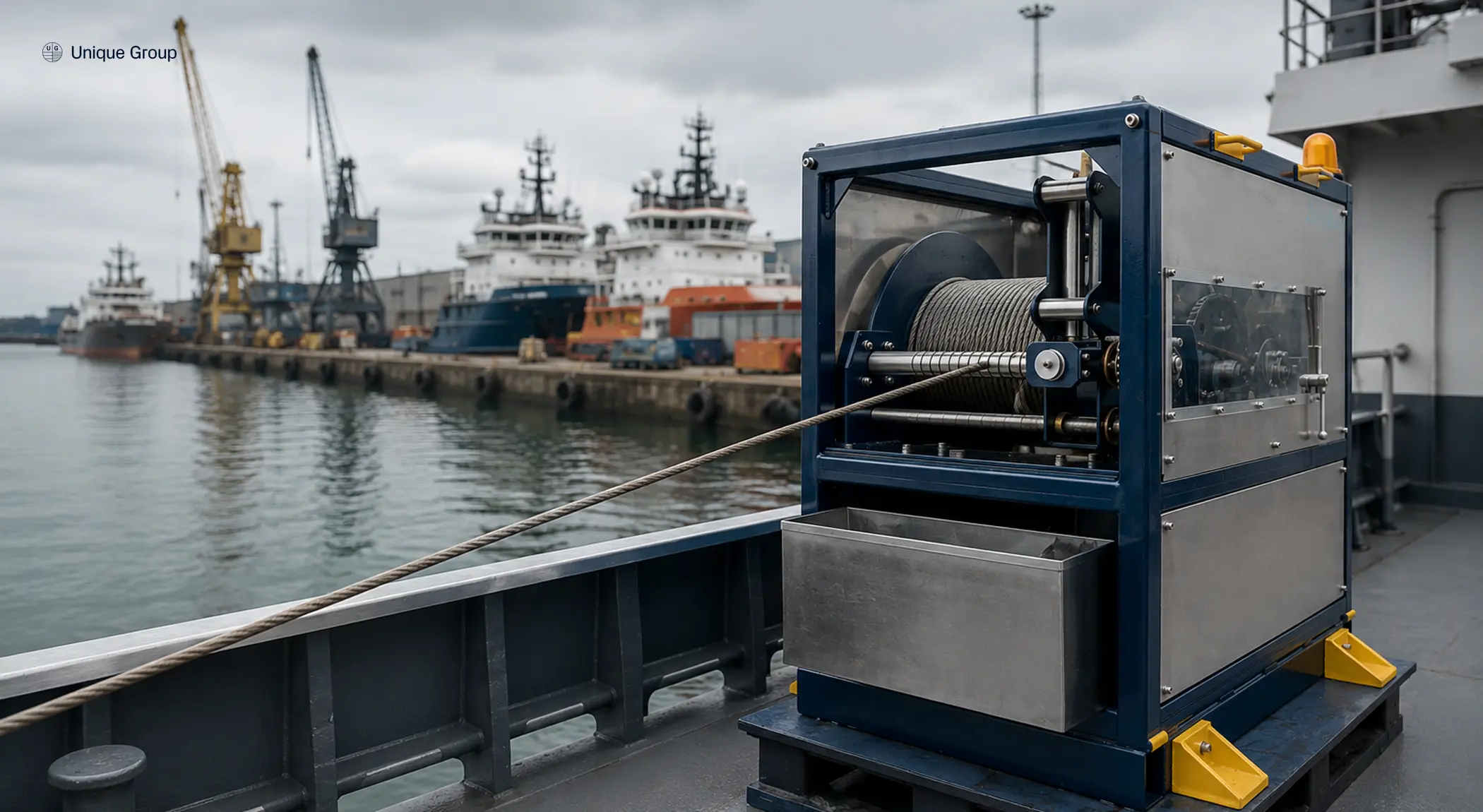
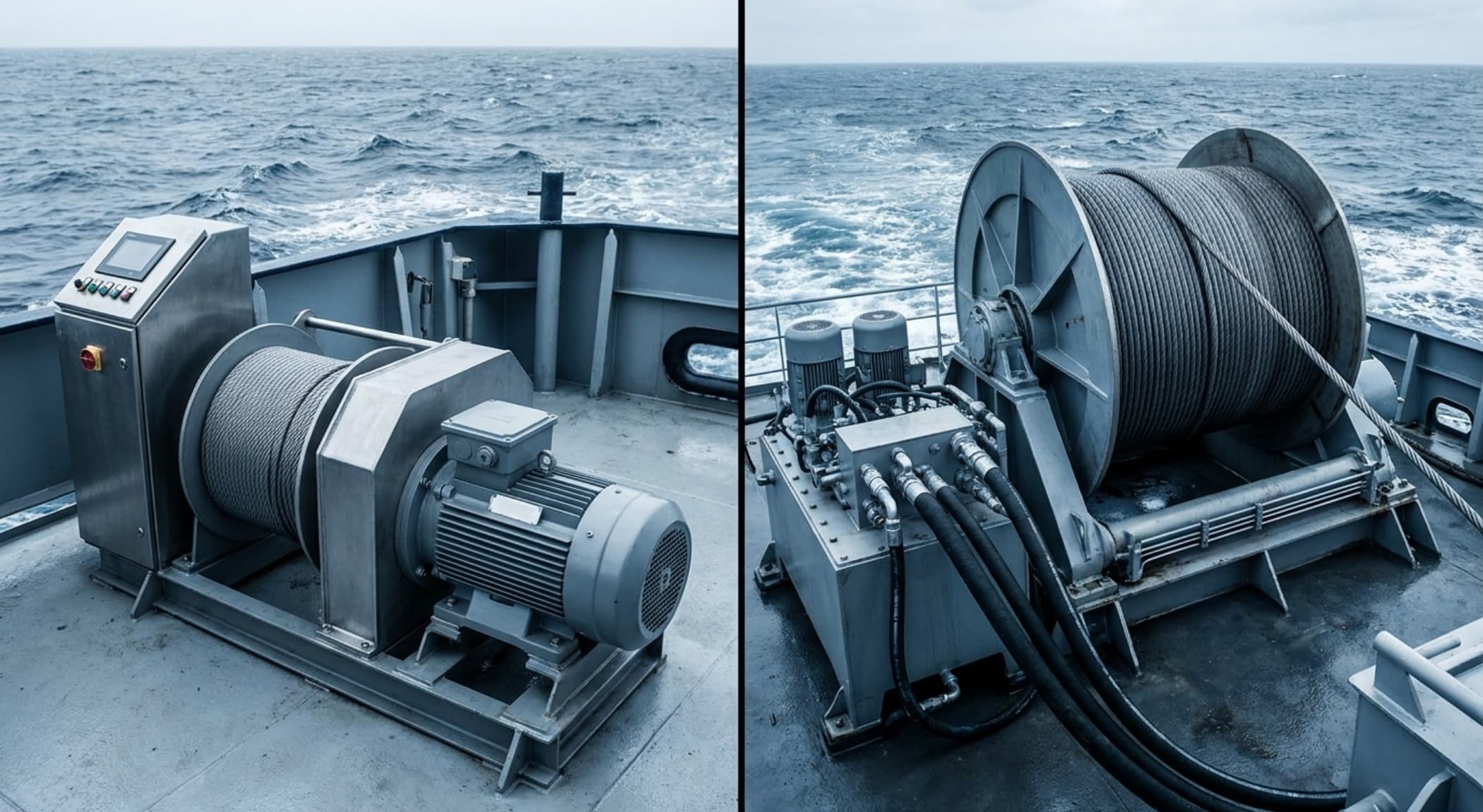
An electric offshore winch uses an electric motor to drive a drum and handle line under load. The motor may be AC single-phase, AC three-phase, or permanent magnet DC, with speed controlled via a variable frequency drive (VFD) where precision is required. Electric winches are increasingly used in survey deployment, offshore wind support, and newbuild vessel electrification programmes.
Electric winches are well suited to operations that require repeatable, controlled deployment, a compact footprint, and integration with digital vessel systems.
What Is a Hydraulic Offshore Winch?
A hydraulic offshore winch uses pressurised fluid, supplied by a vessel hydraulic power unit (HPU) or dedicated hydraulic package, to rotate the motor and drive the drum. Hydraulic winches are capable of high torque output and can sustain heavy-duty duty cycles where hydraulic infrastructure already exists.
Hydraulic winches remain widely used in subsea construction, IRM (inspection, repair and maintenance), decommissioning, and heavy back deck packages.
Electric vs Hydraulic Offshore Winch: Quick Comparison
| Criteria | Electric offshore winch | Hydraulic offshore winch |
|---|---|---|
| Power source | Electrical supply: AC single-phase, AC three-phase, or DC with motor drive or VFD | Hydraulic power from vessel HPU or dedicated hydraulic package |
| Speed and load control | Well suited to precise speed control and repeatable operation; VFD required for variable speed | Strong controllability when designed with suitable valve and control architecture |
| Continuous duty | Some units can overheat under sustained full-load cycles; thermal management is a design consideration | Well-established for heavy, sustained duty cycles; hydraulic fluid acts as a heat transfer medium |
| Energy efficiency | Typically higher. Electric drive efficiency outperforms hydraulic in comparable setups; actual figures vary by system design and operating profile | Lower overall system efficiency due to hydraulic conversion losses; requires HPU maintenance |
| Deck infrastructure | Requires electrical supply, cabling, protection, and suitable electrical power capacity | Requires HPU, hose routing, fluid management, and hydraulic maintenance capability |
| Hazardous area use | Requires ATEX or equivalent certification in classified zones; adds complexity and cost | Can operate in classified zones with appropriate design; well-established in hazardous area applications |
| Maintenance | Eliminates hydraulic fluid management; motor and drive components require periodic inspection | Requires fluid checks, hose inspection, HPU servicing, and leak monitoring |
| Offshore wind use cases | Attractive for cable handling, survey deployment, and newbuild vessel electrification strategies | Suited to heavy-duty installation and vessel-mounted HPU integration |
| Oil and gas use cases | Well suited to survey deployment, controlled lifting, and defined load handling | Common for subsea construction, IRM, decommissioning, and heavy back deck packages |
When an Electric Offshore Winch Is the Right Choice
Electric offshore winches make sense when the operation requires controlled line speed, a compact installation footprint, and straightforward integration with existing vessel electrical systems.
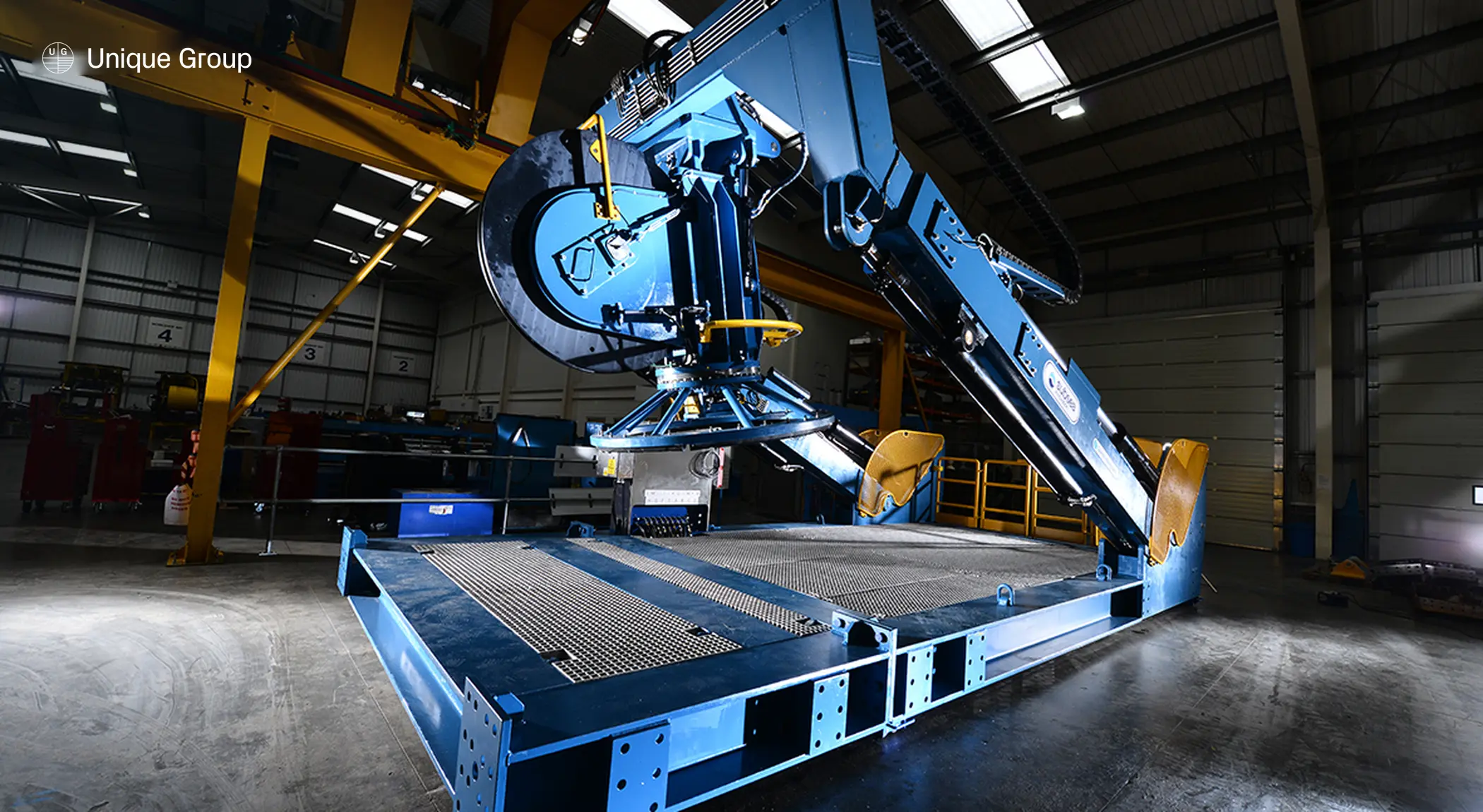
The Unique Group Uni-Winch CEW500 is a compact single-phase electric survey winch designed for smaller research and survey vessels. It supports a wide range of oceanographic deployments, CTD, side-scan sonar, magnetometer, sub-bottom profiler, water sampler, and drop-down camera systems with variable speed control, automatic failsafe brake, local and remote control, and a line speed of 35 m/min at mid-drum from a 230V AC single-phase supply.
For higher-duty electric winch requirements (larger line pull, three-phase power, heavier drum capacity), the selection process follows the same logic: define the load, duty cycle, line speed, and control mode before specifying the unit.
Electric offshore winches are also attracting more attention as operators look for improved control precision, reduced hydraulic oil handling, lower maintenance requirements, and easier integration with vessel electrical and automation systems.
When a Hydraulic Offshore Winch Is the Right Choice
Hydraulic winches are the established choice for high-torque offshore duties, particularly where vessels already carry a hydraulic power unit, the duty cycle is continuous and heavy, and the maintenance team is set up to manage hydraulic systems.
They should not be selected by default or habit alone. Evaluate a hydraulic package using the same criteria as an electric system: required line pull, brake capacity, control architecture, duty cycle, deck space, environmental controls, testing, and certification.
Hydraulic drive systems can achieve full power in a comparatively short amount of time and, in some applications, the ability to locate the drive remotely from the hydraulic station offers an installation advantage. The downside is a standalone hydraulic power plant and the relative complexity of maintaining the system.
When a Pneumatic (Air-Driven) Offshore Winch Is the Right Choice
Pneumatic winches belong in a separate category. They are not a compromise between electric and hydraulic. They are the appropriate choice in specific offshore environments where compressed air operation and classified area suitability are the defining requirements.
The Unique Group EMCE OAW/OMR Series offshore air-driven winch is specifically designed for offshore applications and hazardous environments where space is limited. The range covers:
- OAW: utility lifting
- OMR: man-riding prepared
- WLL first layer: 2,000 kg or 4,280 kg depending on model
- Speed: 30 m/min or 14 m/min depending on model
- Power supply: pneumatic
Pneumatic winches are relevant when the operating environment, compressed air infrastructure, and project classification requirements support their use.
How to Choose the Right Offshore Winch for Your Operation
- Winch selection should follow a structured decision process, not a power source preference. Work through these steps before specifying a unit:
- Define the operation: lifting, pull-in, survey deployment, cable spooling, retrieval, towing support, or decommissioning recovery.
- Confirm load and line data: WLL/SWL, MBL, cable or rope diameter, bend radius, allowable tension, and expected dynamic loading.
- Confirm vessel infrastructure: electrical supply capacity, hydraulic power availability, compressed air, available deck area, deck loading, sea fastening options, and control station position.
- Specify control requirements: local and remote operation, speed control, failsafe brake, tension monitoring, emergency stop, alarms, and data logging.
- Check environment and classification: hazardous area requirements, ingress protection rating, corrosion exposure, splash zone considerations, and applicable certification standards.
- Review maintainability: spare parts availability, inspection requirements, hose or cable routing, operator training, and mobilisation and demobilisation time.
- Select the full package: include fairleads, sheaves, level wind, power unit, controls, lifting accessories, test records, and documentation alongside the winch itself.
Market Context: Why Electric Offshore Winches Are Getting More Attention
The offshore sector is changing in ways that favour electric winch adoption, particularly where offshore wind, vessel electrification, and digital integration are priorities.
Electric winches are receiving greater attention as operators look for cleaner deck packages, improved energy efficiency, reduced hydraulic oil handling, and easier integration with vessel electrical and automation systems. Automation, tension control, and digital monitoring are also becoming more important in modern offshore operations, especially where winches need to interface with vessel control systems or support repeatable deployment tasks.
This does not mean electric winches replace hydraulic systems across all applications. It means operators and procurement teams should evaluate control precision, energy efficiency, digital integration, and vessel power architecture more carefully than before — rather than defaulting to what was specified on the last project.
Need to compare electric, hydraulic, or pneumatic winches for a project? Speak with our subsea mechanical specialists to discuss your load requirements, vessel infrastructure, and operating scope.
Frequently Asked Questions
Are electric offshore winches better than hydraulic winches?
Not universally. Electric winches offer precise speed control, simpler deck infrastructure, and higher energy efficiency in suitable applications. Hydraulic winches are better suited to high-torque, heavy-duty duty cycles where hydraulic infrastructure is already installed and sustained continuous operation is required. The correct choice depends on the specific operation, load, vessel, and maintenance context.
Are pneumatic winches still used offshore?
Yes. Air-driven winches remain relevant for specific offshore and hazardous area applications where compressed air operation, compact design, and classified zone suitability are appropriate for the project.
What is the most common mistake when choosing an offshore winch?
Selecting by power source alone. The correct approach is to define the operation, load, line data, speed requirements, control specification, deck layout, and certification requirements first — then select the winch and power system that meets those requirements.
Can a vessel use more than one winch type?
Yes. A vessel or project package may combine different winch types for different duties: a survey winch, pull-in winch, spooler, lifting winch, and utility winch on the same vessel are common.
What is a VFD and why does it matter for electric offshore winches?
A variable frequency drive (VFD) controls the speed of an AC electric motor by adjusting the frequency and voltage of the power supply. For offshore winches, VFDs enable precise, repeatable speed control across the operating range — particularly important for survey deployments and controlled handling of sensitive equipment.