Commercial diving work is carried out in one of two main ways. In surface-supplied diving, the diver breathes gas delivered from the surface and returns to surface pressure after every dive. In saturation diving, divers live under pressure for days or weeks and decompress once, at the end of the job.
The method you choose shapes most of the project around it. It determines the equipment spread, the vessel, the crew size, the schedule and the cost. This guide compares the two methods and sets out the factors that decide which one a project needs.
Key takeaways
- Surface-supplied divers breathe gas from the surface and decompress after every dive. Saturation divers live under pressure and decompress once, at the end of the job.
- Depth is only one factor. Scope duration, vessel and deck space, helium logistics, hyperbaric evacuation and regulation all shape the choice.
- Saturation costs more per day but can be more economical for large or deep scopes, because far more of each shift is spent working rather than decompressing.
What is saturation diving?
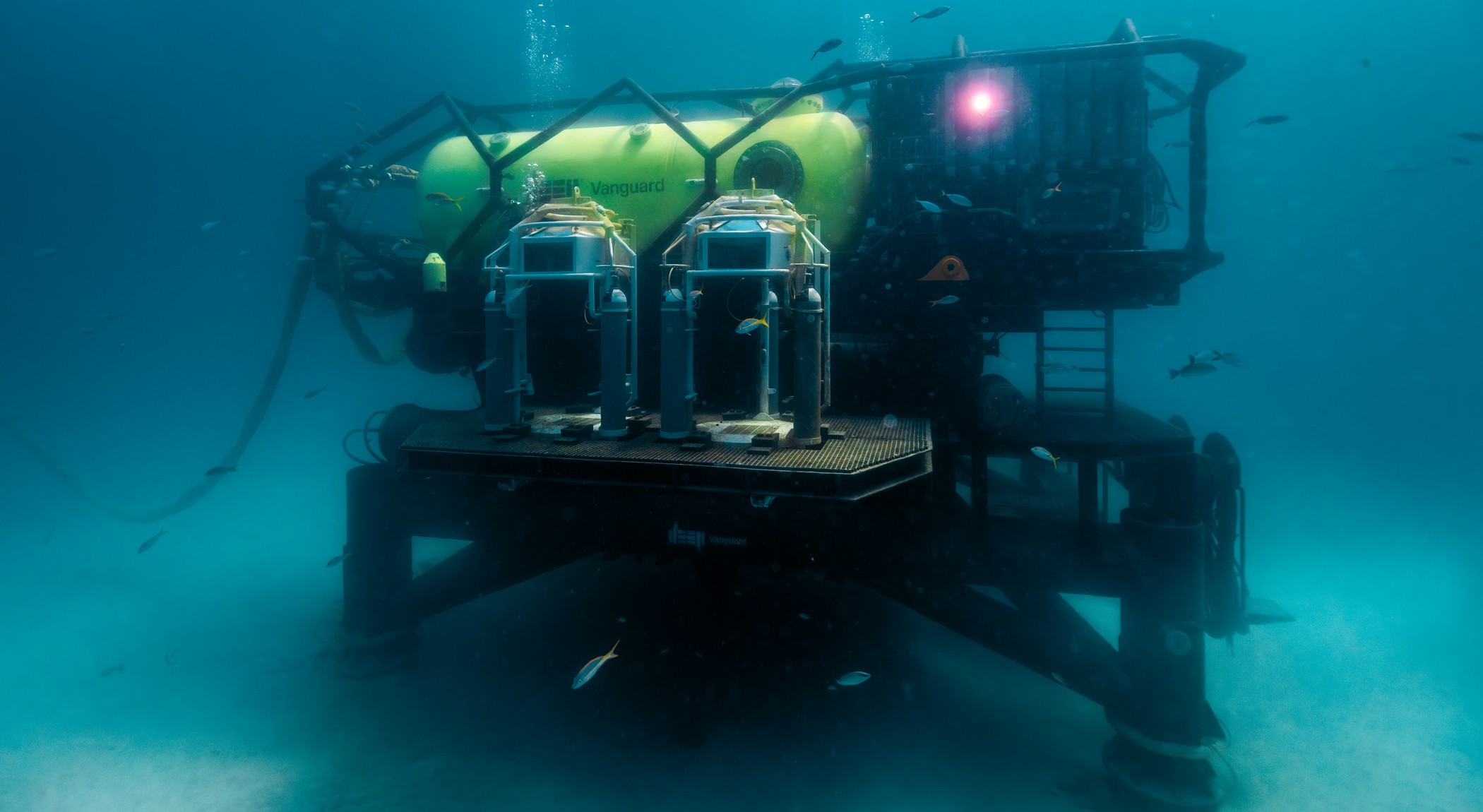
Saturation diving is a commercial diving technique in which divers remain at the pressure of their working depth for an extended period. Divers live in a pressurised chamber complex, part of a saturation diving system, on the vessel or platform, and travel to the worksite in a closed diving bell.
Once a diver’s body tissues are fully saturated with inert gas, the decompression required no longer increases with further time at that depth. Divers therefore decompress once, at the end of the saturation period, rather than after every dive.
Between shifts, the divers stay in the chamber complex at storage pressure. When it is time to work, a team transfers into the bell, which is lowered to depth. The divers then leave the bell to carry out the task while a bellman tends their umbilicals from inside.
Decompression at the end of a saturation is slow and typically takes several days. A 2024 peer-reviewed review of contractor procedures found that decompression from 120 msw storage depth typically lasts around five days. From deeper storage depths, such as 200 msw, it can take a week or more depending on the procedures used.
What is surface-supplied diving?
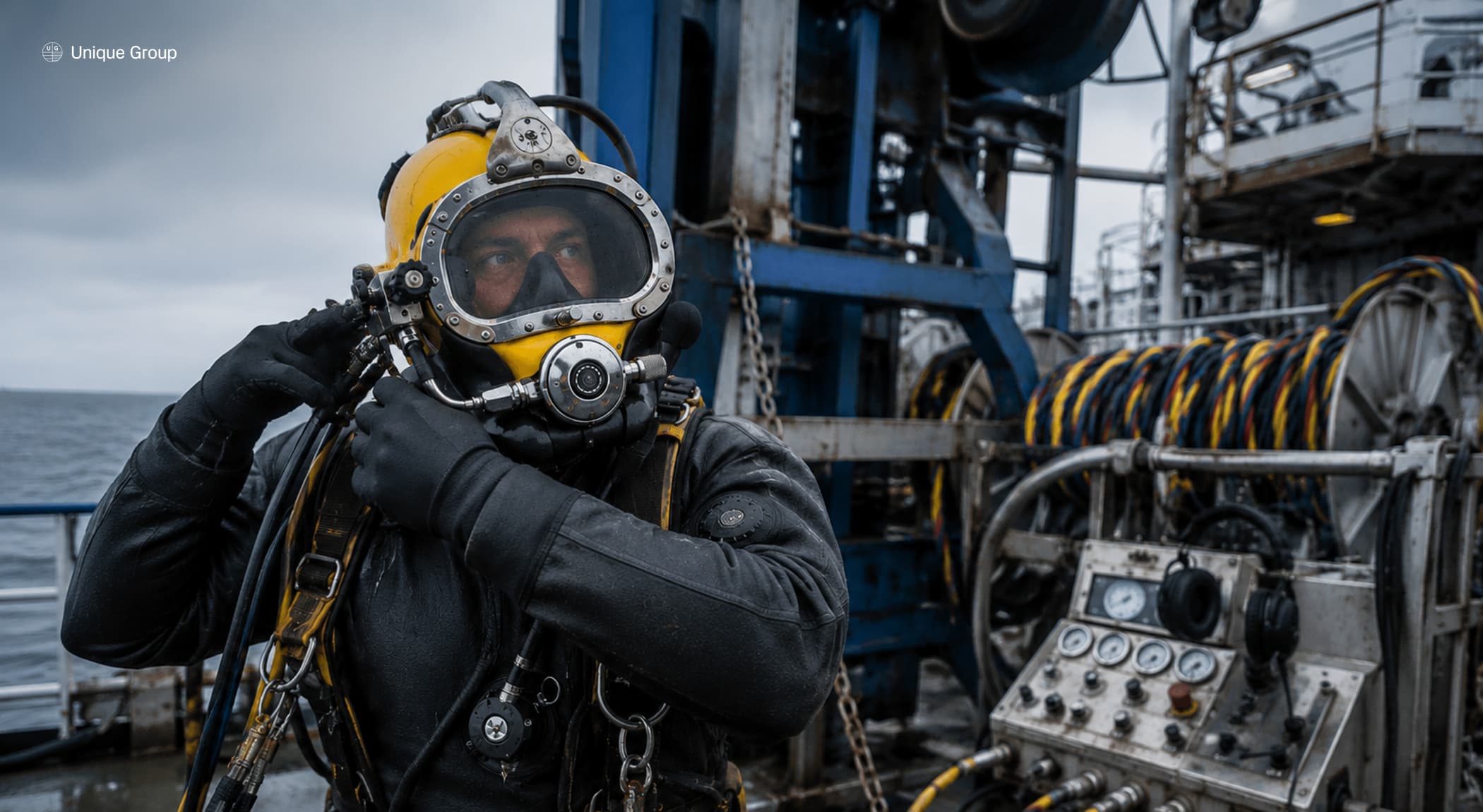
Surface-supplied diving is a method in which the diver breathes gas supplied from the surface through an umbilical, rather than carrying the main gas supply. The umbilical also carries communications and, in most setups, a pneumofathometer line for monitoring depth.
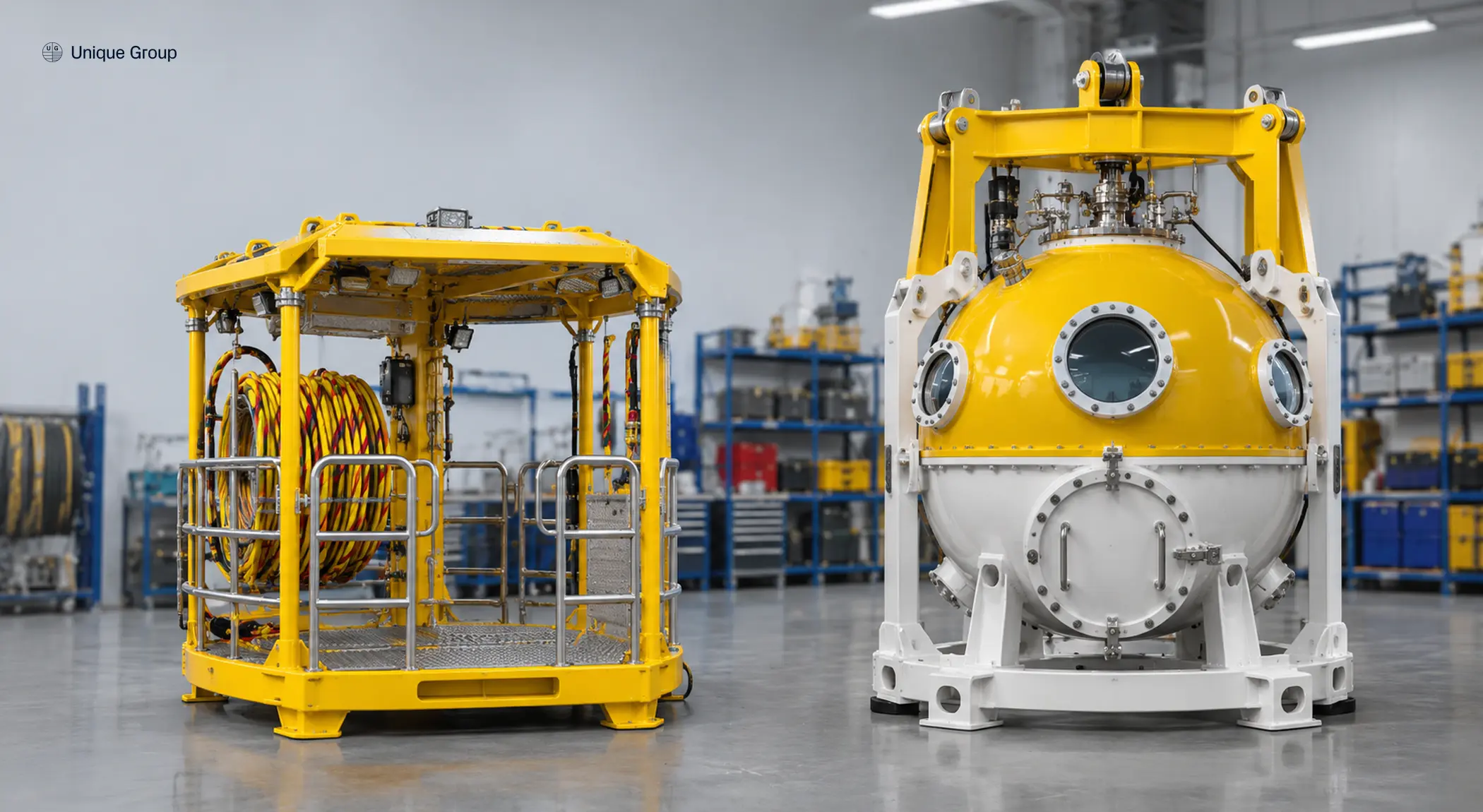
The breathing gas is usually air or nitrox, supplied through a dive control panel. For deeper work with short bottom times, some contractors use mixed gas in a surface-oriented mode. Divers are deployed from a diving stage, a basket or a wet bell.
Each dive is self-contained. The diver returns to atmospheric pressure at the end of it, through in-water decompression stops or surface decompression in a deck chamber. Surface decompression on oxygen, often called SurDO2, shortens the time the diver spends in the water.
Saturation diving vs Surface-supplied diving at a glance
| Factor | Surface-Supplied Diving | Saturation Diving |
|---|---|---|
| Typical depth | Shallower work, commonly within about 50 msw | Deeper work, commonly beyond about 50 msw |
| Productive time | Limited per dive, and shrinks as depth increases | Long working shifts at depth, repeated over many days |
| Decompression | After every dive, in water or in a deck chamber | Once, at the end of the saturation period |
| Breathing gas | Air or nitrox, with mixed gas for some surface-oriented work | Mixed gas, usually heliox |
| Deployment | Stage, basket or wet bell | Closed diving bell |
| Deck spread | Compact, and can be containerised for smaller vessels | Large chamber complex, bell, launch and recovery system (LARS) and gas storage |
| Personnel | Smaller dive team | Larger team, including life support supervisors and technicians |
| Main cost drivers | Number of dives and decompression time | Spread mobilisation, helium, crew and vessel time |
| Emergency planning | Deck chamber for treatment | Hyperbaric evacuation for divers under pressure |
What about the options in between?
The choice is not always binary. Two intermediate methods cover work that is too deep for air diving but not long enough to justify a full saturation spread.
Surface-supplied mixed-gas diving uses a helium-based gas to reduce narcosis at depth while keeping the diver on a surface-supplied system. IMCA guidance permits it from a properly equipped wet bell to a maximum of 75 msw, with bottom time limited to 30 minutes between 50 and 75 msw.
Bell bounce diving uses a closed bell to take divers to depth for a single working period. They then decompress in the bell or transfer under pressure to a deck chamber. It suits dives that are relatively deep, with long decompression, but not deep or long enough to make saturation worthwhile.
How deep can saturation divers go?
In the North Sea, most commercial saturation work has historically taken place at depths of roughly 100 to 180 msw. In Norway, the NORSOK U-100 standard focuses on saturation diving to 180 msw, and deeper operations require special evaluation and validated procedures.
Greater depths bring physiological limits. When divers breathing heliox are compressed beyond about 150 msw, high pressure nervous syndrome (HPNS) can occur, with symptoms such as tremor and impaired performance. Its severity depends on both depth and compression rate, so deeper saturations require slower, staged compression, which extends mobilisation time and adds operational complexity.
The open-sea diving depth record of 534 msw was set in 1988 during Comex’s HYDRA 8 operation in the Mediterranean, conducted with the French Navy using a hydrogen, helium and oxygen mixture known as hydreliox. This was an experimental demonstration rather than routine commercial work. The deeper 701 msw record, set in 1992 during HYDRA 10, was achieved in an onshore hyperbaric chamber.
How to choose the right diving method
The decision rarely comes down to depth alone. Here are the factors diving contractors and project engineers weigh when planning a scope.
Water depth
Depth sets the starting point. In offshore practice following IMCA, UK and Norwegian requirements, surface-supplied air and nitrox diving is limited to 50 msw, and saturation diving is generally used for work deeper than this.
Limits differ in other regions, including the United States, where regulations allow surface-supplied air diving to greater depths. Confirm the applicable limits early, because they affect the vessel and equipment you need to secure.
How long the work will take
Total bottom time often decides the method. On a surface-supplied dive, useful working time falls as depth increases, while decompression time grows. On a deep or lengthy scope, divers can end up spending more time decompressing than working.
Saturation reverses that ratio. The decompression overhead is fixed at the end of the job and is spread across every working shift. On large construction, pipeline or riser campaigns, this usually makes saturation the more productive option, even with the higher daily cost.
Vessel and deck space
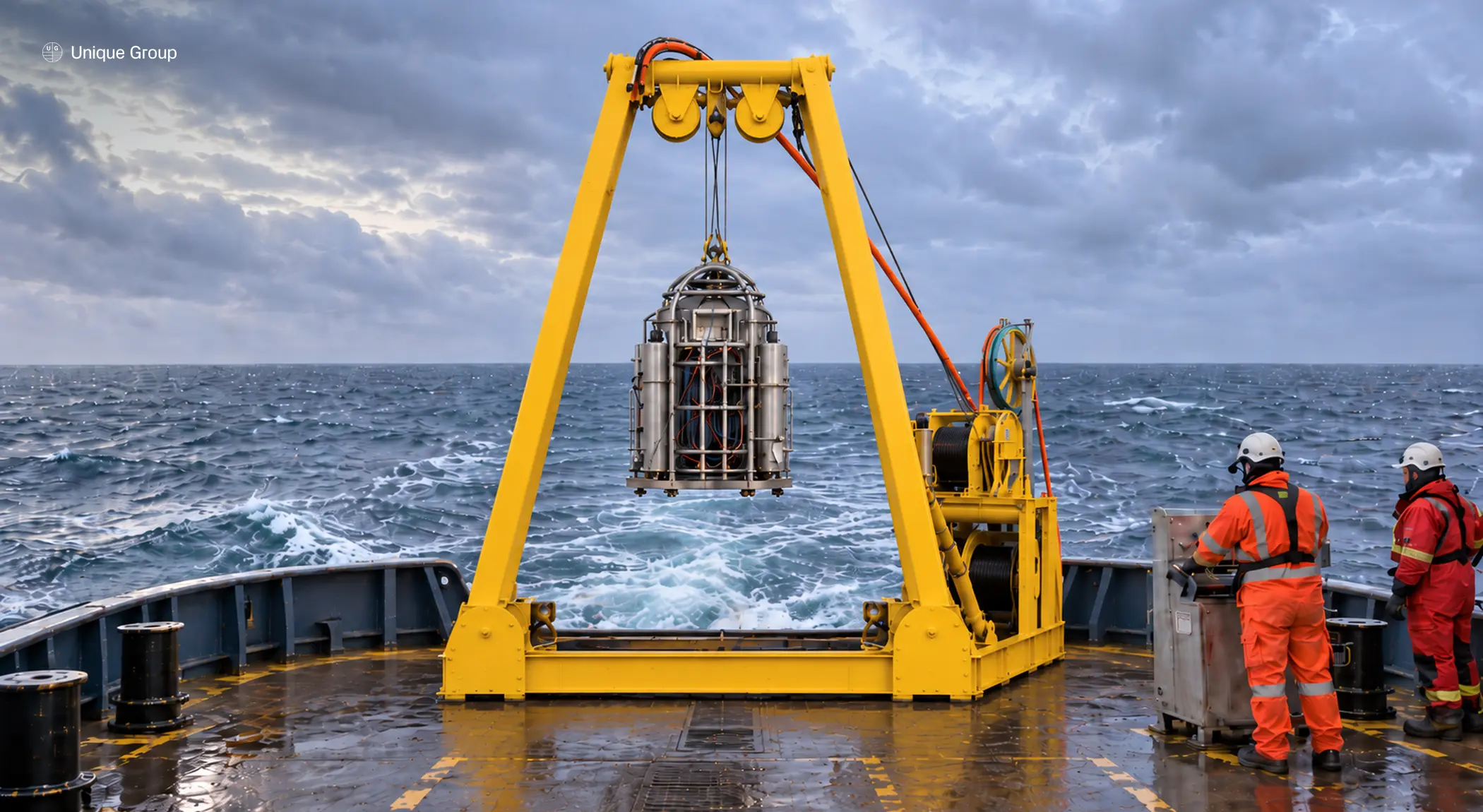
A saturation spread needs room for the chamber complex, the bell, the bell launch and recovery system (LARS), gas storage and life support control. In practice, this often means a dedicated dive support vessel or a permanently installed system.
A surface-supplied spread is far more compact. Containerised systems can be mobilised to smaller vessels, platforms or nearshore sites. Where a project needs saturation capability without a dedicated vessel, a mobile saturation system can be installed for the duration of the campaign.
Cost, helium and logistics
Saturation diving costs more per day. The spread, the larger crew and the vessel time all add up, and helium is a significant cost whose supply varies by region. Gas reclaim systems recover exhaled helium to reduce consumption.
Comparing daily rates alone can mislead. What matters is the cost of completing the full scope. A surface-supplied campaign that needs many more dives and long decompression schedules can end up costing more than a shorter saturation campaign.
Emergency and hyperbaric evacuation
Divers in saturation cannot be brought to the surface quickly. If the vessel has to be abandoned, they must be evacuated under pressure, using a self-propelled hyperbaric lifeboat (SPHL) or another hyperbaric rescue unit, and then received at a facility that can decompress them safely.
Plan this arrangement as part of the system from the start. Unique Group has designed, manufactured and delivered a 12-person Hyperbaric Reception Facility (HRF) and Life Support Package for Oceaneering’s air and saturation diving operations in Angola, rated for depths of up to 300 msw and compliant with IMCA and DNV requirements. Read more in our article on SPHLs.
Regulatory and client requirements
Depth limits, gas requirements and system standards vary by location. National regulators such as the UK Health and Safety Executive and Havtil in Norway, industry guidance such as the IMCA D 014 code of practice, standards such as NORSOK U-100, classification society rules and client specifications can all apply to the same project.
Settle these requirements before choosing equipment, because they can determine which methods are permitted at a given depth and how the system must be built and certified.
Equipment each method requires
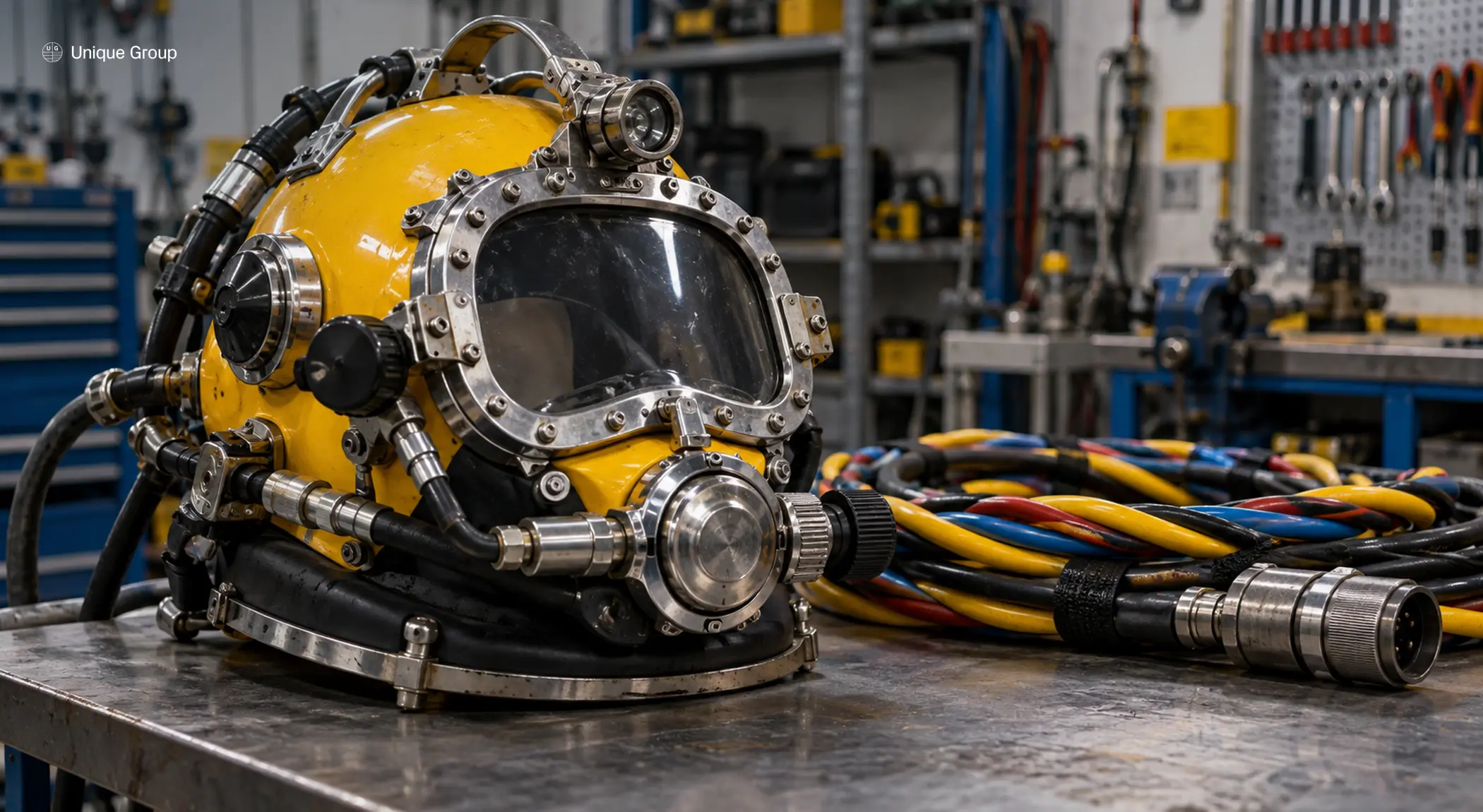
A surface-supplied spread is built around a dive control panel, compressors and high-pressure gas storage, diver umbilicals, helmets and communications. Depending on the depth and decompression plan, it may also need a stage or wet bell with a LARS, and a deck decompression chamber. The UG LR80 A2 diver wetbell system is one example of this type of deployment equipment.
A saturation spread is larger and more integrated. It includes:
- living and transfer chambers
- a closed bell and bell LARS, with bell equipment such as heaters, battery packs and hot stabs
- gas storage, mixing and reclaim systems
- environmental control
- life support control
- a hyperbaric evacuation arrangement
Explore Unique Group’s saturation diving systems.
For a full breakdown of the components involved, see our guide to diving life support systems.
Choosing the right method for your project
Surface-supplied diving suits shallower work and shorter tasks, where a compact spread and quick mobilisation make sense. Saturation diving is the practical choice for deep or long-duration work, where repeated decompression would take more time than the work itself.
Many projects sit close to the line between the two. The right answer comes from looking at depth, scope duration, vessel, logistics, emergency planning and regulation together, before the equipment is selected.
Speak with our diving specialists to discuss your project requirements.
Frequently asked questions
What depth requires saturation diving?
Under IMCA, UK and Norwegian practice, surface-supplied air and nitrox diving is limited to 50 msw, so saturation is generally used for work deeper than this. In Norway it is a legal requirement below 50 m. Limits differ elsewhere, and bottom time also matters: a long campaign can justify saturation even near the crossover depth.
Can surface-supplied divers use mixed gas?
Yes, in some regions. IMCA guidance permits surface-supplied mixed-gas diving from a wet bell to a maximum of 75 msw, with bottom time limited to 30 minutes between 50 and 75 msw. It is not permitted below 50 m in Norway, and IMCA advises against it from DP vessels.
How long can divers stay in saturation?
DMAC 21 recommends that, where no national regulations apply, a saturation should not normally exceed 28 days, and IMCA guidance applies this limit including decompression. Cumulative saturation exposure should not exceed 182 days in any 12 months. Norway and some contractors set stricter limits.
Is saturation diving more expensive than surface-supplied diving?
Per day, yes. For a large or deep scope of work, it can still be the more economical option overall, because divers spend far more of their time working and far less decompressing.