Every offshore decommissioning programme comes down to a sequence of cuts. Pipelines, casings, conductors, jacket legs and templates all have to be severed cleanly, safely and in the right place before anything can be recovered. But there is no single cutting method that suits every material, diameter and access condition. Choosing well means understanding what each tool does best. This guide walks through the main subsea cutting methods used in decommissioning and how to match them to the scope.
Key Takeaways
- No single cutting method works for every scope. Selection depends on material, wall thickness, diameter, access, and how much reaction force the deployment system can handle.
- Diamond wire saws give the cleanest, most precise cut and can sever almost anything they can wrap around, but they need time to rig around the target.
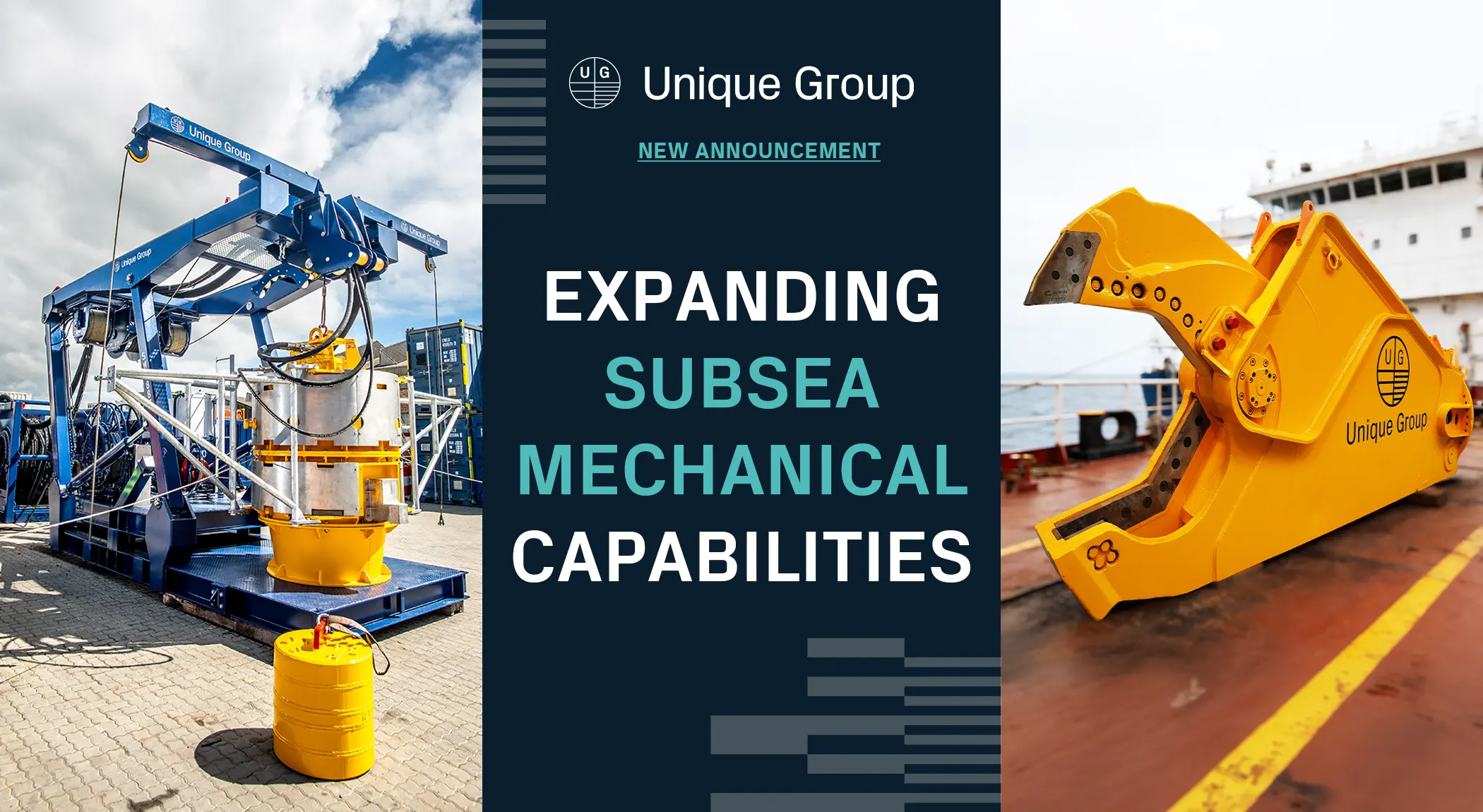
- Hydraulic shears are the fastest method for a single accessible cut. Unique Group’s Subsea Hydraulic Shear delivers 1850 tonnes of force through a 965mm jaw opening.
- Abrasive waterjet is the only method suited to composite materials such as grouted casings or concrete-coated pipe, cutting steel, concrete, grout and plastic at 2400 bar.
- Cutting and recovery should be planned together. Cut length should match the recovery tool’s capacity, such as a twin-grab tool’s ability to recover two lines at once.
Why Cutting Method Selection Matters
The cut defines everything downstream. Cut length dictates how many lifts the recovery spread has to make; cut quality affects how safely a load can be rigged; and the cutting method itself governs how much time an ROV or dive spread spends on station. A method that is fast on thin-wall pipe may stall on a multi-string casing; one that handles concrete and grout may be overkill on a clean steel flowline. Selection is a balance of material, wall thickness, diameter, access and the tolerance for reaction forces on the tool.
Diamond Wire Cutting
A diamond wire saw drives a diamond-impregnated wire in a loop around the member and cuts by abrasion. It is the precision option, able to sever multi-string casings, heavy-wall tubulars, structural members and complex or irregular pipe systems where a jaw simply cannot fit. Unique Group’s Ren Diamanta series diamond wire saws are built for exactly this: high-precision cutting of risers, pipes, jacket legs, caissons, piles, subsea structures and templates, and they are equally suited to emergency intervention and salvage.
The strength of diamond wire is that it cuts almost anything it can wrap around, regardless of internal structure, and leaves a clean, square face. The trade-off is set-up: the wire has to be rigged around the target, so it favours planned cuts on large or composite sections rather than rapid repetitive work.
Hydraulic Shearing
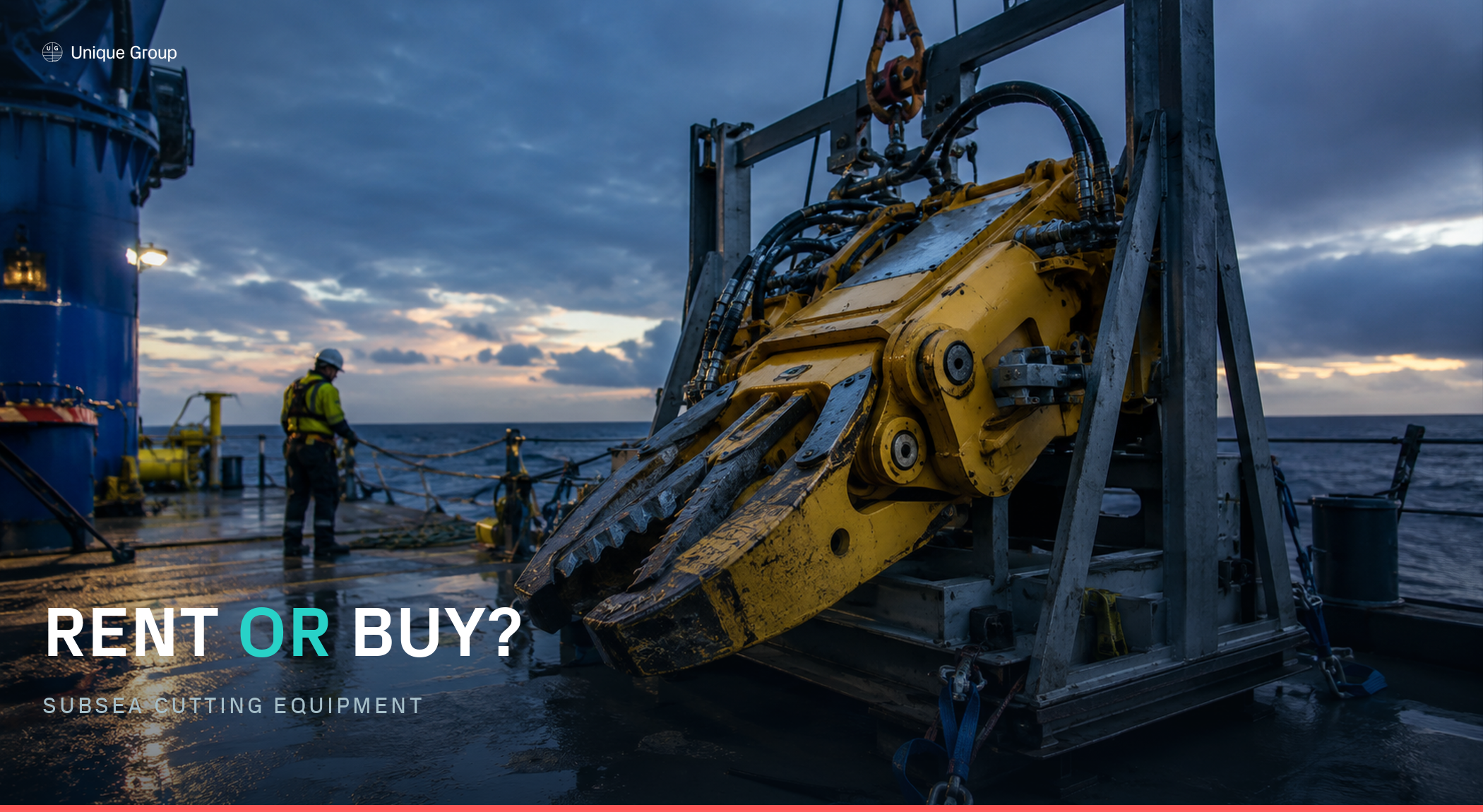
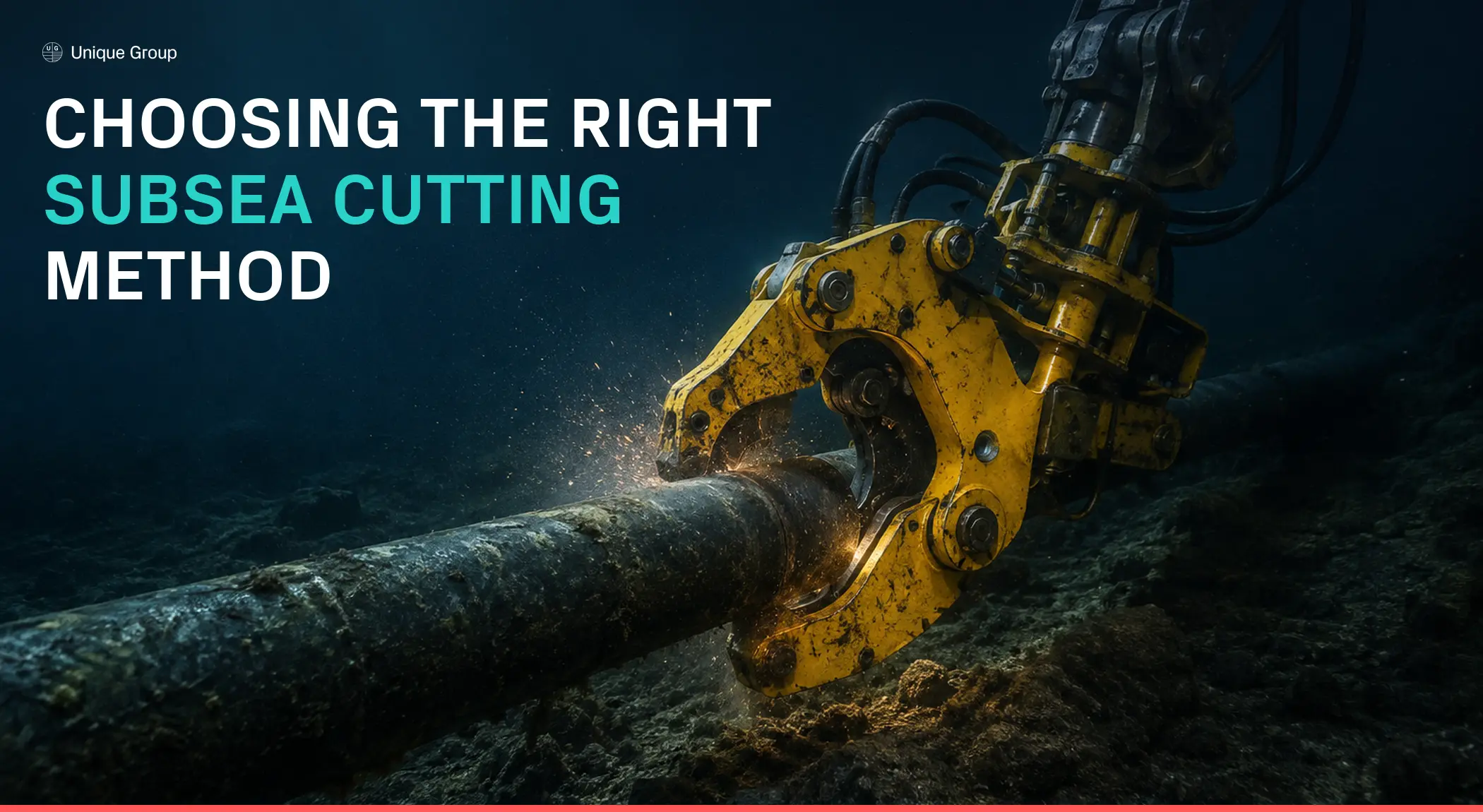
A hydraulic shear cuts by brute mechanical force, closing a hardened jaw through the member like a giant pair of bolt cutters. It is the fastest method for a single, accessible cut. Unique Group’s Subsea Hydraulic Shear delivers 1850 tonnes of cutting force through a 965 mm jaw opening and can sever pipelines up to 36 inches in diameter with 1.5-inch wall thickness. There is no consumable wire and no abrasive spread; the jaw closes, the pipe parts, and the tool moves on.
Shears are ideal for thick-walled flowlines and structural members such as piles, conductors and braces, where speed matters and the cut face does not need to be laboratory-clean. The limits are geometry and reaction: the jaw has to fit around the target, and the tool and its handling system have to react the closing force.
Abrasive Waterjet Cutting
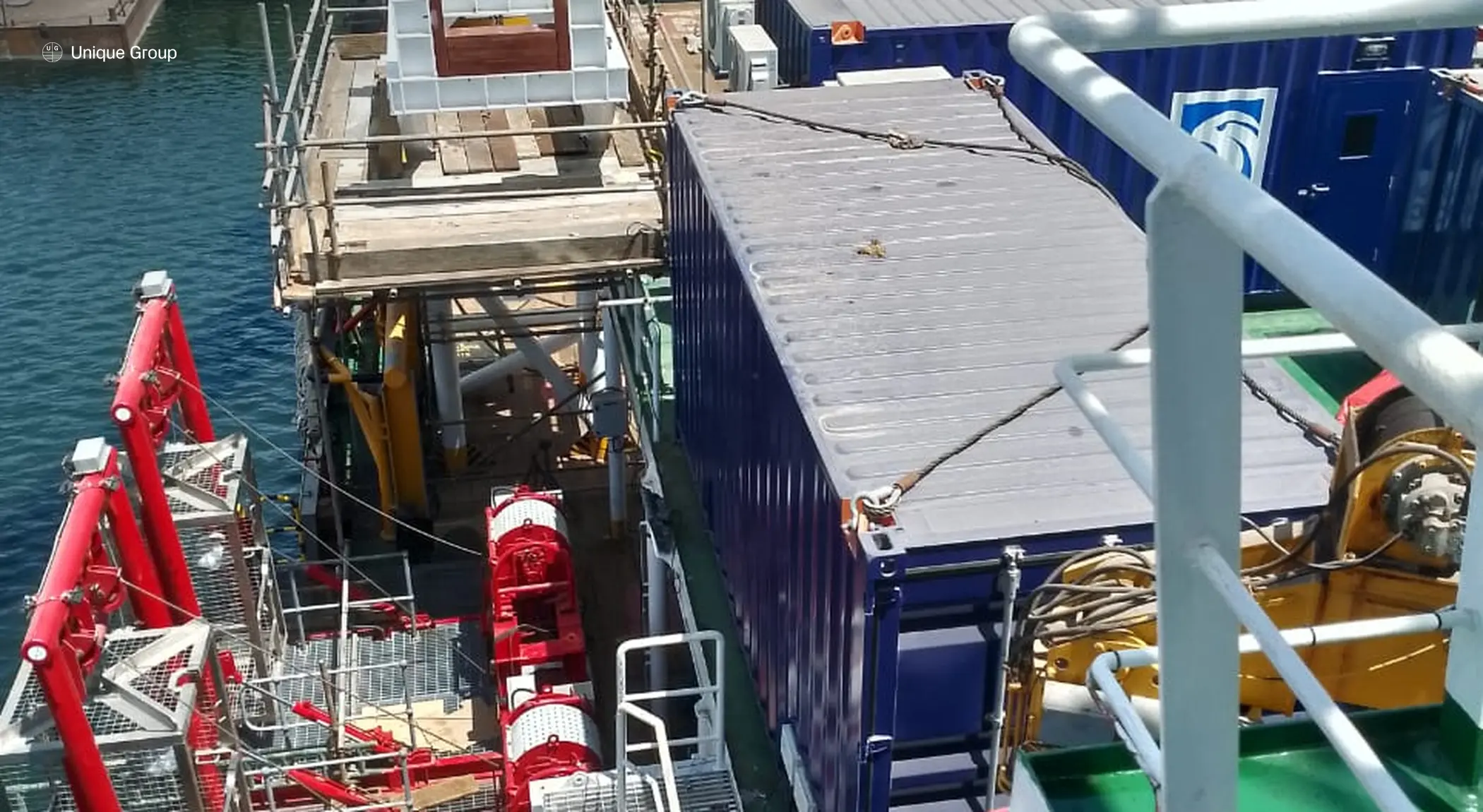
Abrasive waterjet cutting mixes high-pressure water with abrasive grit and drives it through a nozzle to erode a kerf through the material. Unique Group’s REN Abrasive Cutting System runs at 2400 bar from a topside spread of two 10-foot containers and a downline hose reel, feeding remote-controlled magnetic crawlers and internal or external cutting manipulators. Crucially, it cuts steel, concrete, grout and plastic, and it works both above and below the waterline.
Waterjet is the method of choice when the target is a composite, such as grouted casings, concrete-coated pipe or multi-string wells, or when access forbids a jaw or a wrapped wire. It produces no heat-affected zone and needs no mechanical grip on the workpiece. The cost is topside footprint and the consumables of water and abrasive.
Matching Method to Scope
- Clean steel flowline, fast repetitive cuts: hydraulic shear.
- Multi-string casing, jacket legs, irregular members: diamond wire saw.
- Grouted, concrete-coated or composite sections: abrasive waterjet.
- Cutting close to or above the waterline: abrasive waterjet with a crawler.
- Emergency intervention or salvage: diamond wire for versatility across unknown sections.
Reaction Forces, Deployment and Support
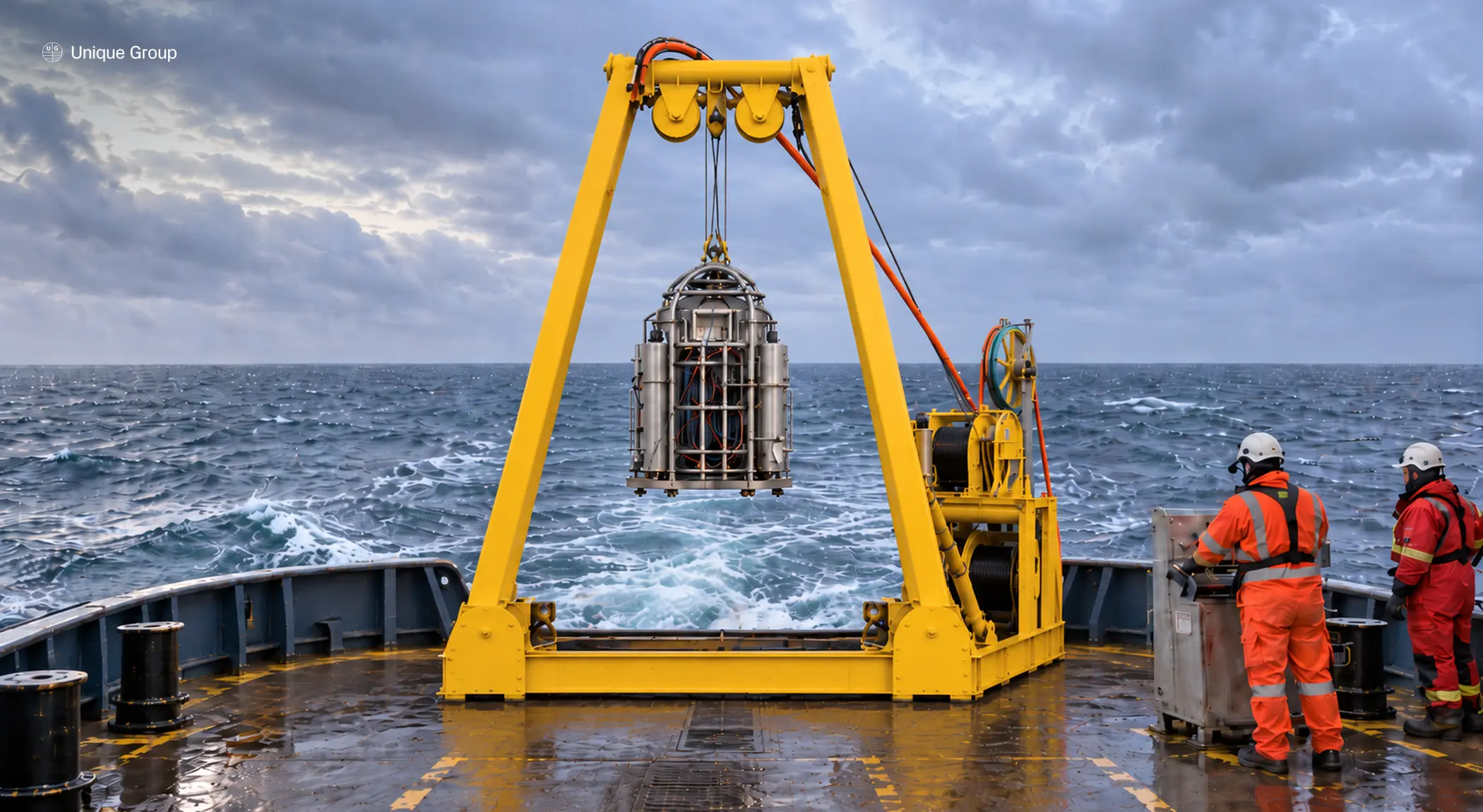
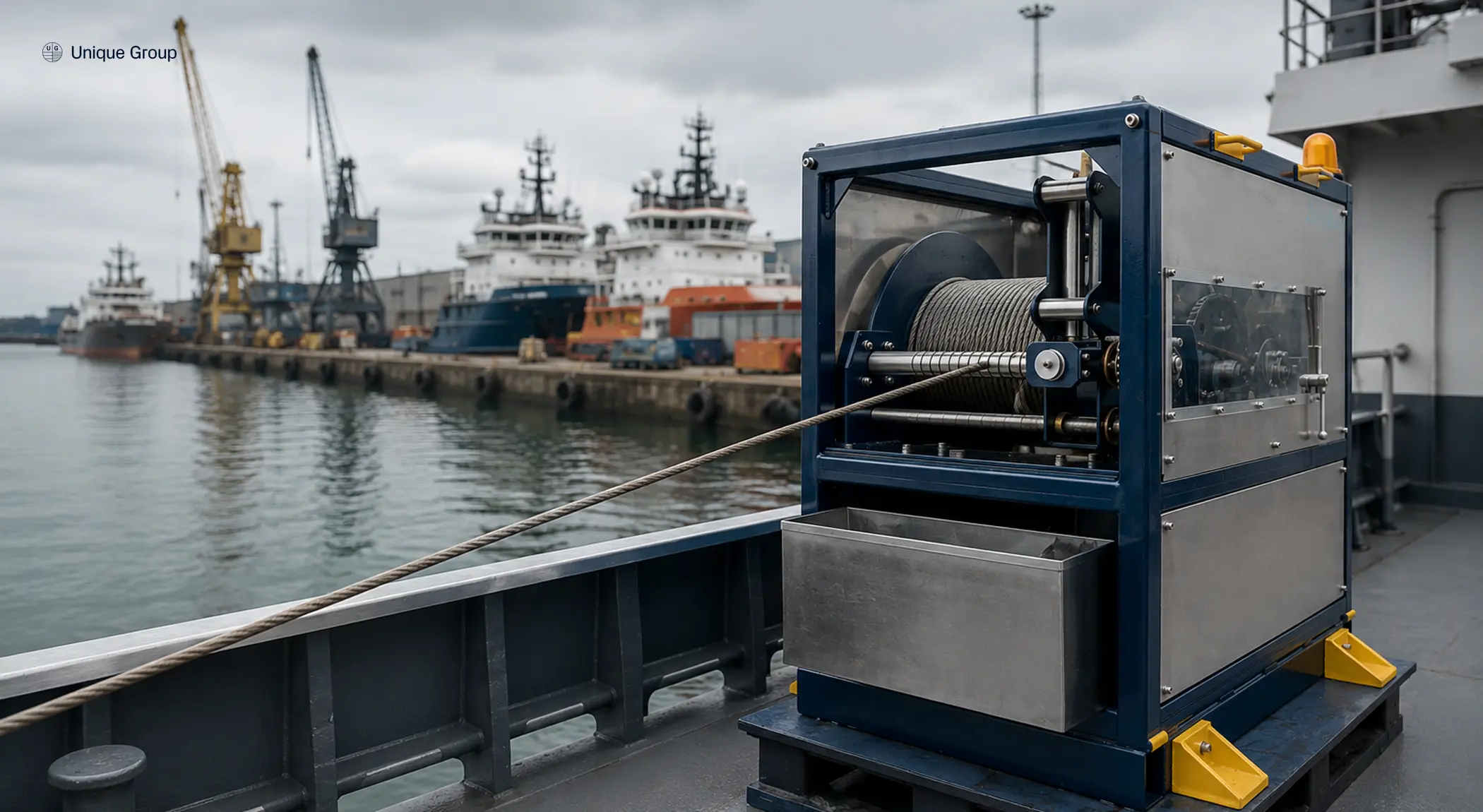
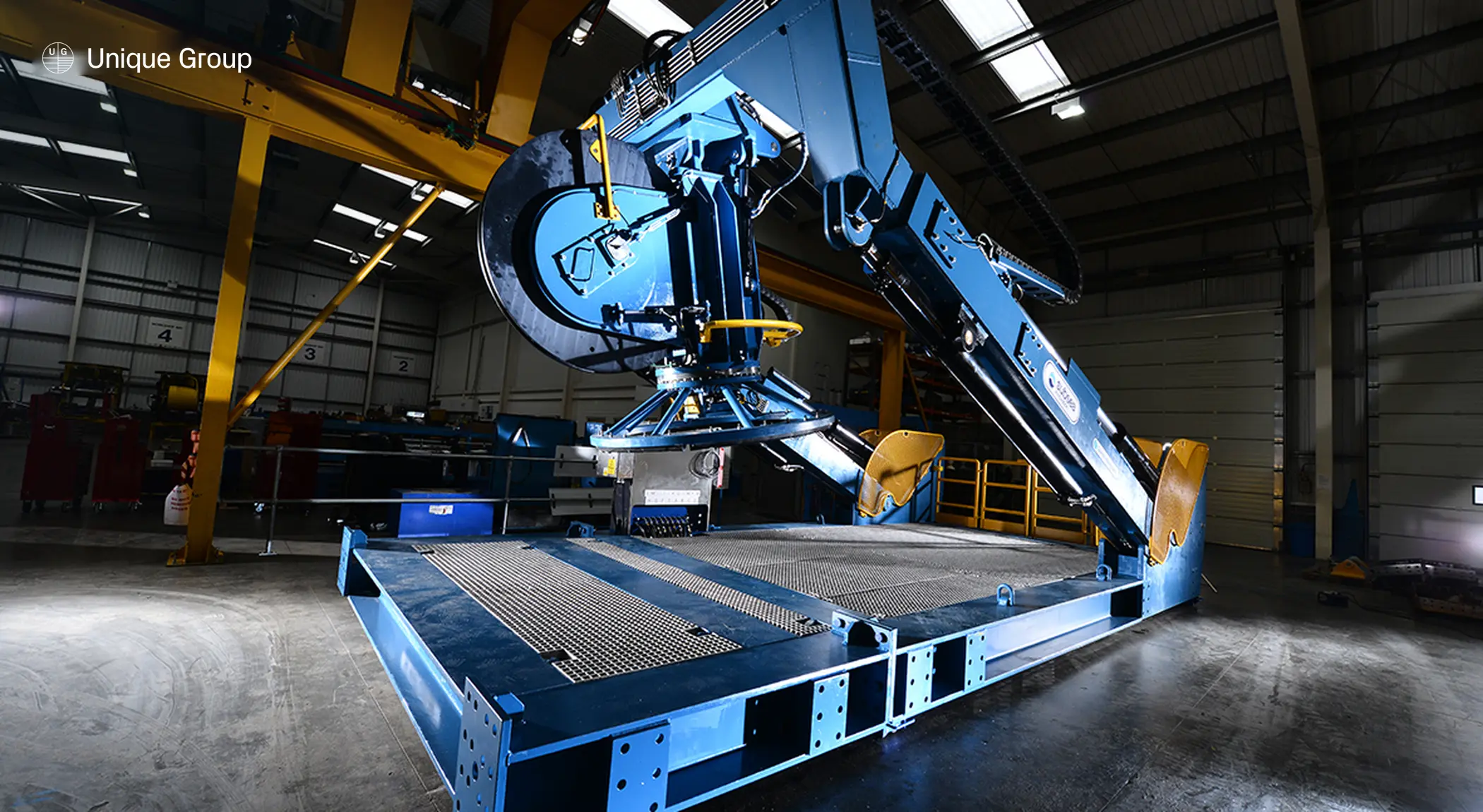
Beyond the cut itself, each method carries a support burden that shapes the operation. A hydraulic shear needs a handling system able to react its enormous closing force and enough deck space to mobilise a heavy tool. A diamond wire saw needs room to rig the wire loop and a means to feed and tension it.
An abrasive system needs its topside container spread, high-pressure pumps and abrasive supply on deck, plus a downline to the cutting head. None of this is a drawback; it is simply part of specifying the method honestly, because the tool that fits the deck and the vessel is as important as the tool that fits the pipe.
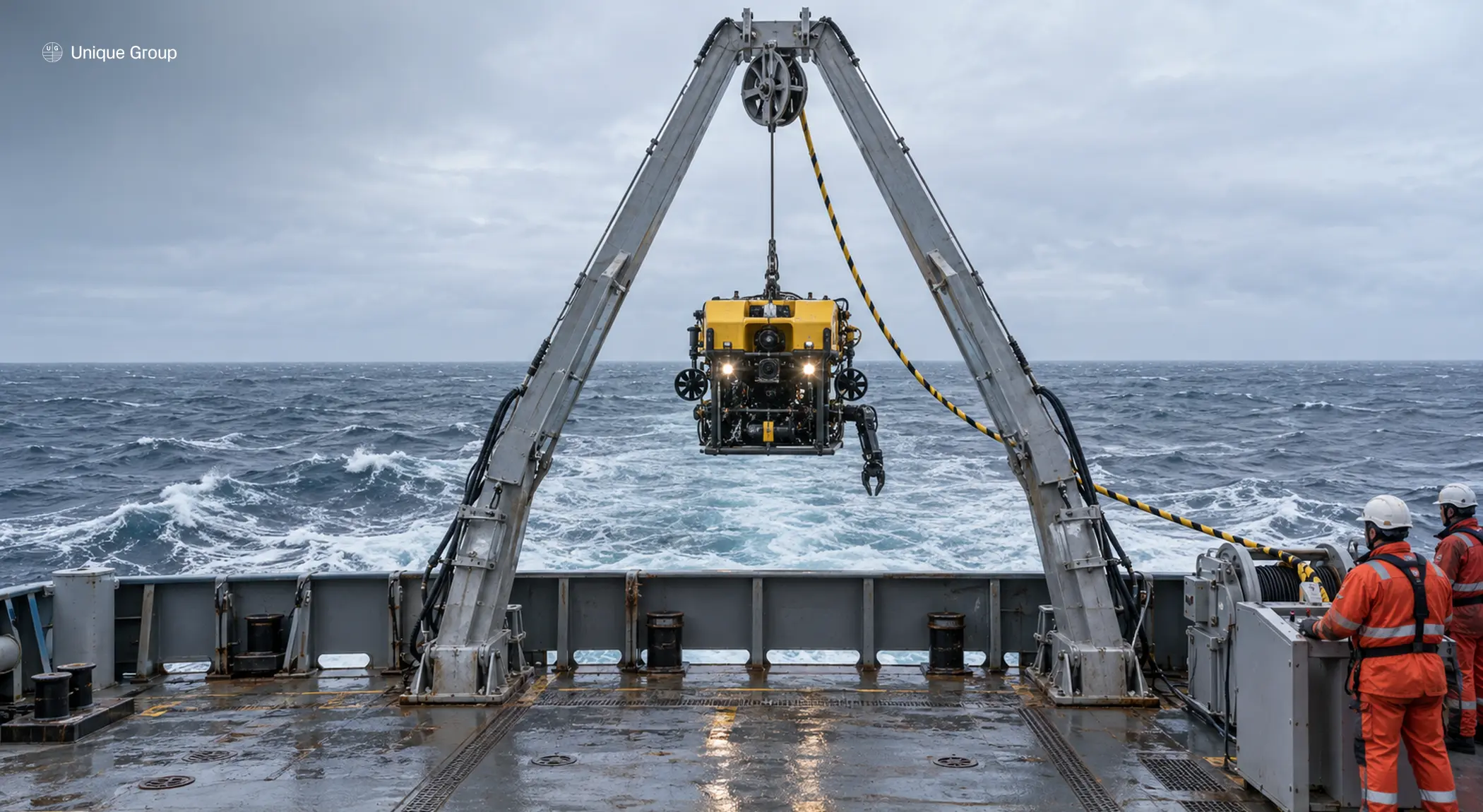
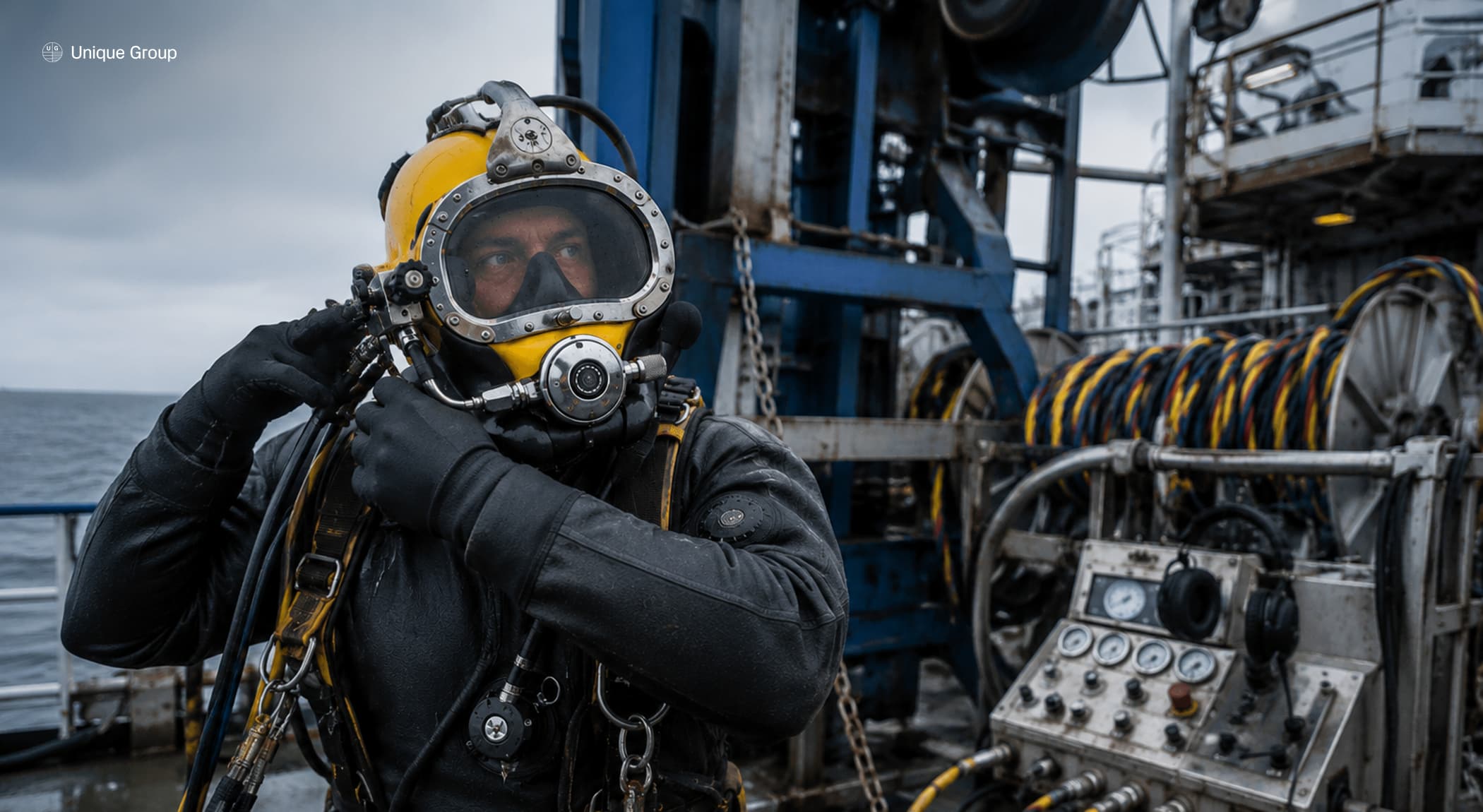
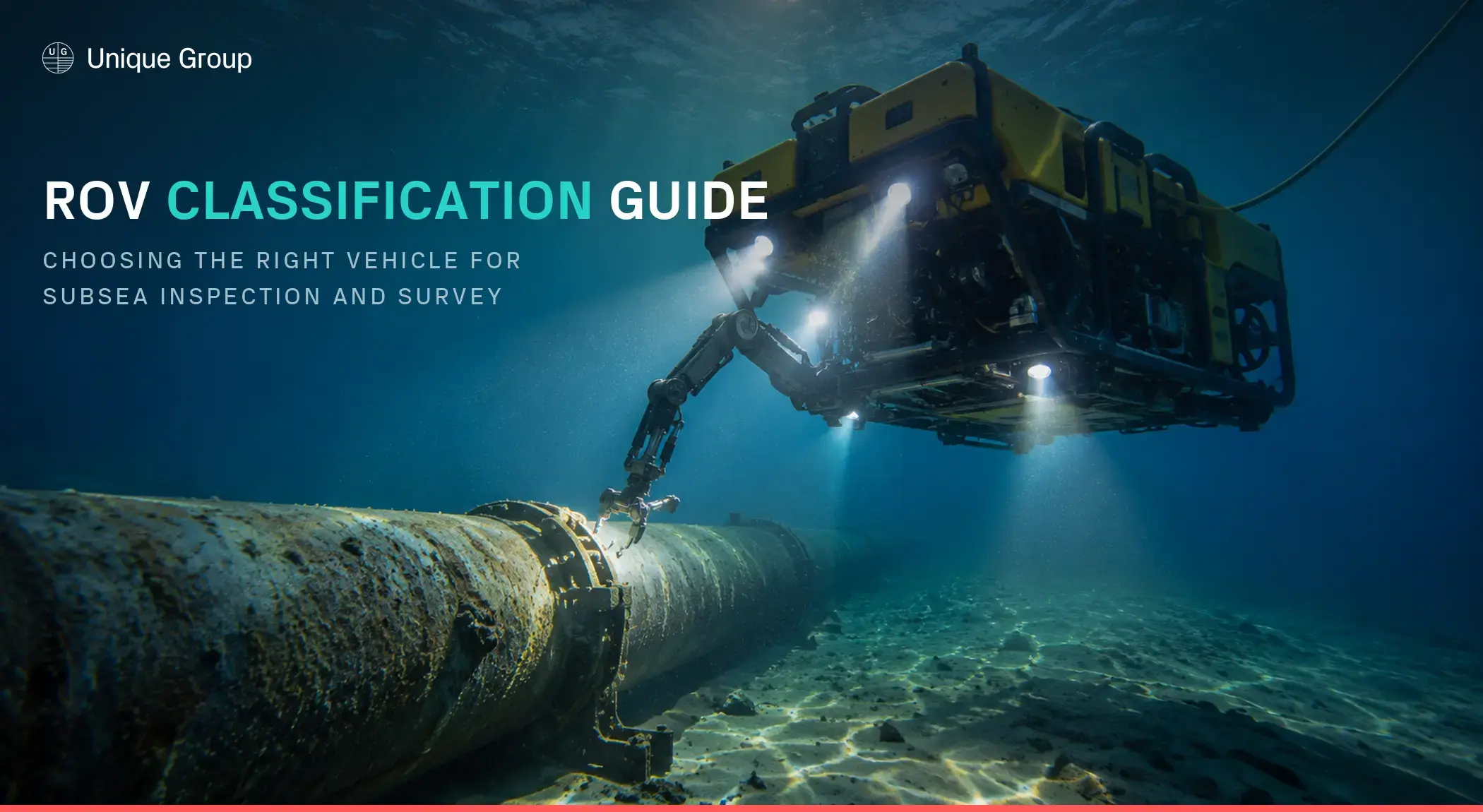
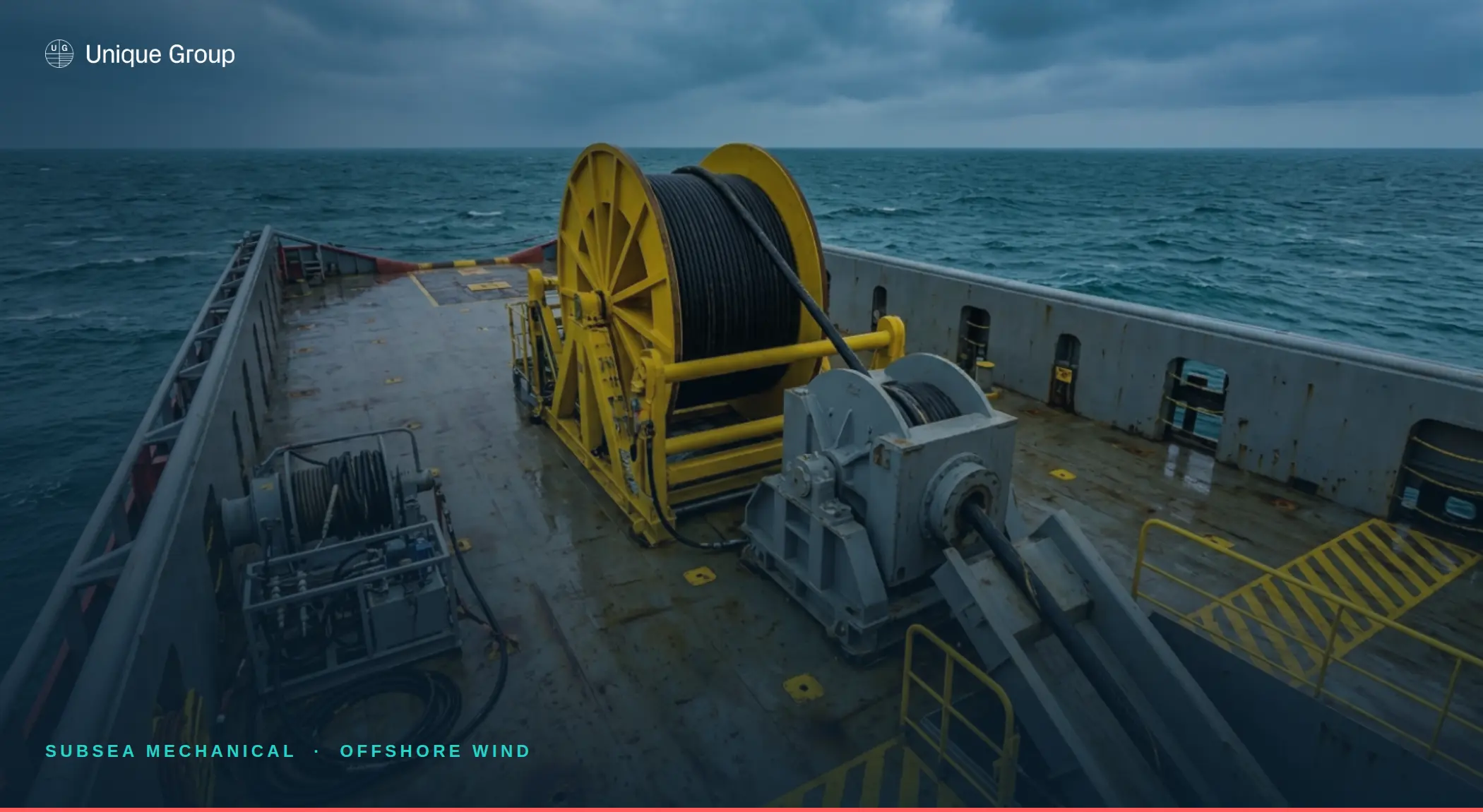
Deployment method matters too. Most modern subsea cutting is ROV-deployed, which keeps divers off the cut and allows work at depths and in conditions that would otherwise be off-limits. Matching the cutting tool to the available ROV or deployment system, and to the seabed access at the cut location, is part of the same selection exercise as choosing between wire, jaw and jet.
Cutting is Only Half the Job
Whatever severs the steel, something has to recover it. Cut sections are engaged and lifted with pipeline recovery grabs; for twin or bundled lines, a twin-grab tool recovers two at a time. Planning the cut length around the recovery tool’s capacity and jaw range keeps the two operations in step and avoids sections that are cut but awkward to lift.
A Single, Integrated Cutting and Recovery Spread
Unique Group supplies diamond wire saws, hydraulic shears, abrasive cutting systems and recovery grabs as part of one integrated decommissioning capability. Specifying the cutting methods and the recovery tools together, from one supplier with more than 30 years of offshore experience and a worldwide office network, means the whole severance-and-recovery sequence is designed as a system rather than assembled from parts. That is how a decommissioning cutting scope stays on schedule.
Speak with our subsea mechanical specialists to discuss your project requirements.