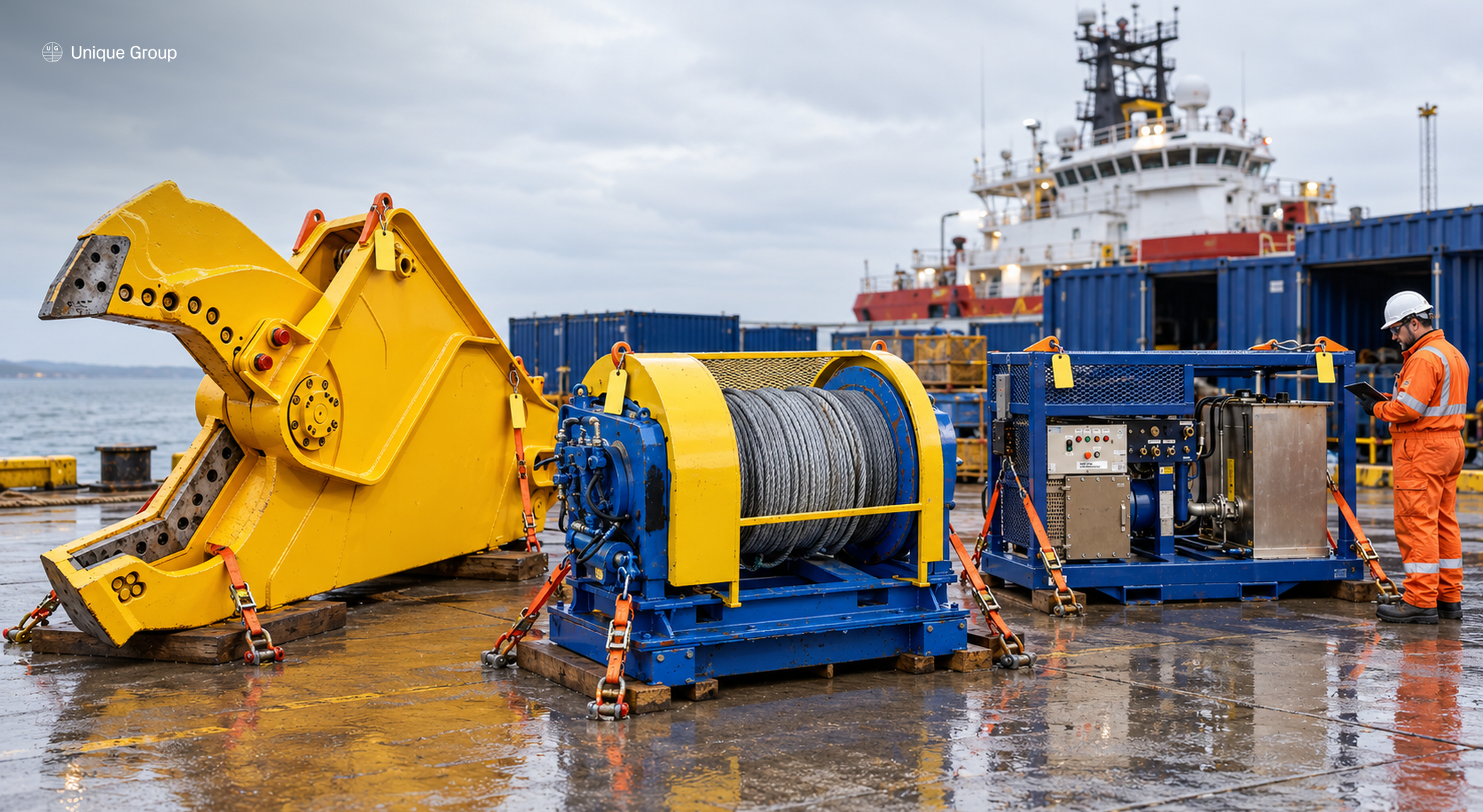
Subsea equipment carries two costs: the cost of owning it, and the cost of it standing idle between campaigns. An operator running a single decommissioning spread and a contractor mobilising winches most weeks of the year work from the same catalogue and reach opposite conclusions. The decision turns on a small number of variables: how often campaigns run, how heavily equipment is utilised when they do, how quickly it must be mobilised, how much certification and maintenance burden the operator is prepared to carry in-house, and whether the budget favours capital expenditure (capex) or operating expenditure (opex). Neither answer is universally correct. This guide sets out where renting is the cheaper and faster route, where ownership pays for itself, how to work out the break-even point for a specific item of equipment, and what a complete subsea equipment rental package should include.
Key Takeaways
- Renting suits low-frequency or one-off subsea campaigns, while buying suits equipment mobilised often enough to justify the ownership burden.
- The decision turns on campaign frequency, utilisation rate, mobilisation urgency, and the certification and maintenance burden an operator is willing to carry.
- The break-even point is calculated per item rather than taken from a single industry figure, because rental rates, purchase prices, maintenance, certification, and mobilisation requirements all differ by equipment type.
- Renting is usually the stronger option for one-off decommissioning spreads, peak overflow capacity, and specialist cutting tools used infrequently.
- Ex-rental sale sits between the two routes, and suits operators who have crossed the utilisation threshold but do not want to pay new-build price or wait on a new-build lead time.
- A complete rental package should include certification, spares, technician support, and mobilisation support, rather than the equipment alone.
Why Renting vs Buying Is a Decision, Not a Default
Renting converts a capital purchase into an operating cost and transfers maintenance, storage, and recertification to the supplier. Ownership reverses that position. The asset is available on demand, and its cost per campaign-day falls with every additional day of use, provided the utilisation is there to justify the purchase in the first place.
Four variables carry most of the weight. Campaign frequency establishes how many days per year the equipment will earn. Utilisation rate establishes how much of that time the equipment is actually working rather than waiting on weather, vessel availability, or another part of the spread. Mobilisation urgency establishes whether a procurement lead time is survivable or whether the equipment has to arrive certified and ready within days. The certification and maintenance burden establishes what an operator takes on permanently: planned maintenance, non-destructive testing (NDT), load testing, inspection, testing and certification or recertification where applicable, spares holding, and the technicians who carry out the work.
Buying wins in clear and specific circumstances. It wins for core fleet equipment that mobilises continuously across a contract portfolio. It wins where equipment has been configured or modified for a particular vessel spread or interface, so that a standard rental unit would need reworking on each hire. It wins where an operator works in locations with difficult logistics, customs, or cabotage constraints that make repeated inbound and outbound shipping slower and more expensive than holding the asset locally. And it wins where an operator already runs a maintenance and certification function, because the marginal cost of adding another asset to an existing regime is low. Subsea equipment rental earns its place in the remaining cases, which for most operators is the majority of them.
Renting vs Buying: Cost and Operational Comparison
The comparison below sets the two routes against each other on the factors that decide most subsea equipment cases. Cost is only one of them. Certification status, spares access, and the time it takes to get a certified unit to a quayside frequently matter more to a campaign schedule than the headline rate. Where a cell states a commercial position rather than a figure, that is deliberate, because rates and purchase prices for subsea mechanical equipment are quoted against configuration and scope rather than published as list prices.
| Factor | Rent | Buy |
|---|---|---|
| Upfront cost | No capital outlay. A rental rate for the hire period, plus mobilisation and demobilisation, and where applicable a deposit or damage waiver. It avoids the upfront capital commitment associated with purchasing equipment and allows equipment costs to be aligned more closely with individual campaigns. | Full purchase price as capital expenditure, plus the costs that follow it: spares holding, handling and storage, and the maintenance and certification regime the asset then requires for its working life. |
| Utilisation break-even | Cheaper below the break-even point for the item in question, because cost is incurred only on the days the equipment is on hire. The break-even is calculated per item rather than set at one figure across the catalogue. | Cheaper above the break-even point for the item in question, with cost per campaign-day falling on every additional day of use. Where that point sits depends on purchase price, the maintenance and certification regime, and the mobilisation effort each campaign requires. |
| Maintenance and recertification | The supplier typically manages the fleet’s long-term maintenance and applicable certification, while responsibilities during the rental period are defined by the rental agreement. | Carried by the owner for the working life of the asset: planned maintenance, non-destructive testing (NDT), load testing, and inspection, certification or recertification at intervals required by the applicable standard or equipment requirements. |
| Mobilisation time | Governed by stock availability, certification status, and technician availability rather than by procurement. Regional availability across Unique Group’s global network can help reduce transit and mobilisation time. | Immediate where the asset is in-house, certified, and not committed to another campaign. Subject to manufacturing and delivery lead time where the equipment is being bought new. |
| Spares and technician support | Should be itemised in the agreement rather than assumed, covering consumables, critical spares, and technician attendance onshore or offshore. | The owner is responsible for funding the required spares, maintenance capability, and competent technical support for the equipment and its interfaces. |
| Obsolescence risk | The supplier carries the long-term asset ownership and obsolescence risk. Rental can also allow a different specification to be selected for later campaigns, subject to fleet availability. | Carried by the owner across the asset life, and mitigated through refurbishment, upgrade, or resale. |
| Route to ownership | Ex-rental sale allows equipment that has been in the rental fleet to be purchased outright, which shortens lead time against a new build. | New-build purchase gives full specification control and a full asset life, at new-build price and lead time. |
How to Work Out the Break-Even for a Specific Item
Rent-versus-buy resolves item by item rather than against a single industry figure. The break-even point, expressed in campaign-days per year, is the number of working days at which the annual cost of owning a particular item falls below the cost of renting the same item for those days. That number moves substantially between equipment categories, because rental rates, purchase prices, maintenance and certification regimes, and mobilisation requirements all differ by category. A threshold that holds for a light electric winch will not hold for a full excavation spread or for specialist cutting tooling.
Working it out means comparing two annual totals for the item in question. On the ownership side: the purchase price spread across the expected asset life, planned maintenance, non-destructive testing (NDT), load testing and recertification at the intervals the applicable standard sets, spares holding, storage and handling, storage and handling, and insurance, less the residual value expected at disposal. On the rental side: the rate for the full chargeable hire period, including any standby days, mobilisation and demobilisation for each campaign it is hired for, and any consumables chargeable on use. The break-even point is reached where the estimated annual cost of ownership equals the estimated annual cost of renting the same equipment for the expected campaign schedule.
Three factors move the result more than any others. A demanding certification and maintenance regime pushes the break-even higher, because the owner funds that regime whether or not the equipment works. The rental rate as a proportion of purchase price varies by category, and specialist tooling in limited supply hires at a higher proportion of its purchase price than commodity equipment does. Mobilisation requirements pull in both directions, favouring ownership where an item mobilises repeatedly to the same vessel or spread, and renting where campaigns are dispersed and each one carries its own shipping, customs, and interface effort.
Two qualifications apply, whatever the calculation returns for a given item. The threshold should use a consistent definition of utilisation, because hire days and productive operating days are not always the same. And the threshold assumes the operator can absorb the certification and maintenance regime that ownership brings. An operator without that function in place will find the real break-even sits higher than the arithmetic suggests, because establishing the regime is a cost in itself.
Where Renting Wins vs Where Owning Wins
The calculation is a test rather than a verdict, and in practice, operators may use a mixed model, combining owned core equipment with rented capacity for project-specific or peak requirements: a small owned core fleet, with rented capacity around it. The sections below set out the cases that fall clearly on each side, which is usually enough to place a given item of equipment without modelling it in detail.
Where Renting Usually Wins
One-off decommissioning spreads are among the clearest cases. A decommissioning scope is finite, the tooling is often scope-specific, and the equipment has no obvious second use once the structure is removed, so the ownership burden outlives the revenue. Peak overflow capacity is the second case. Where an owned fleet covers baseline workload, renting the additional units for a busy quarter avoids sizing the fleet permanently for a peak that occurs a few weeks a year. Specialist cutting tools used infrequently are the third case, because the cutting method is selected against the conditions of a particular cut and a tool bought for one job may not suit the next. That decision has its own variables, and it is covered in detail in subsea cutting equipment: rental vs purchase.
Where Owning Usually Wins
Core fleet equipment belongs in the owned column. Where a winch, tool, or handling system mobilises across most of a contract portfolio, cost per campaign-day drops far enough to justify the purchase, and the operator gains availability that does not depend on a supplier’s stock position. Frequently mobilised equipment also rewards familiarity, because technicians working on the same units build competence in their maintenance and interfaces, and the equipment can be modified permanently to suit a vessel deck layout, control system, or power supply rather than reworked for each hire. Ownership additionally suits operators who already run a maintenance and certification function, since the marginal cost of adding an asset to an existing regime is far lower than establishing one from nothing.
What a Subsea Equipment Rental Should Include
A rental agreement covers considerably more than the equipment on the manifest. Certification, spares, technician support, and mobilisation support all determine whether a rented unit works on arrival or holds up a campaign, and each should be itemised in writing before the agreement is signed rather than assumed from the rate.
- Certification pack: current certificates for the equipment and its lifting appointments, with the certifying body named and the validity period stated, so the pack can be presented against the operator’s own assurance requirements. Equipment approved to recognised standards should say which: the Ren Mattress Recovery Tool, for example, is stated as DNV and NORSOK approved.
- Spares and consumables: the critical spares and consumables a campaign will run through, held with the equipment rather than shipped separately after a failure offshore. The agreement should state which items are included and which are chargeable on use.
- Technician support: named, competent technicians available for mobilisation, commissioning, and, where the scope requires it, offshore attendance for the duration of the campaign. Many rental suppliers leave this implicit. It is worth requiring it explicitly, with the response arrangement and any offshore day rates set out in the agreement.
- Mobilisation and demobilisation support: packing, transport documentation, interface checks against the vessel or spread, function testing on arrival, and the same sequence in reverse on completion.
Unique Group’s Subsea Equipment Range
The framework above applies to any subsea spread. Applying it to a specific project means looking at the equipment categories involved and where each usually falls, which is where Unique Group’s subsea mechanical equipment range gives a practical reference point across lifting, cutting, excavation, and recovery work.
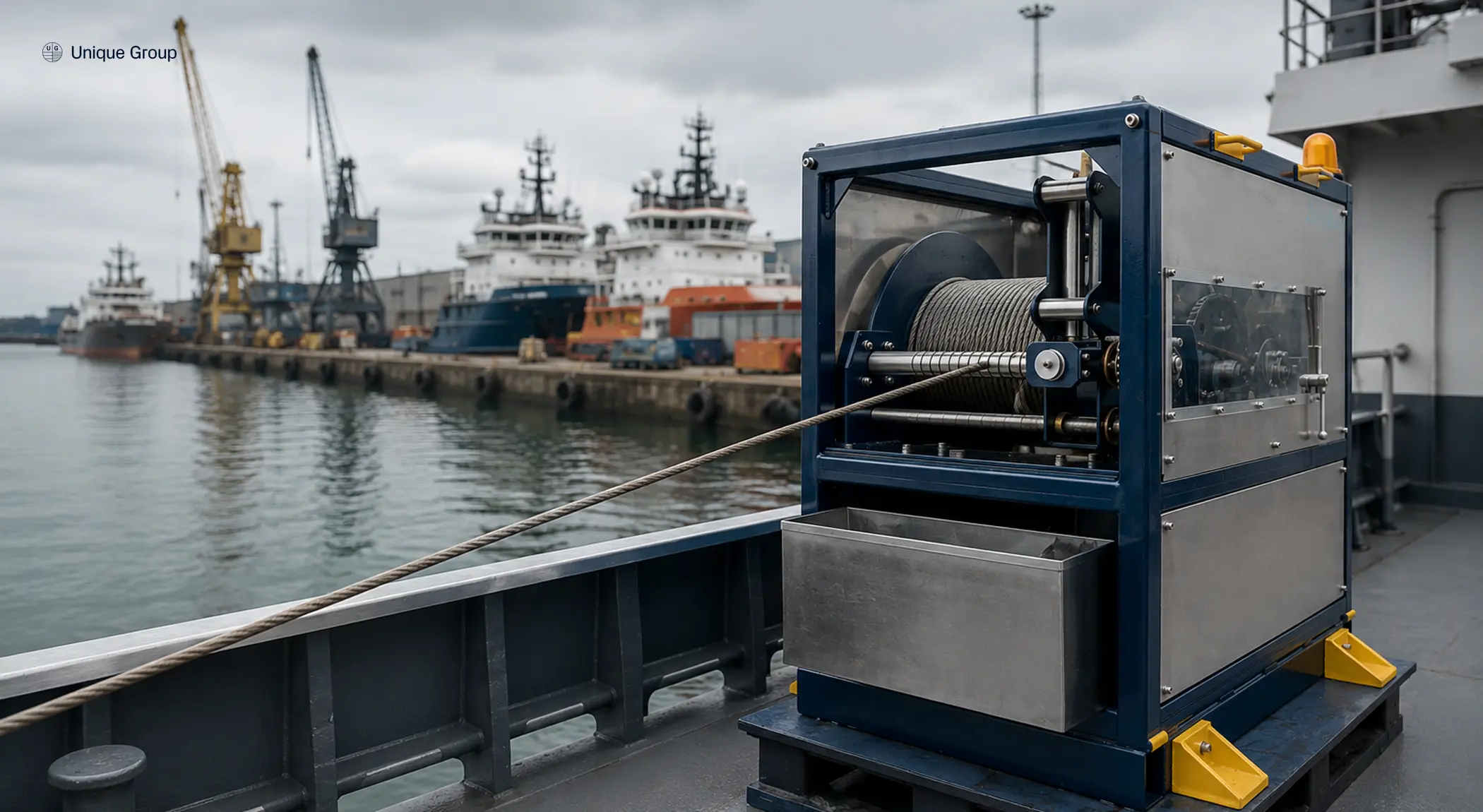
Subsea winches span both routes. Man-rider and umbilical winches mobilised across a contract portfolio tend to sit on the ownership side, while lighter electric units such as the A.G.O. CSW-7VK (2.25kW) and A.G.O. CMW-2 (3.75kW) are available for rental and suit operators covering a single campaign or a peak in workload.
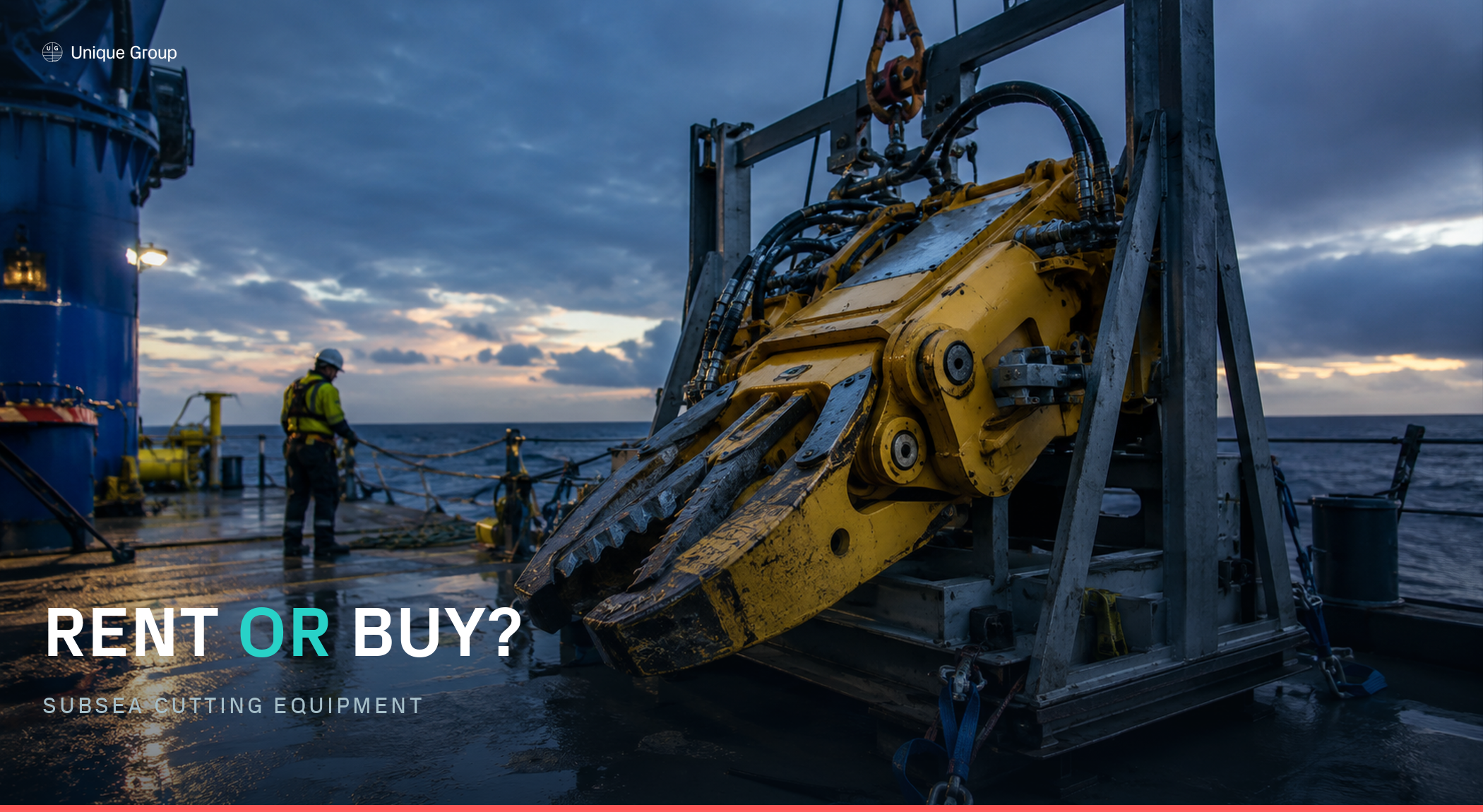
Subsea cutting shears and subsea wire saws fall more clearly on the rental side, and Unique Group classes them accordingly: the RenOcean Subsea Hydraulic Shear, the Ren Diamond Wire Saw 20″, and the Ren Diamond Wire Saw 30″ are all listed as available for rental.
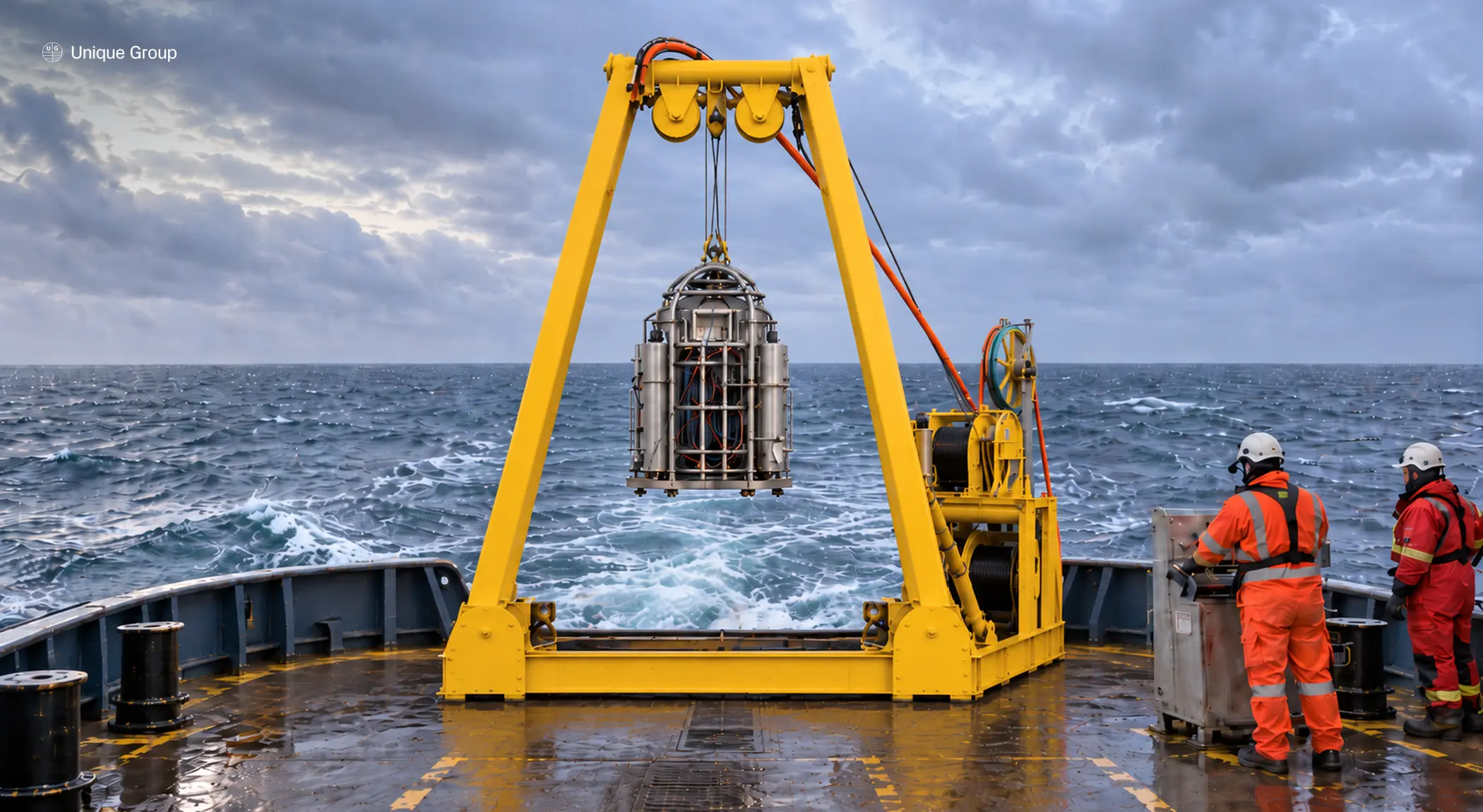
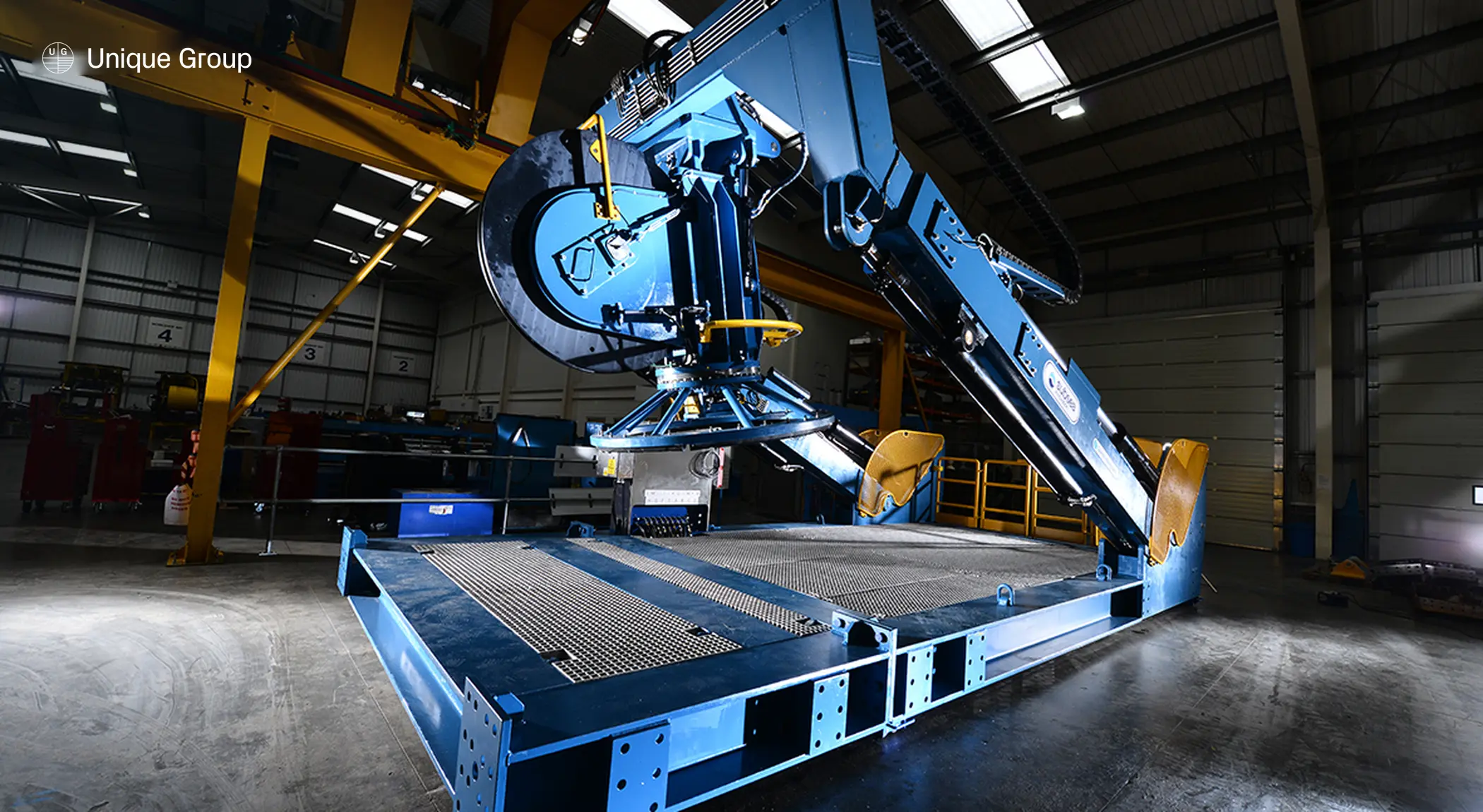
Seabed excavation equipment sits at the other end of the scale. The UG Uni-FlowX Controlled Mass Flow Excavation System is supplied as a full spread rather than a single tool, comprising a launch and recovery system (LARS) with a built-in 37kW hydraulic power unit (HPU), a main lift winch, two clump weight winches, and a data umbilical reel, with a maximum gross weight of 13 tonnes in the main unit. Equipment at that scale makes utilisation the deciding variable, because the mobilisation and interface effort is substantial whichever route an operator takes.
The REN mattress recovery tool sits firmly on the rental side, and is listed as available for rental. It addresses one specific task, the controlled recovery of concrete mattresses from the seabed, which appears intermittently within wider decommissioning, rerouting, and site clearance programmes.
FAQ
Is it cheaper to rent or buy subsea equipment?
It depends on utilisation, and the break-even point differs by equipment type. The deciding factor is the number of campaign-days per year the equipment will actually work, measured against the break-even point calculated for that specific item using the method set out above. Below that threshold, renting is generally cheaper, because ownership means funding maintenance, certification, and storage on an asset that is standing idle. Above it, cost per campaign-day of an owned asset falls below the equivalent rental cost, and buying becomes the cheaper route.
How is the rent-versus-buy break-even calculated?
There is no single figure that holds across subsea equipment, because rental rates, purchase prices, maintenance and certification burden, and mobilisation requirements vary by category. The break-even is worked out per item, by setting the annual cost of ownership, meaning purchase price across the asset life, planned maintenance, testing and recertification, spares, storage, and insurance, against the rental cost for the full chargeable hire period, including any standby days. The calculation should use a consistent definition of utilisation. Operators without an established maintenance and certification function should expect their real break-even to sit higher.
What should be included in a subsea equipment rental agreement?
A rental agreement should cover four things beyond the equipment itself: a certification pack with the certifying body named and validity periods stated, critical spares and consumables held with the equipment, named technician support for mobilisation and commissioning, and mobilisation and demobilisation support including function testing and transport documentation. Each should be itemised in writing, with inclusions separated from chargeable items, before the agreement is signed.
What types of subsea equipment are best suited to renting?
Equipment used on finite or infrequent scopes suits renting most clearly. That includes one-off decommissioning spreads, where tooling is scope-specific and has no obvious second use once the structure is removed; peak overflow capacity, where renting avoids sizing an owned fleet for a few busy weeks a year; and specialist cutting tools such as diamond wire saws and hydraulic shears, which are selected against the conditions of a particular cut rather than held as standing fleet.
How quickly can rented subsea equipment be mobilised?
Mobilisation time varies by scope and cannot be reduced to a single figure. It depends on equipment type, current certification status, stock availability, technician availability, and the transport documentation the destination requires. Standard equipment held certified and ready mobilises considerably faster than a unit requiring recertification, modification, or interface work against a specific vessel spread. Regional stock also matters, and availability across Unique Group’s global network can help reduce transit and mobilisation time.
Does Unique Group offer subsea equipment rental?
Yes. Unique Group lists more than 500 products as available for rental, including subsea cutting equipment such as the RenOcean Subsea Hydraulic Shear and the Ren Diamond Wire Saw 20″ and 30″, the Ren Mattress Recovery Tool, and electric winches including the A.G.O. CSW-7VK and A.G.O. CMW-2. Rental sits alongside outright sale and ex-rental sale, so equipment can be hired for a single campaign or purchased once utilisation justifies ownership.
Can rented subsea equipment be purchased later?
Yes. Unique Group offers ex-rental sale alongside rental and new purchase, which allows equipment from the rental fleet to be bought outright. The route suits operators whose utilisation has risen past the point where renting remains economic, and it can reduce new-build lead time.