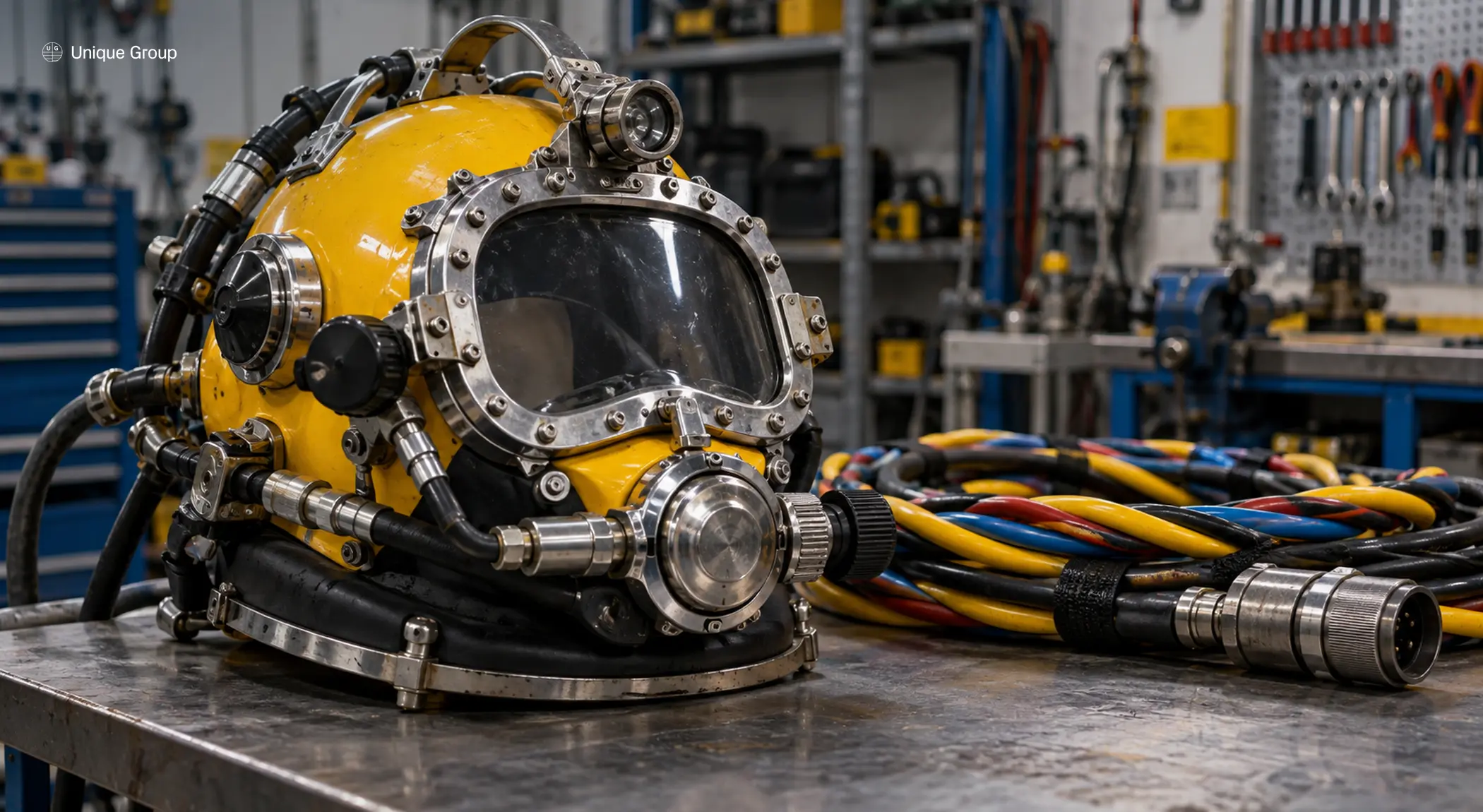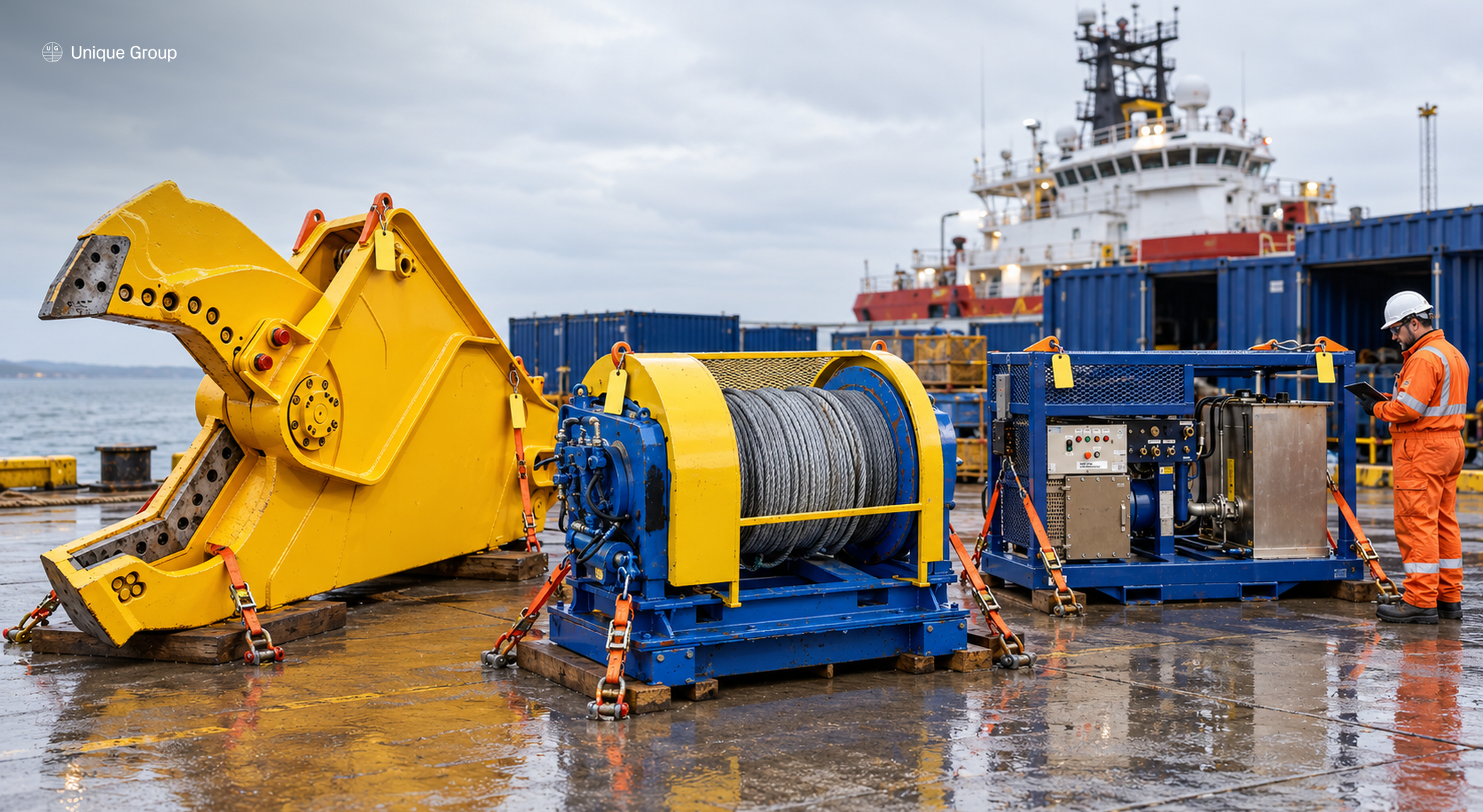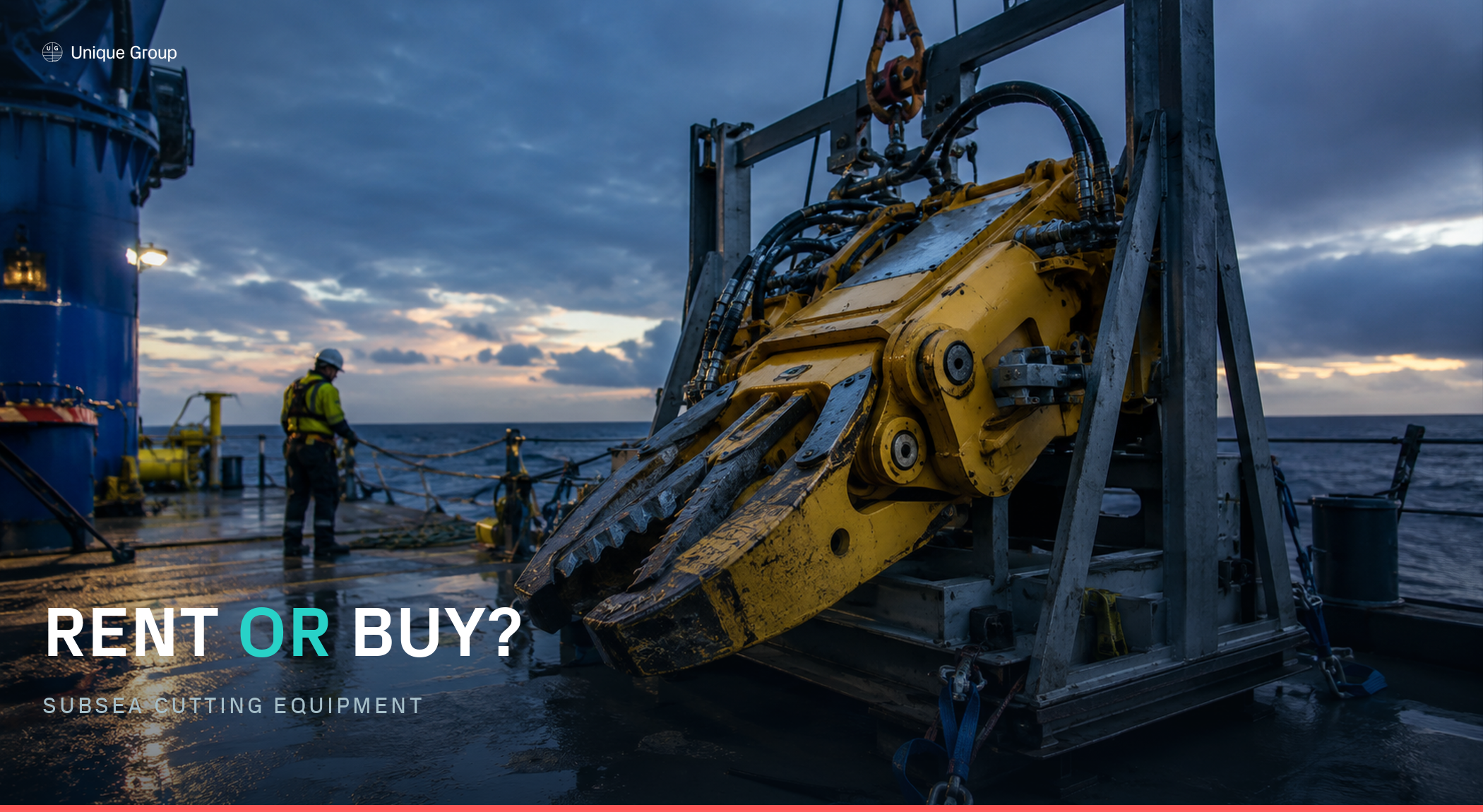
Subsea cutting tools are major capital items. A diamond wire saw, a hydraulic shear or an abrasive cutting spread each represents serious money to own and a real commitment to maintain and certify. So one of the earliest decisions on a decommissioning or construction scope is whether to rent the equipment for the campaign or buy it outright. This guide walks through the factors that should drive that decision.
Key takeaways
- Renting suits single, defined-duration campaigns; buying suits high-utilisation, sustained programmes.
- Ownership carries recurring costs beyond the purchase price: maintenance, re-certification, spares, storage, insurance and transport.
- Ex-rental sale offers a lower-cost route into ownership without new-build pricing.
- Unique Group supports rental, purchase and ex-rental sale across its subsea cutting range, backed by more than 30 years of offshore experience and a global office network.
- The decision should be made per tool, but considered across the whole cutting spread, recovery, excavation and back-deck equipment included, for a consistent commercial approach.
The case for Renting
Most offshore cutting work is project-based. A campaign needs a particular tool for a defined window, after which it sits idle until the next similar job. Renting matches spend to that reality: you pay for the tool while you use it and hand it back when the scope is done. There is no capital tied up in an asset that spends most of the year on the shelf, and no long-term maintenance, certification or storage burden.
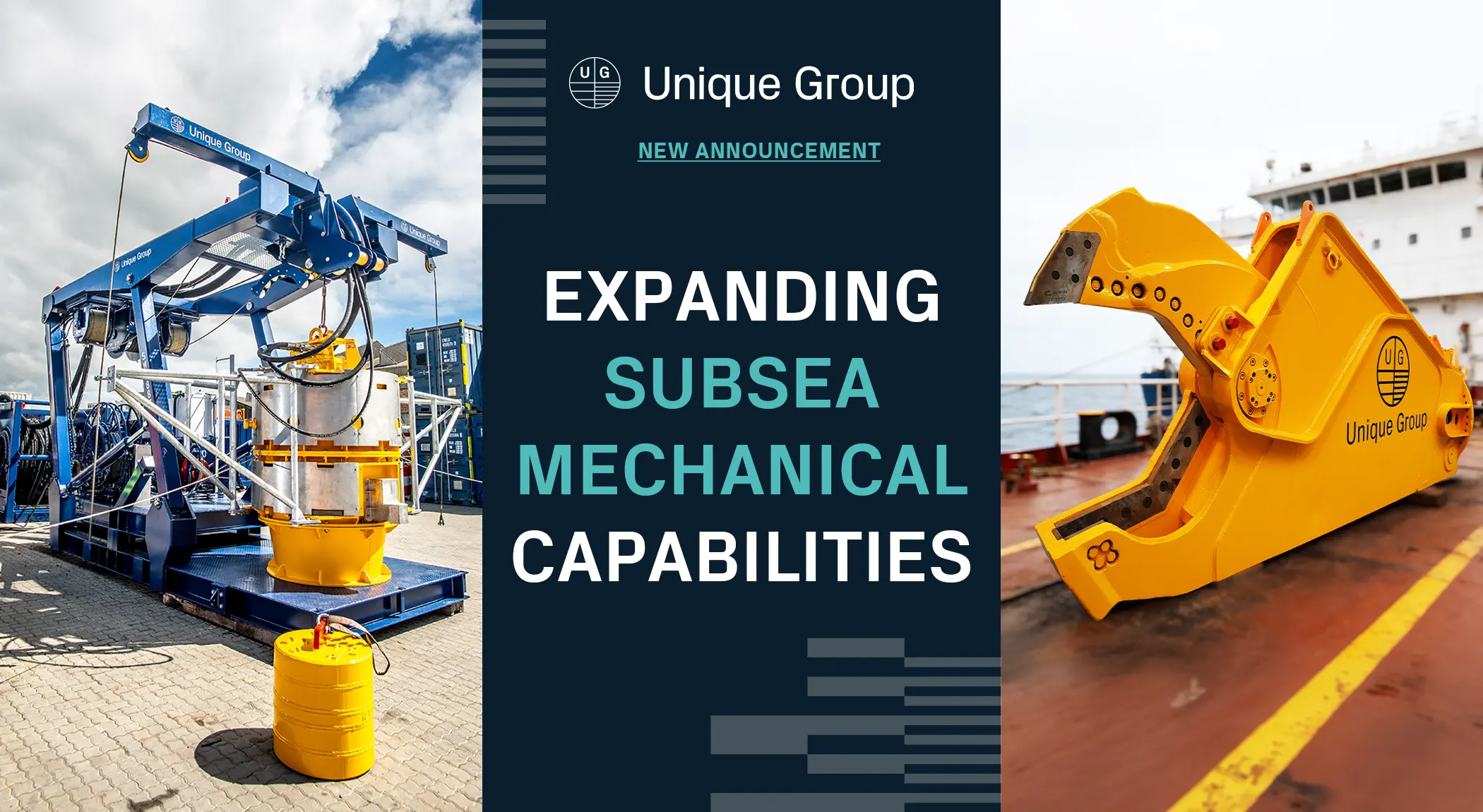
Renting also gives you the right tool for the specific scope. Unique Group offers its diamond wire saws and hydraulic shears on a rental basis, alongside ex-rental sale options, so a project can take exactly the cutting method a scope calls for: precision wire for casings, or a shear for fast repetitive flowline cuts. There is no need to own every tool for every eventuality.
The case for Buying
Ownership makes sense when utilisation is high and sustained. A contractor running near-continuous cutting campaigns, or an operator with a long multi-year decommissioning programme, may find that the cumulative rental cost approaches or exceeds the purchase price.
Owning the tool also gives complete control over availability, with no dependence on a rental pool during a busy season. It lets a contractor build the tool into a standardised, repeatable spread that crews know intimately.
The counterweight is everything that comes with ownership: capital outlay, ongoing maintenance and re-certification, spares holding, storage, and the technology risk that a better tool arrives before the asset has paid for itself.
| Factor | Rental | Purchase | Ex-Rental Sale |
|---|---|---|---|
| Upfront cost | Lowest, pay per campaign | Highest, full asset cost | Mid-point, below new-build price |
| Best fit | Single or occasional campaigns | High-utilisation, sustained programmes | Contractors moving toward ownership on a lower entry cost |
| Maintenance & re-certification | Supplier’s responsibility | Owner’s responsibility | Owner’s responsibility from purchase |
| Availability control | Dependent on rental pool | Full control | Full control |
| Technology risk | Transferred to supplier | Held by owner | Held by owner |
| Commercial model with Unique Group | Available across the cutting range | Available across the cutting range | Available across the cutting range |
Questions that decide it
Utilisation: How many days a year will the tool actually cut? Low or sporadic use points to rental; high, sustained use points to purchase.
Programme length: A single campaign favours rental; a multi-year programme can justify ownership.
Scope variety: If different jobs need different cutting methods, renting the right tool each time beats owning one and forcing it to fit.
Maintenance capability: Ownership requires the systems and people to maintain and certify subsea tools; renting places that with the supplier.
Cash and risk profile: Rental preserves capital and transfers obsolescence risk; purchase converts operating cost into an asset you control.
Ownership may also carry favourable depreciation or capital allowance treatment depending on your jurisdiction, worth checking with your finance team when comparing the two models.
The Hidden Costs of Ownership
Sticker price is the easy part of owning a subsea cutting tool. The harder costs are the ones that recur for as long as you keep it.
Subsea tools need scheduled maintenance and periodic re-certification to stay in class, and both require facilities, competent people and downtime. Spares have to be held so a failure offshore does not end a campaign.
The tool has to be stored, insured and mobilised, and it has to be transported to and from each job. Add these together over the life of an asset and the true cost of ownership can be a large multiple of the purchase price.
There is also technology risk. Cutting tools improve, and an owned tool can be overtaken by a better one before it has earned back its cost. A renter simply takes the newer tool next time; an owner has to decide whether to keep running older equipment or absorb the cost of upgrading. For a tool used only occasionally, that risk sits entirely on the owner for little operational gain.
A Middle Path: Ex-rental sale
The choice is not strictly binary. Ex-rental sale, buying a tool that has been in the rental fleet, can offer a lower entry cost for a contractor moving toward ownership while still giving the control that owning brings. Unique Group lists sale, rental and ex-rental sale availability across its subsea cutting equipment range, so the commercial model can be matched to the project rather than dictated by it.
The surrounding spread
A cutting tool rarely works alone. It is part of a spread that includes recovery grabs, excavation and back-deck equipment, and the rent-or-buy question applies across the whole chain. Sourcing the cutting tools and the surrounding subsea mechanical equipment from one supplier keeps the commercial arrangement simple and the equipment compatible, whichever model you choose.
Making the call with Unique Group
For most single campaigns, rental is the pragmatic choice: it matches spend to use, transfers maintenance and certification, and gives access to the precise cutting method each scope needs. For high-utilisation contractors, purchase or ex-rental sale can be the better long-term economics. Unique Group supports all three models across its cutting range, backed by more than 30 years of offshore experience and a global office network, so the decision can be made on the numbers that fit your project rather than on what a supplier happens to stock.
Speak with our subsea mechanical specialists to discuss your project requirements.
Frequently Asked Questions
What is ex-rental sale?
Ex-rental sale is the purchase of equipment that has previously been used within a rental fleet. It offers a lower entry cost than new equipment while still transferring full ownership and control to the buyer.
Does Unique Group offer both rental and purchase for subsea cutting tools?
Yes. Unique Group offers diamond wire saws and hydraulic shears for rental, purchase, and ex-rental sale, so the commercial model can be matched to the project.
Should a decommissioning contractor rent or buy cutting equipment?
It depends on utilisation and programme length. A single, defined campaign generally favours rental; a sustained, high-utilisation programme can justify purchase or ex-rental sale. See “Questions that decide it” above.