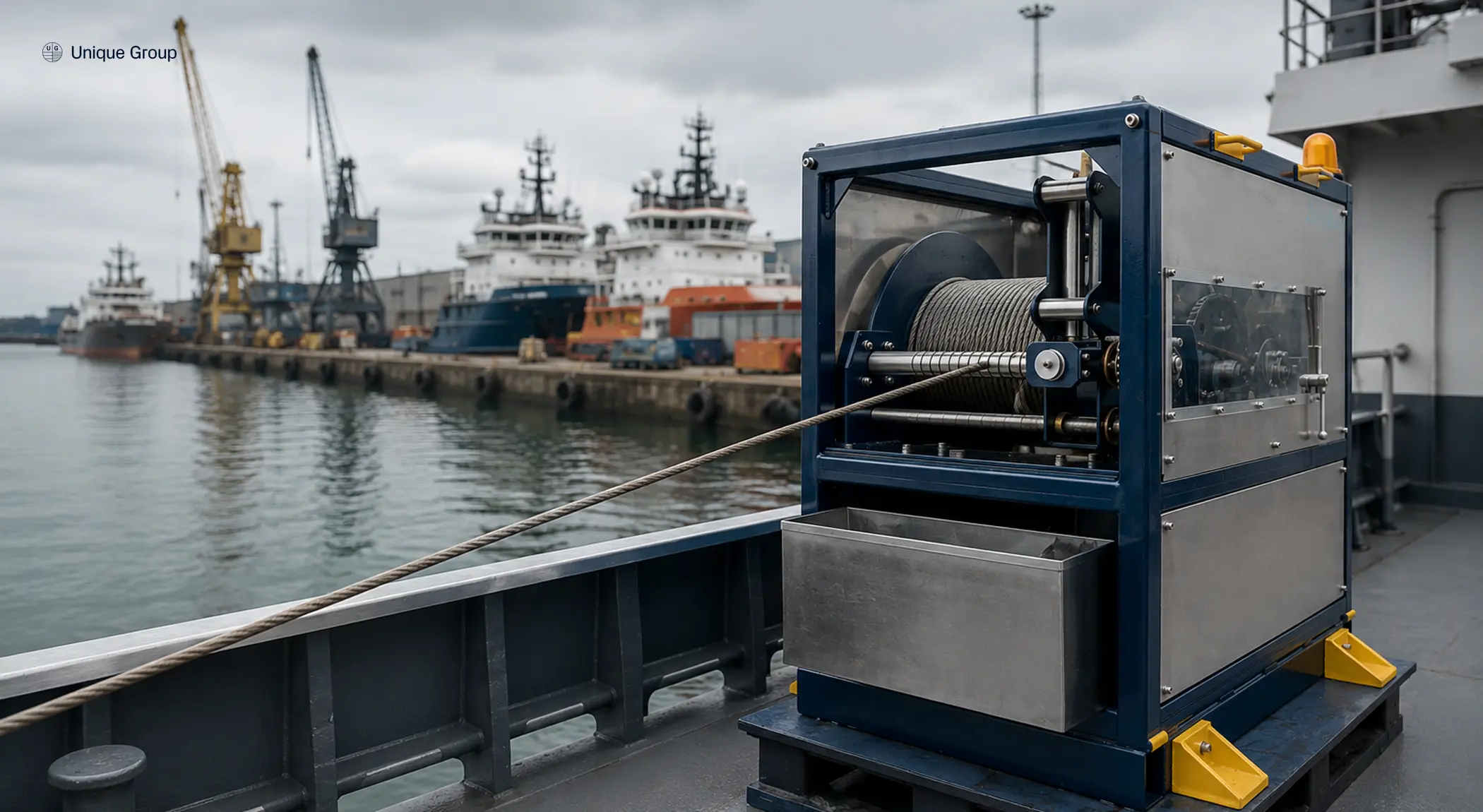
A survey winch does a different job than a lifting or mooring winch. It isn’t rated for heavy loads or high line pull. It’s rated for controlled, repeatable, low-speed deployment of sensitive instruments, over and over, cast after cast, without damaging the cable or the payload.
That distinction matters most on smaller research and survey vessels, where deck space, power supply, and crew size are all more limited than on a construction or IRM vessel. Specifying the wrong winch here doesn’t just cost money. It costs deployment time and, in the worst case, the instrument on the end of the cable.
This article covers what a survey winch needs to do, the constraints that shape the decision on smaller vessels, and where a compact single-phase electric winch like the Uni-Winch CEW500 fits.
Key Takeaways
- A survey winch is built for controlled, repeatable, low-speed cable deployment, not for high line pull or heavy lifting.
- On smaller research and survey vessels, available power supply and deck footprint usually narrow the shortlist before any spec comparison starts.
- The same winch is typically used for deploying towed side-scan sonar and magnetometer systems, sub-bottom profilers, CTDs, water samplers, and drop-down cameras.
- Larger line pull, three-phase power, or heavier drum capacity requirements point toward a bigger three-phase electric or hydraulic winch instead.
What a survey winch actually needs to do
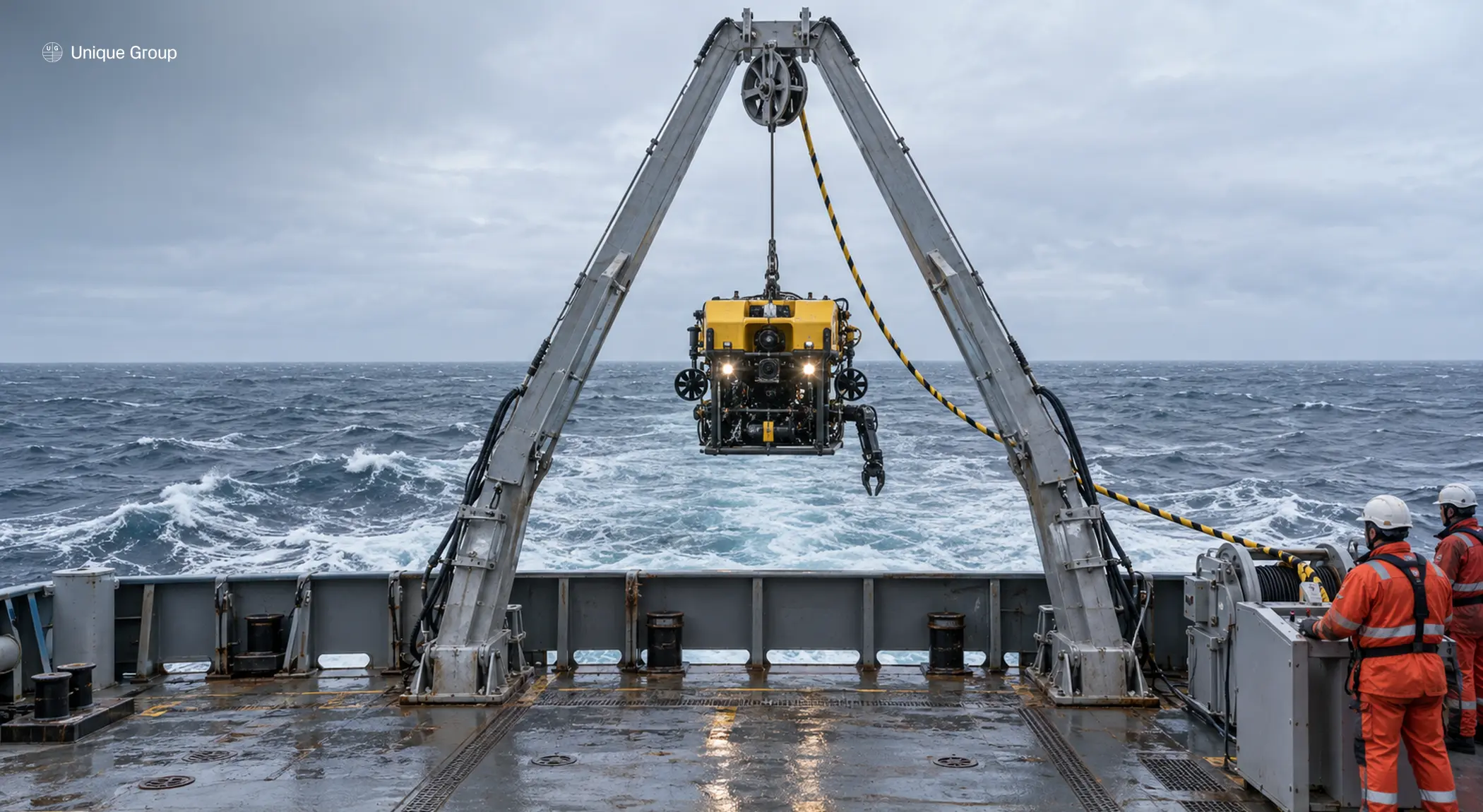
A survey winch deploys and recovers towed or lowered instrumentation: side-scan sonar and magnetometer towfish, sub-bottom profilers, CTDs, water samplers, and drop-down cameras. The job is to pay out and retrieve cable at a controlled, consistent speed, while keeping the cable evenly wound on the drum.
This is a different engineering problem to a lifting winch. Line pull requirements are modest. Speed control and repeatability matter more than raw pulling force. Damage to the instrument or cable during a cast is usually the real risk, not a dropped load.
The deck space and power problem on smaller vessels
Larger survey and construction vessels typically carry three-phase power and can absorb the deck footprint of a full winch package without much thought. Smaller research and charter vessels often can’t.
Two constraints tend to decide the shortlist before any spec sheet gets compared:
- Power supply available on board: Many smaller vessels only have single-phase 230V AC power, not three-phase. A winch that needs three-phase supply may require additional generator capacity or simply isn’t an option.
- Deck footprint: Space on a smaller research vessel is already split between multiple instrument systems, sample handling, and crew working area. A winch with a large footprint competes directly with everything else that needs to be on deck.
Getting either of these wrong late in project planning usually means a mobilisation delay, not a simple swap.
Key specifications to check before you specify one
Before comparing winches, define these against your actual operation:
| Specification | What to check |
|---|---|
| Power supply | Single-phase or three-phase, and what’s actually available on the vessel |
| Line pull required | Rated pull at the core and at the drum top will differ; check both against your heaviest payload |
| Cable storage capacity | Maximum cable length the drum needs to hold for your deepest planned cast |
| Level wind mechanism | Precise, even winding protects the cable over repeated casts and reduces wear |
| Control mode | Local and remote pendant control, with variable speed, gives more precise handling than fixed-speed operation |
| Brake and safety features | Automatic failsafe brake and emergency stop are standard requirements for handling instrumentation over the side |
| Environmental rating | An IP-rated enclosure matters for equipment mounted on an open deck in offshore conditions |
Compatible instrument systems
A compact electric survey winch is typically specified against one or more of the following:
- Towed side-scan sonar and magnetometer systems
- Sub-bottom profilers
- CTD (conductivity, temperature, depth) systems
- Water samplers
- Drop-down camera systems
The winch itself doesn’t need to know what’s on the other end of the cable. What it needs to deliver is consistent, controlled payout and retrieval, whichever of these instruments is deployed.
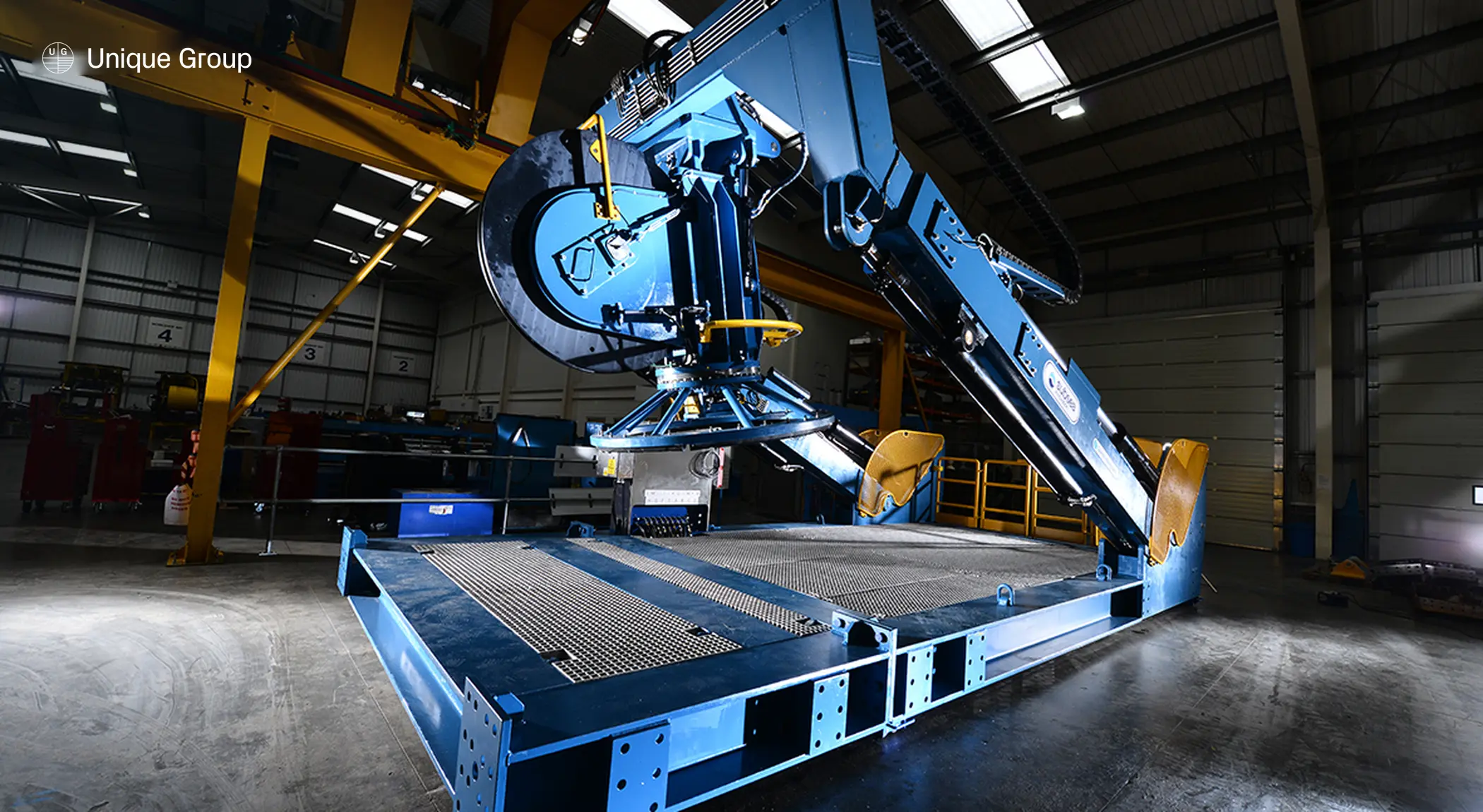
Uni-Winch CEW500: Compact Single-phase Electric Winch
The Uni-Winch CEW500 is built specifically for the small-footprint, single-phase constraint described above. It runs from a 230V AC, single-phase supply, which removes the three-phase requirement that rules out some vessels before the comparison even starts.
| Specification | Value |
|---|---|
| Power supply | 230V AC, single-phase, 50/60 Hz |
| Motor | 2.2 kW, with fail-safe brake unit |
| Line speed | 35 m/min at mid-drum |
| Rated line pull (core) | 240 kg |
| Rated line pull (drum top) | 200 kg |
| Cable storage capacity | Up to 650 m |
| Level wind | Chain-drive diamond screw mechanism |
| Control | Local and remote pendant control, variable speed |
| Enclosure rating | IP66 |
| Construction | SS316L / mild steel with marine-grade finish |
Refer to datasheet for detailed technical specifications.
The winch is designed for towed side-scan and magnetometer systems, sub-bottom profilers, water samplers, CTD systems, and drop-down camera systems. For operations that need to track deployed cable length and load in real time, the Uni-CountLM cable counter with load monitoring is designed to interface directly with the CEW500.
When you need something bigger
A compact single-phase winch like the CEW500 fits smaller research and survey vessels running towed instrumentation. It’s not the right choice for higher line pull, three-phase power availability, or heavier drum capacity requirements.
| Compact single-phase electric winch | Larger three-phase or hydraulic winch | |
|---|---|---|
| Best suited to | Smaller research and survey vessels | Larger survey, construction or IRM vessels |
| Power supply | 230V AC single-phase | Three-phase electric or hydraulic power unit |
| Deck footprint | Small | Larger |
| Line pull | Lower, suited to towed instrumentation | Higher capacity available |
| Typical payload | Side-scan sonar, magnetometer, CTD, sub-bottom profiler, drop camera | Same, plus heavier towed bodies and deeper storage requirements |
Where higher line pull, three-phase power, or heavier drum capacity apply, the selection process still follows the same logic: define the load, duty cycle, line speed, and control mode before specifying the unit. For a broader look at how electric and hydraulic winches compare across offshore operations, see our guide on electric vs hydraulic offshore winches.
Speak with our survey specialists to discuss your project requirements.
Frequently Asked Questions
What is a survey winch used for?
A survey winch deploys and recovers towed or lowered survey instrumentation, such as side-scan sonar, magnetometers, sub-bottom profilers, CTDs, and water samplers, at a controlled, repeatable speed.
What power supply does a small research vessel need for a towed sonar winch?
It depends on the winch. Many smaller vessels only carry single-phase 230V AC power, which is why compact single-phase electric winches are specified for this class of vessel rather than winches that require three-phase supply.
Can a single-phase electric winch run a side-scan sonar system?
Yes. The Uni-Winch CEW500 is a single-phase electric winch designed specifically for towed side-scan and magnetometer deployment, alongside sub-bottom profilers, CTDs, water samplers, and drop-down cameras.