Client: Montevideo Residence
Location: Belgium
Project News in Client website: https://www.montevideo-residence.be/nieuws/watergewichtzakken-houden-montevideo-residence-in-balans/
Summary of the Project
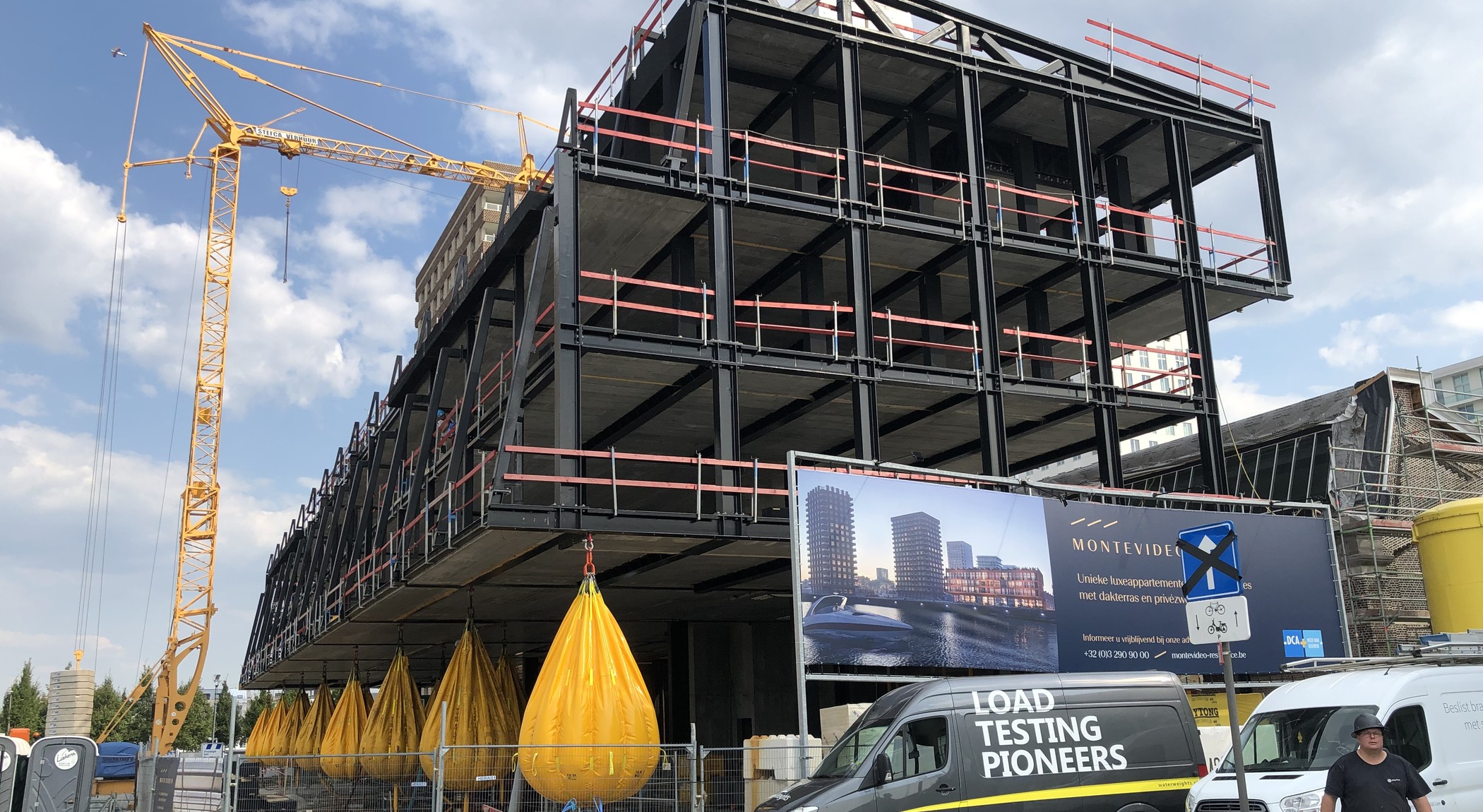
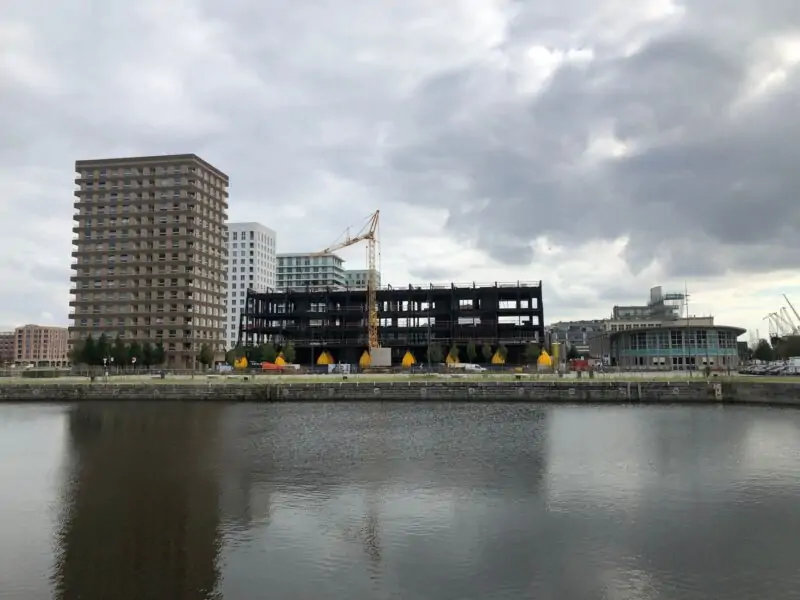
Unique Group supported the structural pre-load testing of a new residential building in Belgium using our Water Weights® load testing solutions. Located in a dense city-centre environment with height restrictions and limited space, the project required a safe and flexible method to simulate structural loads during construction.
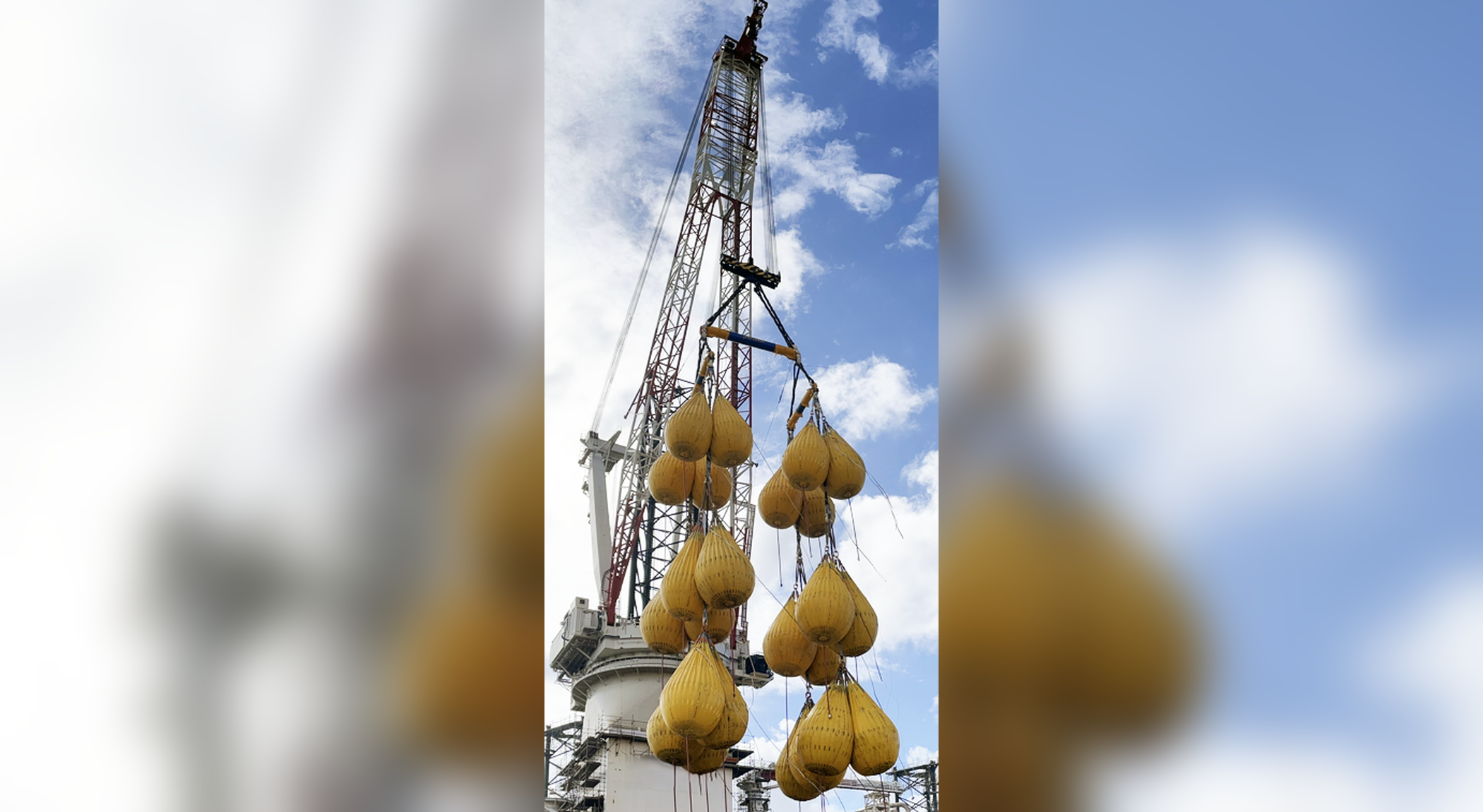
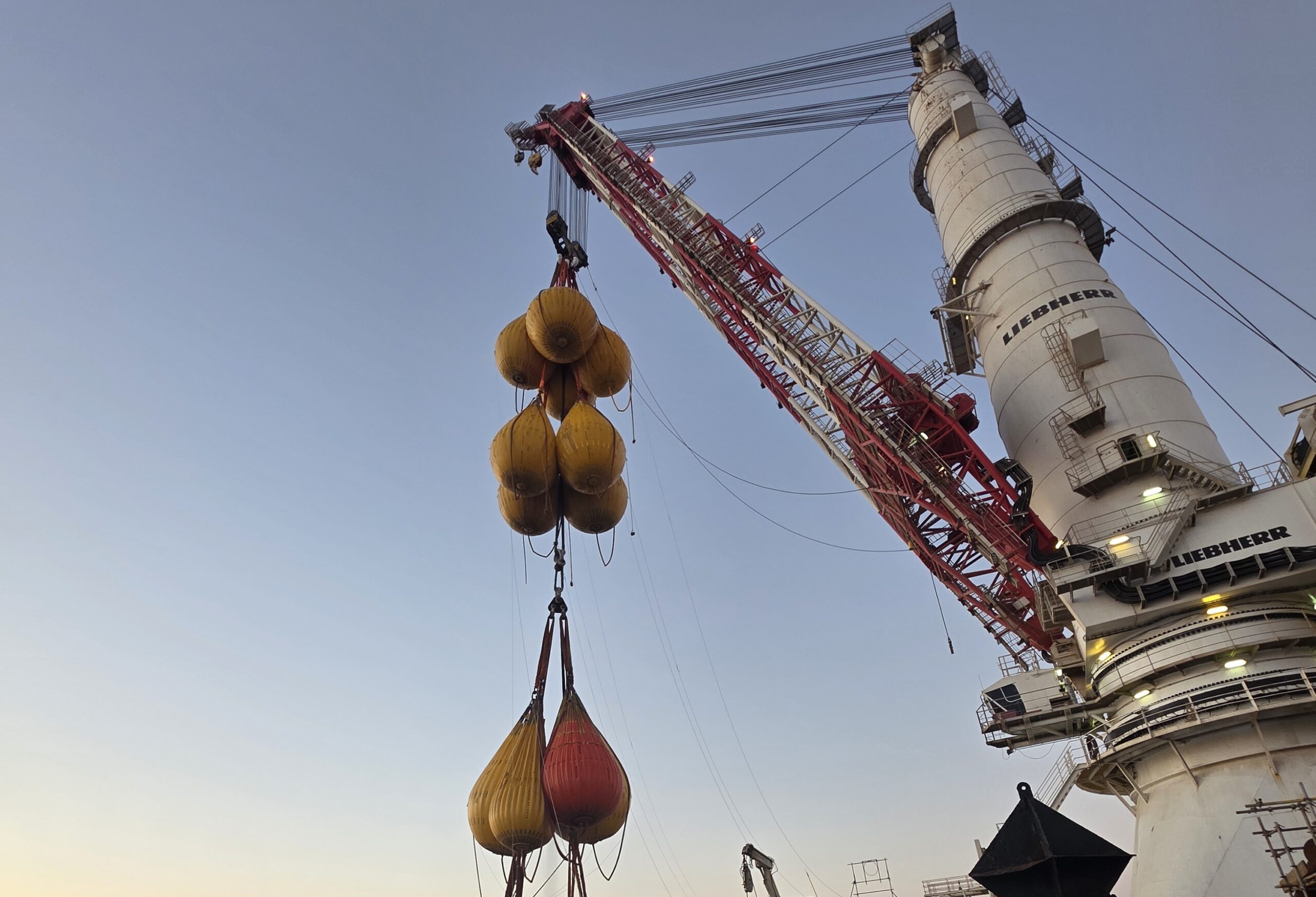
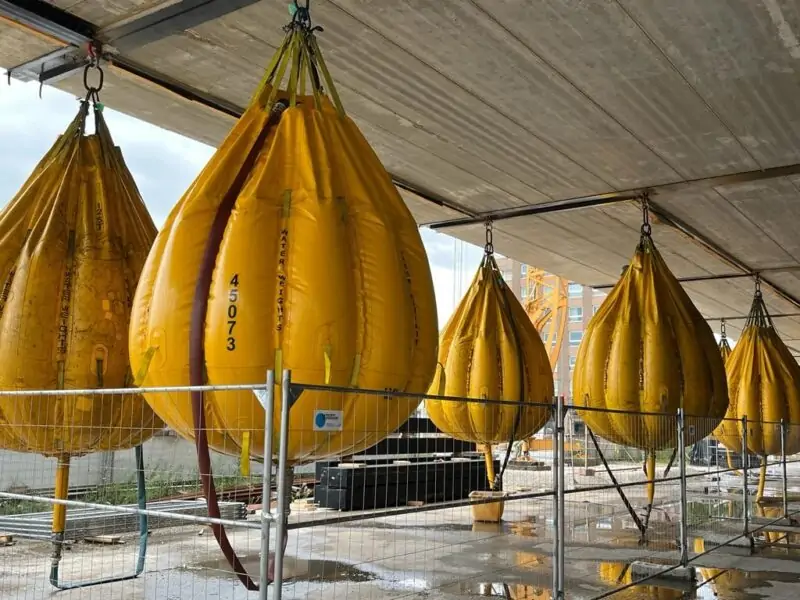
A series of 12.5-tonne water-filled load testing bags were suspended to replicate the required loads, enabling engineers to monitor how the structure responded as construction progressed. By replacing traditional solid weights with its adaptable Water Weights® system, Unique Group delivered a safer, low-logistics solution that allowed accurate load simulation in a confined urban environment while supporting engineers in validating the building’s structural performance under real conditions.
Client Requirement:
The client required a reliable method to conduct pre-load structural testing on a newly constructed building located in a busy residential area in Belgium.
The objective was to simulate operational loads during construction in order to monitor the building’s structural response and ensure safety and stability as additional components were installed.
Due to the urban location and limited site access, the solution needed to:
- Provide accurate and controllable load simulation
- Be safely deployed within tight urban spaces
- Avoid the logistical challenges associated with transporting and positioning traditional solid test weights
- Allow gradual load adjustment as construction progressed
Challenges Faced
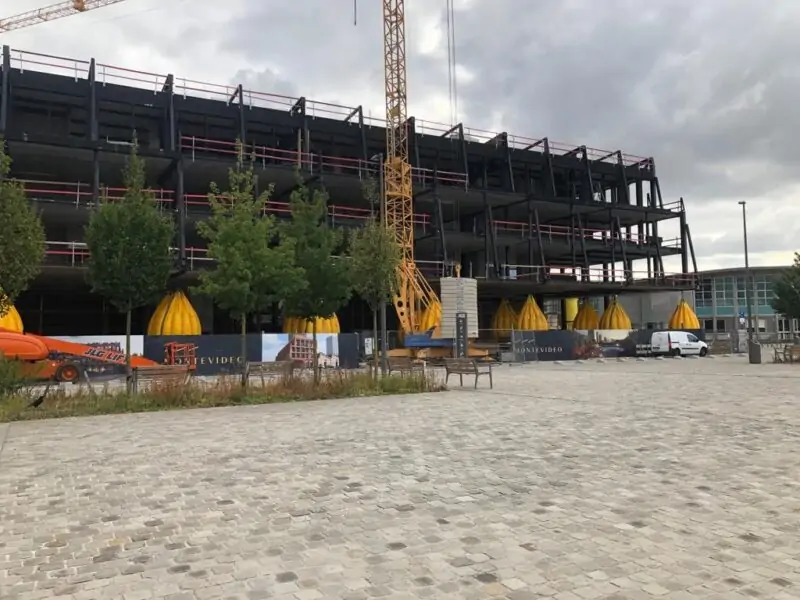
The project presented several operational constraints typical of city-centre construction environments:
- Height restrictions: Limited vertical clearance prevented the use of conventional lifting setups and traditional solid load blocks.
- Confined urban space: The building site was surrounded by residential infrastructure, leaving minimal room for heavy equipment or staging large solid weights.
- Logistical limitations: Transporting and positioning traditional solid test masses would require extensive lifting equipment and additional safety measures.
- Controlled load variation required: Engineers needed the ability to gradually reduce loads over several months as structural elements were completed and installed.
Unique Solution Provided
To address these constraints, Unique Group deployed its Water Weights® load testing system, using fourteen 12.5-tonne water-filled bags designed specifically for controlled structural load simulation.
The bags were suspended and filled with water to create the required test loads without the need for heavy solid weights. Their flexible design enabled safe installation even in restricted headroom environments, making them particularly suitable for the confined urban setting.
As construction progressed and additional building elements were installed, the loads were incrementally reduced by releasing water in controlled stages, allowing engineers to closely monitor the structure’s performance under changing conditions.
This approach provided a safe, adaptable, and precise testing method, ensuring the building could be evaluated under realistic load scenarios while maintaining operational efficiency on site.
Benefits Delivered
Safe Alternative to Solid Weights: Water Weights® eliminated the risks associated with lifting and positioning heavy solid masses in a confined urban environment.
Adaptability to Restricted Spaces: The low headroom design enabled load testing in areas where traditional testing methods could not be deployed.
Precise Load Control: Water could be added or released gradually, allowing engineers to simulate real operational loads and monitor structural behaviour throughout construction.
Reduced Logistics and Installation Complexity: Compared to solid weights, the water-filled bags required significantly less transport, lifting equipment, and installation time.
Versatility Beyond Traditional Applications: While commonly associated with crane and davit testing, this project demonstrates how Water Weights® technology can effectively support structural engineering and building construction applications.