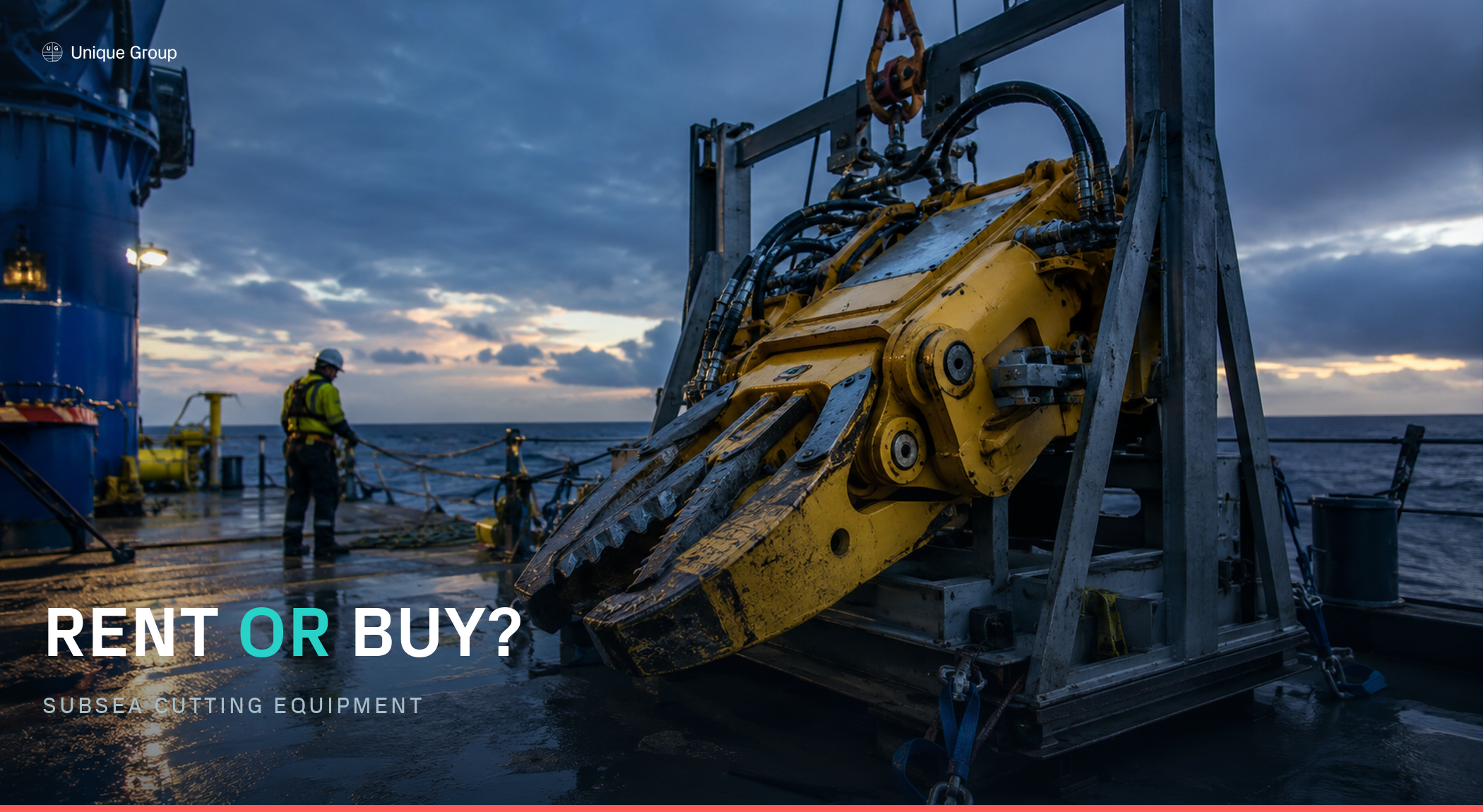
Should you rent load test water bags, buy them, or outsource the test entirely? The answer depends on three things: how often you load test, how large the test load is, and whether you have a trained, competent crew to run it.
Key takeaways
- Outsource for one-off or infrequent tests: a turnkey load testing service generally suits organisations without a competent in-house testing crew, or those that need specialist project support.
- Rent for occasional load testing: water bag rental lets companies with competent teams run tests without investing in equipment ownership.
- Buy for frequent testing (with a trained crew): purchasing Water Weights® can be cost-effective for organisations that test regularly, provided they can manage inspection, maintenance and storage.
- Combine rental with technical support for larger tests: additional water bags and specialist engineering assistance can supplement your existing in-house capability.
- Compare total costs before deciding: consider testing frequency, required load capacity, mobilisation, rigging, personnel and long-term maintenance, not just the rental or purchase price.
There are four options:
- Outsource a one-off or infrequent test.
- Rent when your own team tests occasionally.
- Buy, with a trained crew, when you test several times a year.
- Add on-site support when a test is larger than your own equipment can handle.
Unique Group offers all four worldwide, through Water Weights® sale and rental and our turnkey load testing service. This guide explains how to choose.
The four models at a glance
| Model | Who runs the test | What you own | Best for |
|---|---|---|---|
| Turnkey load testing service | Unique Group’s team | Nothing | One-off or infrequent tests, or no in-house crew |
| Rental | Your own competent team | Nothing. The bags are returned after the test | Occasional tests |
| Purchase (with a trained crew) | Your own trained team | The bags | Several tests a year |
| Rental with on-site support | Your team, with Unique Group engineers and technicians | Your existing bags, if any | Test loads beyond your own equipment |
For how water bag load testing works, from bag capacities to load measurement, see our practical guide to proof load testing with water bags.
Four questions that decide the model
How often do you load test?
Whether a proof load test is required depends on the applicable regulation, the manufacturer’s requirements, class rules and a competent person’s assessment. Common triggers include commissioning, significant repair or modification, and periodic intervals set by those rules or by an examination scheme.
If you test once a year or less, renting or outsourcing means you never pay for equipment that sits idle between tests. If you test several cranes, davits or structures every year, owning your own bags starts to make sense.
How large is the test load?
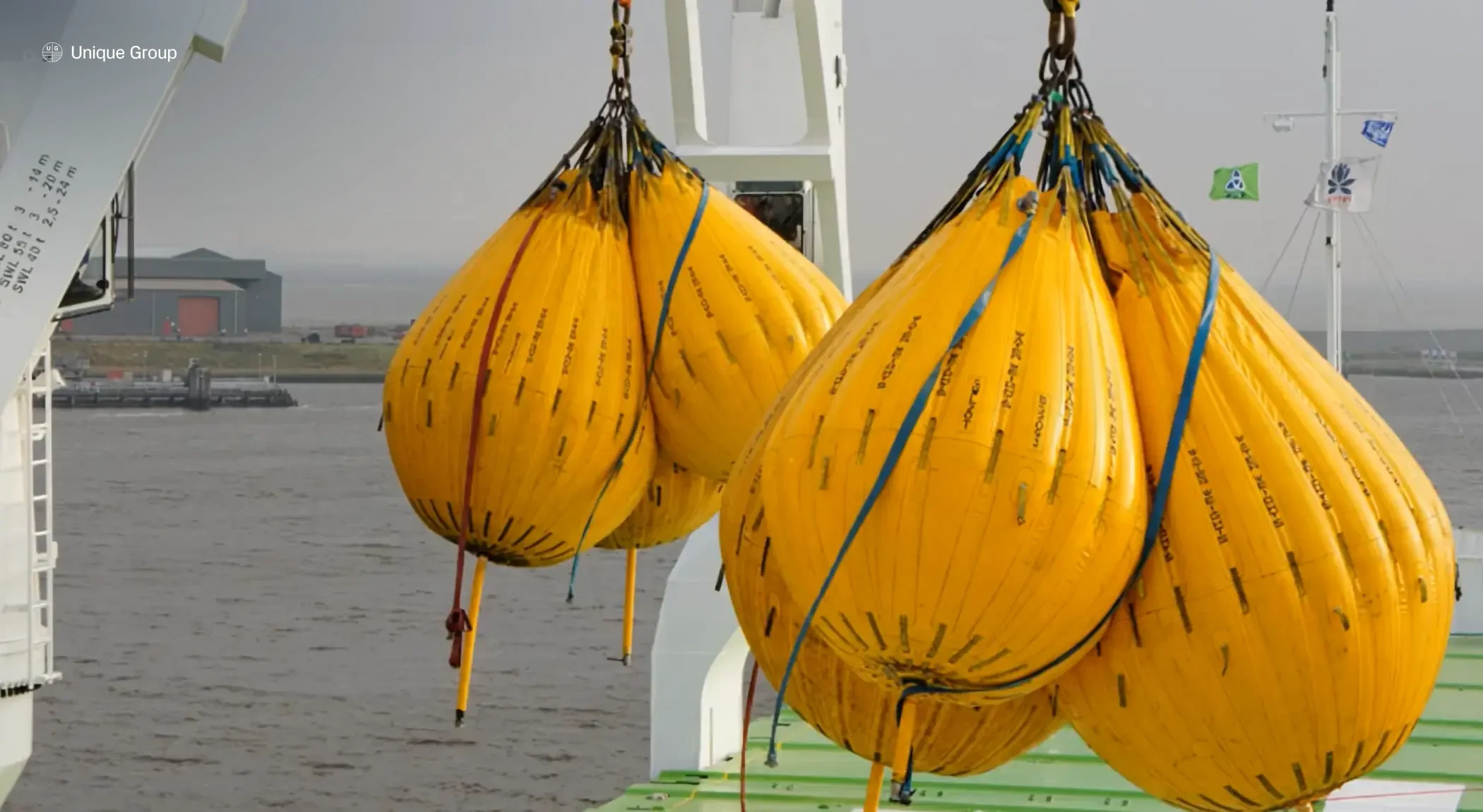
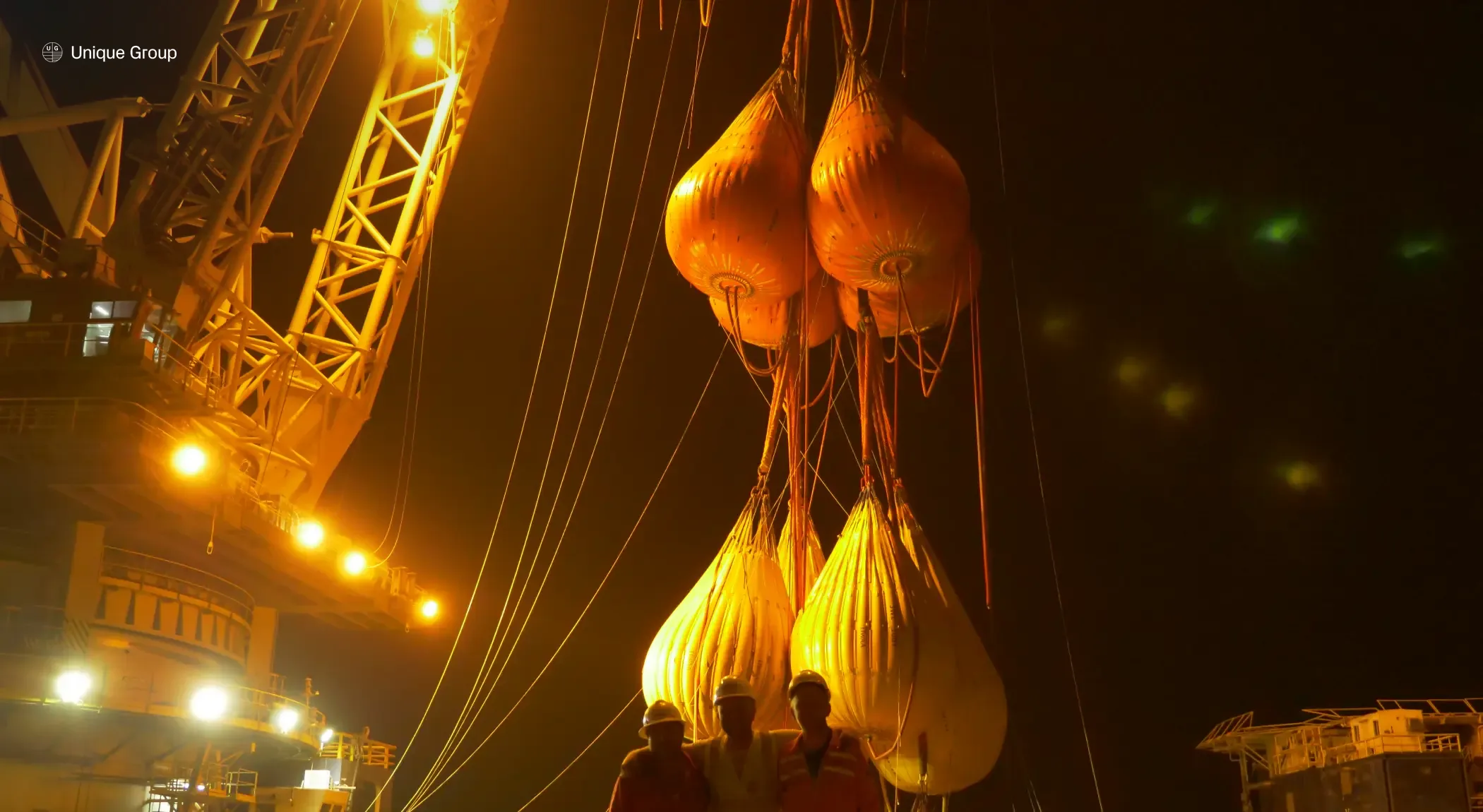
Standard Water Weights® proof load bags run from 10 t to 110 t each, with a Low Headroom range from 1.0 t to 12.5 t. Larger test loads combine several bags, using spreader beams or a multi-bag rigging layout. This is how Unique Group completed a 1,500 t load test on a barge-mounted crane in Mexico.
Water Weights® are also used for structural pre-loading applications, not just lifting equipment tests. Unique Group supported a structural pre-load testing project on a new residential building in Belgium, using fourteen 12.5 t water-filled bags.
It rarely makes sense to own enough bags for an occasional very large test. Size your own fleet for your regular tests, and rent extra capacity when you need it.
Do you have a competent, trained crew?
A water bag load test involves rigging, filling, load measurement, staged loading and controlled discharge. In the UK, LOLER leaves the decision on whether and how to load test to a competent person. Without that capability in-house, a turnkey test is the safest route. With a capable team, renting or buying works, and staff training options can be discussed with our team.
Where is the equipment?
Water Weights® equipment mobilisation is coordinated through Unique Group’s regional network, subject to equipment availability, project location and requirements. Because the bags are filled with water on site, they are not transported at their full test weight. This makes remote and offshore sites practical under any of the four models.
How the four models compare
| Factor | Turnkey service | Rental | Purchase (with a trained crew) | Rental with on-site support |
|---|---|---|---|---|
| Test frequency | One-off or infrequent | Occasional | Several tests a year | Occasional large or complex tests |
| Test load capacity | Scoped to the project | Chosen per test from the available range | Limited to the bags you own | Your bags plus rented additional capacity |
| Headroom | Bag type selected to suit the project | Standard or Low Headroom range, selected for your test | Choose the range that matches your typical lifting points | Additional bags selected to suit the rigging layout |
| Rigging | Scope tailored to the project | Planned and carried out by your team | Planned and carried out by your team | Rigging layout supported by Unique Group engineers and technicians |
| Mobilisation | Coordinated through our regional network, subject to availability, location and requirements | Coordinated through our regional network, subject to availability, location and requirements | Bags delivered once, then stored and moved by you | Coordinated through our regional network, subject to availability, location and requirements |
| Water supply | Planned as part of the project scope | Planned with your team before the test | Planned with your team before each test | Planned with your team before the test |
| Maintenance | No equipment to maintain | Ask what the rental quotation covers | Inspection, storage and repair are yours | Depends on whether bags are owned or rented |
| Crew competence | Unique Group’s team | Your competent team | Your own trained team | Your team, supported by Unique Group |
When outsourcing makes sense
Unique Group provides turnkey Water Weights® load testing services, with the scope tailored to each project. Depending on the requirements, services can include test planning, equipment mobilisation, rigging, on-site testing and load application documentation.
Outsourcing suits:
- Commissioning tests on new cranes or lifting equipment
- Tests after repair, modification or re-rating
- Organisations without lifting specialists on staff
- Tests that must fit a tight shutdown window
Our team completed deck crane load tests in Singapore in 9 hours and a 693 t gantry crane test in two days. See Water Weights® Load Testing Services.
When renting makes sense
Renting suits companies whose own competent team tests occasionally, such as once or twice a year. Rental periods depend on the project, so tell us your test dates and location and we will quote accordingly.
Renting also avoids the ongoing costs of ownership, and you can choose from the full capacity range rather than only the bags you would otherwise own. Ask us what is included in the rental quotation, including any rigging or load measurement equipment, so you can compare it with other options. To see the bags, view our proof load testing equipment.
When buying makes sense, and what ownership involves
Buying suits operators that load test several times a year. Typical examples are drilling contractors with several rig cranes, port operators with large crane fleets, and shipyards testing equipment as it is built. Customers in this position can enquire about staff training options alongside a purchase, subject to confirmation of format and location.
Owning bags also means taking on the responsibilities that come with them:
- Inspection: bags and lifting sets must be inspected and maintained in line with the applicable rules and manufacturer guidance.
- Storage: bags should be cleaned, dried and stored correctly between tests.
- Repair and replacement: damaged bags must be repaired or replaced before their next use.
- Crew competence: your team needs training and practice to run tests safely.
- Capacity limits: the bags you own set the largest test you can run without additional equipment.
On inspection intervals, it helps to separate the regulation from the guidance. In the UK, LOLER requires thorough examination of lifting accessories at least every six months, or in accordance with an examination scheme drawn up by a competent person. LEEA 051 is industry guidance, not a regulation. It recommends a thorough examination of lifting sets at least every six months. Your competent person decides which approach applies to your equipment.
For more, read the importance of LEEA 051 and water weights in load testing lifting equipment.
When rental with on-site support makes sense
Even teams that own bags reach their limits. This happens with a test load larger than their fleet, a complex multi-bag rigging layout, or a structure they have not tested before. In these cases you can rent the additional bags you need, and Unique Group’s engineers and technicians can support the rigging layout and the test itself.
Unique Group also has experience supporting complex, high-capacity projects, including a 726 t proof load test involving cranes aboard a pipelay vessel.
Which model fits your situation?
| Scenario | Model to consider | Why |
|---|---|---|
| New port crane being commissioned | Turnkey load testing service | A one-off test with no need to own equipment or staff the test |
| Annual crane test with a competent in-house team | Rental | No idle equipment between tests |
| Drilling contractor testing several rig cranes each year | Purchase (with a trained crew) | Frequent use can justify ownership, and a trained crew can test on demand |
| One-off test of a very large crane | Turnkey, or rental with on-site support | The load may exceed a typical owned fleet, and multi-bag rigging needs engineering |
| Lifeboat davit winch overload test | Rental or turnkey | The overload test is periodic, with a long interval, so ownership is hard to justify |
| Building floor test after a change of use | Turnkey load testing service | A one-off test that needs specialist floor bags and flowmeter measurement |
Lifeboat example. Under SOLAS and IMO MSC.402(96), lifeboat and rescue boat launching appliances are subject to periodic maintenance, thorough examination and operational testing. This includes a five-yearly overload test of the winch. Other examinations and tests apply at other intervals, and the work must be done by service providers authorised under MSC.402(96) where required. Water bags can supply the test load. Authorised servicing, certification and the full test programme remain with the owner and the authorised service provider. Check the applicable flag and class requirements.
What to compare on cost
Compare the total cost of each model, not the headline price:
- Turnkey: a project-specific quotation covering the agreed equipment, personnel, mobilisation and deliverables.
- Rental: the rental period, shipping both ways, your own crew’s time, and any rigging or load measurement equipment.
- Purchase: the purchase price, plus inspection, storage, repair, training and crew time over the working life of the bags.
For companies that test once a year or less, rental or a turnkey test often costs less than ownership once inspection, storage and crew time are counted. Ask our team for quotations on more than one model if you want to compare them directly.
Frequently asked questions
Is there a minimum rental period?
Rental periods depend on the project. Contact our team with your test dates and location and we will advise.
How is Water Weights® equipment mobilised?
Water Weights® equipment mobilisation is coordinated through Unique Group’s regional network, subject to equipment availability, project location and requirements.
Do you train our staff?
You can enquire about staff training options when buying bags. Format, location and any certification are subject to confirmation for your project.
Can you support a test if we own our bags?
Yes, subject to the project. With rental and on-site support, we can supply the additional bags you need, plus engineers and technicians to support the rigging layout and the test.
Is a proof load test always compulsory?
No. Requirements depend on the applicable regulation, manufacturer requirements, class rules and a competent person’s assessment. If you are unsure which applies to your equipment, ask your competent person or classification society.
Choose the right model for your next test
The right load testing model depends on how often you test, how large the load is, and who will run the test. Whichever route fits, Water Weights® are available for sale and rental worldwide, alongside our turnkey load testing service.
- Rent or buy Water Weights®: view our proof load testing equipment
- Let our team run your load test: Water Weights® Load Testing Services
Speak with our buoyancy and ballast specialists to discuss your project requirements. Tell us your test load, location, how often you test and the crew you have available.